
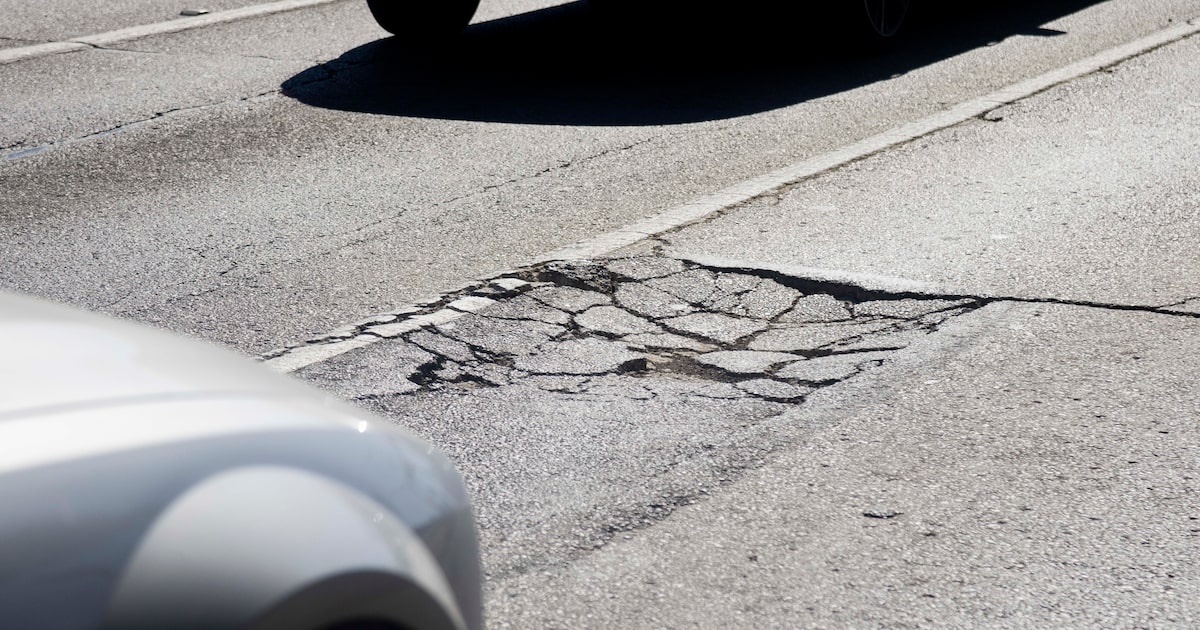
As ice and sleet from the winter storm thaw, potholes in North Texas may get worse than before. Here’s why, how to drive safely around them and how to report any dangerous holes.
Why do potholes form?
A pothole typically needs three things to form: stress, water and freeze-thaw cycles.
Stress starts with traffic. Each time a car or truck passes over a road, its weight flexes the pavement and can create small cracks, the BBC reported in 2024. Over time, repeated loads widen those cracks, giving water a way in. Resident and rural roads not designed to support the weight of multi-axle big rigs are especially vulnerable, according to Forbes.
Once water seeps through the surface, it can collect beneath the pavement — especially in spots with poor drainage, like dips in the road or underpasses beneath viaducts. That moisture weakens the underlying soil and base layers, so the pavement loses the firm support it needs, according to the University of Missouri.
News Roundups
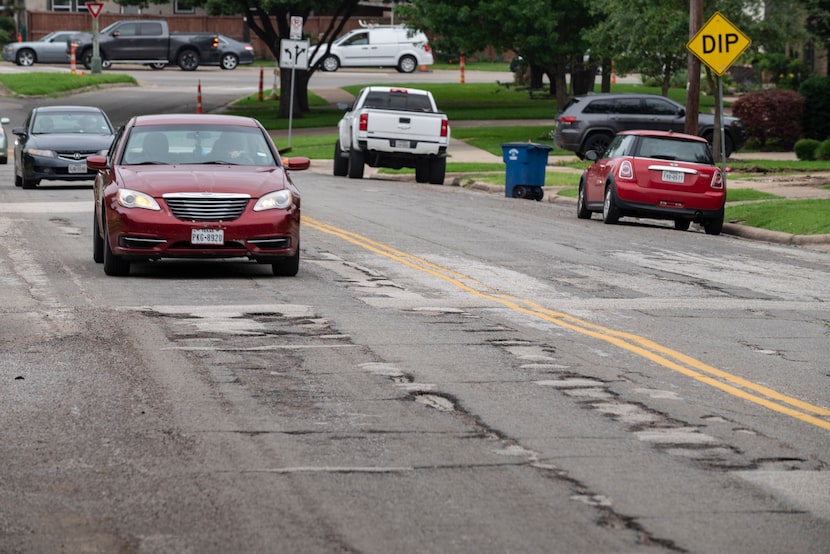
Potholes photographed in 2021 on Richmond Avenue in East Dallas.
Ben Torres / Special Contributor
Freeze-thaw cycles speed up the breakdown. When temperatures hover around the freezing point, water under or in the pavement freezes and expands, pushing up on the road and stressing it in all directions. When this frozen water thaws, it can leave behind damage and a looser road base. With continued traffic, the pavement eventually collapses into a pothole.
There are efforts in North Texas to make roads more resistant to stress and weather wear, such as by incorporating recycled plastic into asphalt, the material used to pave roads.
How to drive safely and report potholes
Hitting a pothole could cause serious damage to your car tires, wheels and shocks. It could also lead to an accident if you lose control of your vehicle.
While it can be hard to avoid potholes in North Texas, your best defense is to spot them early and make a mental note of them on your regular commute, according to Forbes.
When you see a pothole, slow down and give yourself room to steer safely around it. If you can’t avoid it, don’t slam the brakes right before impact; braking hard compresses the suspension and can increase the force on the tire and wheel — not to mention potentially cause an accident if someone’s behind you. Be cautious around puddles or debris that can hide a pothole’s depth.
Keep your tires in good shape — properly inflated and rotated regularly, after every 5,000 to 7,500 miles. Worn or underinflated tires are more likely to suffer damage from a pothole.
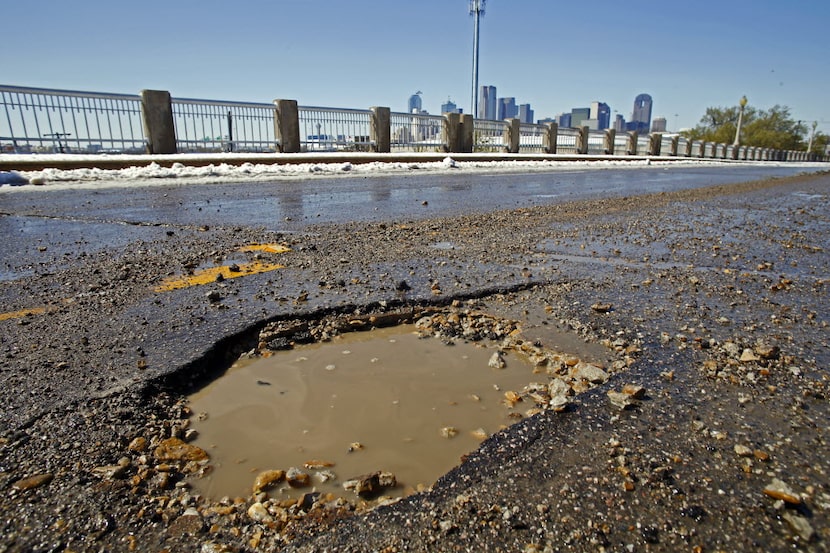
A pothole along Malcolm X Blvd on Thursday, March 5, 2015 in Dallas.
Nathan Hunsinger / Staff Photographer
If you spot a pothole, especially one that is dangerous or causing vehicle damage, the Texas Department of Transportation and the city of Dallas offer ways to report it.
For interstate highways and other state-managed roads, which are maintained by TxDOT, you can submit a report through the “Road Needs Repair” form online or call 800-558-9368 for urgent safety hazards.
For city of Dallas streets, you can report potholes by calling 3-1-1 within city limits or 214-670-3111 from elsewhere.
Miriam Fauzia is a science reporting fellow at The Dallas Morning News. Her fellowship is supported by the University of Texas at Dallas. The News makes all editorial decisions.
 Is your diet causing UTIs? Here’s how it may be at fault
Research suggests food choices could play a role in getting urinary tract infections.
 Will there be an eclipse in Texas in 2026? Here’s where to see eclipses this year
Dallas won’t experience another full solar eclipse anytime soon, but 2026 has some eclipses to watch for.
 ‘Doomsday Clock’ moves closer to midnight. Here’s why — and what it means
Scientists cited threats from nuclear weapons, climate change and artificial intelligence.
 Snow fleas in North Texas? Here’s how to spot them — and whether you should be concerned
The tiny arthropods thrive in cold, wet conditions and often appear as snow melts.