
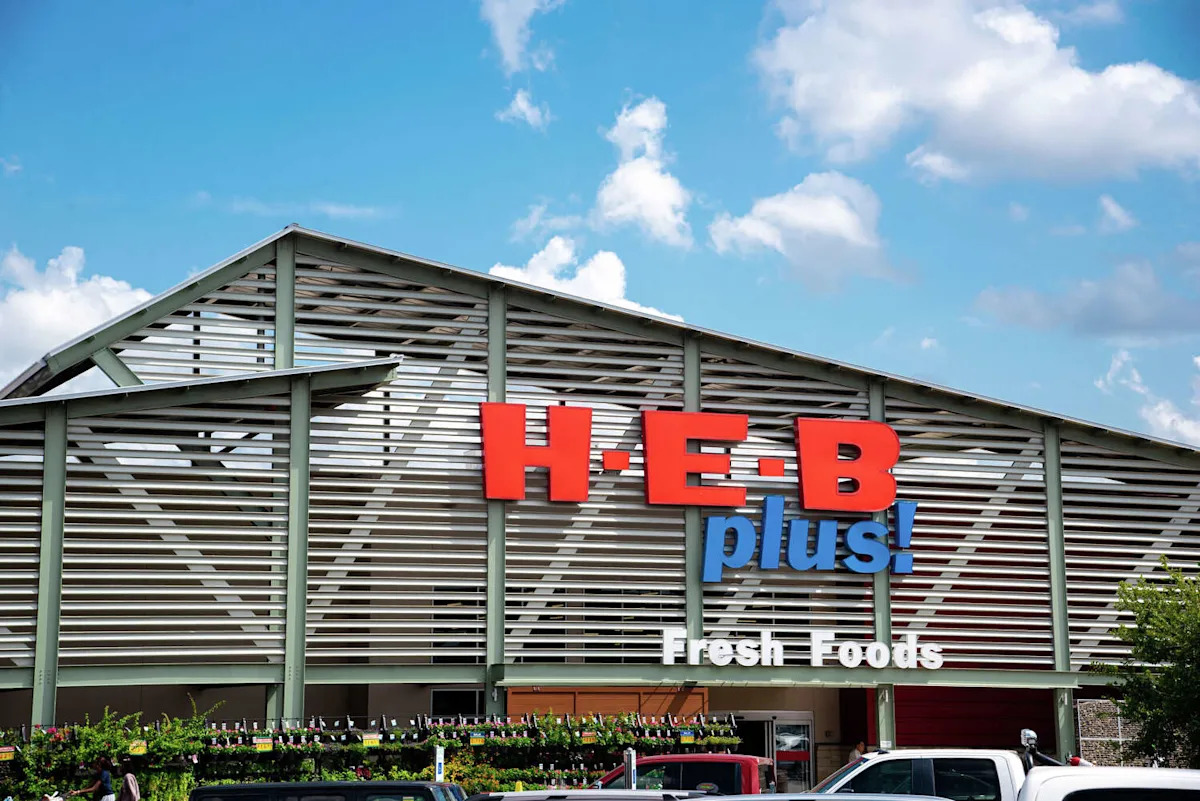
H-E-B might be king in Texas, but that doesn’t mean there can’t be some healthy competition.
The beloved San Antonio-based grocer oversees approximately 400 stores across Texas and Mexico. But, whether it’s in segments of the state that have yet to welcome their first H-E-B (cough, cough, El Paso and Dallas city limits), or bustling city hubs that have a wealth of grocer options to choose from, one begs the question: Who are H-E-B’s Texas rivals?
Kroger is one of H-E-B’s stiffest competitors, with the Ohio-based chain operating more than 200 stores across over 80 cities in Texas. The grocer giant is primarily clustered in the Dallas-Fort Worth and Houston metro areas, but does not have any stores up and running in Texas’ capital city. Austin previously housed a Kroger delivery center for a year between March 2023 and May 2024 off Ferguson Lane in Northeast Austin, but has never welcomed a full-service grocery store from the brand.
Walmart is another department store heavy hitter than has an expansive footprint across the Lone Star State, with an estimated 593 retail units and 22 supply chain facilities. Of that total count, it comprises 393 supercenters, 96 neighborhood markets, 82 Sam’s Clubs, 18 discount stores, four pharmacy-specific formats and an undetermined number of fuel stations. The big box retailer is also a heavy hitter when it comes to its “aggressive pricing to capture a substantial H-E-B market share,” according to an analysis conducted by retail analyst resource BCG Matrix. Austin is currently home to seven Walmart supercenters, per online store directory data.
Those seeking more bang for their buck might opt for warehouse retailers like Costco and Sam’s Club, with the former revving up its Texas expansion efforts and opening three new Texas locations this spring. Costco currently features more than 40 warehouse stores in Texas, including two in Austin and four already operational in area suburbs.
“These warehouse clubs compete by offering bulk items at competitive prices, appealing to value-conscious shoppers and impacting H-E-B’s pricing strategies,” BCG Matrix’s analysis read in part.
While H-E-B encapsulates Texas pride, a German-founded brand is coming for its Lone Star prowess. Aldi, an international discount supermarket chain, is home to approximately 129 stores across Texas, according to the company.
“Aldi’s focus on private-label brands and a low-price model presents another competitive challenge, particularly for customers prioritizing affordability,” BCG Matrix’s findings added.
Its customer base is primarily nestled in the Dallas-Fort Worth and Houston areas, but it has expanded into the Austin metro in recent years courtesy stores in Pflugerville and Georgetown and an upcoming one in Cedar Park. As for a store in Austin itself? No plans have been confirmed of an in-city limits storefront coming down the pipeline anytime soon.
This article originally published at Who are H-E-B’s biggest Texas rivals, and have they set up shop in Austin?.