
New Braunfels ISD trustees learned what is fueling stagnant student enrollment growth, and how private and charter schools may affect the district’s outlook over the next decade at a meeting Jan. 12.
What happened
Trustees reviewed a demographic and enrollment forecast, highlighting how housing growth, population shifts and the Texas Education Freedom Accounts are playing in a new demographic study from Population and Survey Analysts.
The study was presented during a Dec. 8 meeting by PASA, a Texas-based firm hired by the district to conduct a comprehensive demographic study. The study aims to help guide long-term planning for facilities, attendance zones and enrollment capacity, according to board documents.
Digging deeper
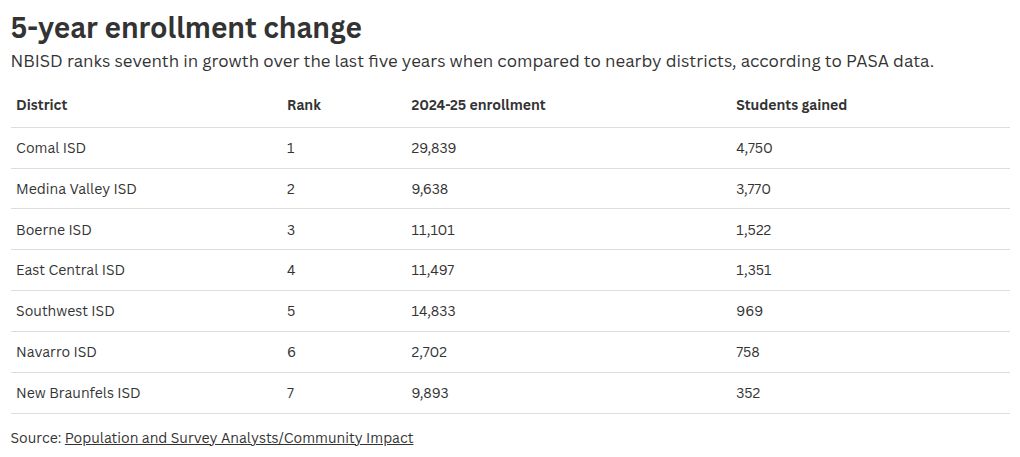
NBISD continues to experience population growth, largely driven by new housing developments, such as Veramendi, but student enrollment continues to plateau. Between 2019 and 2025, the district gained approximately 350 students, while the population within district boundaries increased by an estimated 3,000-4,000 residents, according to PASA’s data.
Although the numbers are steady, NBISD is one of the fastest-growing Education Service Center Region 20 districts, according to the data.
The district’s median resident age—about 43—is significantly higher than the statewide average, which typically reflects an influx of “empty nesters” and retirees, PASA President Stacey Tepera said.
Although births within the district have increased in recent years, kindergarten enrollment has continued to decline. The decline can be attributed, in part, to families choosing private schools, transfers or homeschooling options since becoming more available around 2018, Tepera said.
Private schools currently have a larger impact on district enrollment than charter schools, with more than 1,000 resident students attending private campuses. Charter school enrollment remains limited, but two additional charter schools have recently been approved to open in New Braunfels as early as 2027, Tepera said.
While enrollment is expected to shift among campuses, no elementary, middle or high school is projected to exceed capacity within the next 10 years.