
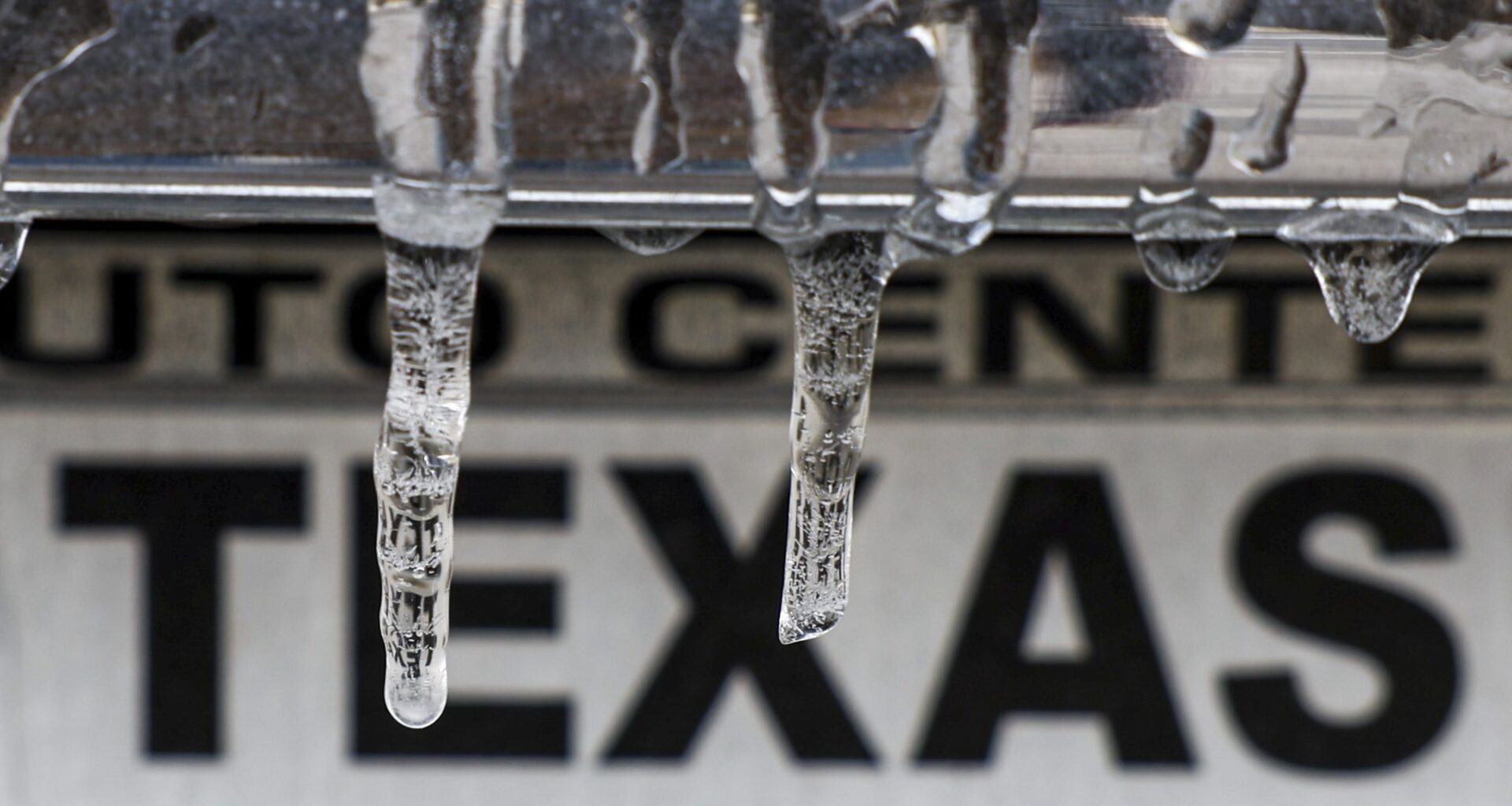
Ice is seen on a vehicle in San Antonio on Jan. 25, 2026. San Antonio stayed under or at the freezing mark for 47 straight hours during last week’s arctic cold front.
Andrew J. Whitaker/San Antonio Express-News
As South Texans prepare for another round of freezing weather, the Electric Reliability Council of Texas briefed regulators on how the state’s grid handled the first major winter storm of 2026.

The bottom line: No systemwide power outages were reported.
Article continues below this ad
While ice accumulation and trees falling on lines did spur localized outages as temperatures plummeted in Texas from Jan. 23 through Jan. 28, they were repaired by local utilities and weren’t a result of grid issues, Dan Woodfin, ERCOT’s vice president of system operations, told the Public Utility Commission on Thursday.
In San Antonio, 60 outages affecting 8,000 people were reported Sunday morning. San Antonio stayed under or at the freezing mark for 47 straight hours during the arctic blast. Elsewhere in the state, Houston spent nearly 30 consecutive hours at or below freezing while Austin recorded 50 straight hours, and the deep freeze lasted for 58 hours in the Dallas-Fort Worth area.
But ERCOT didn’t need to make any calls for conservation or issue an Energy Emergency Alert.
READ MORE: Arctic air is headed to Texas. Are the electric grid and local utilities ready?
Article continues below this ad
Woodfin said the forecasts of wind chill and frozen precipitation could have caused significant outages, but “what actually played out was much better than that.”
The winter blast did cause about 12 gigawatts of wind capacity to be forced out because of icing on Saturday, but the grid still had the capacity to handle the demand.
In addition, a large unit in Central Texas tripped on Saturday night, Woodfin said, causing an overload on transmission lines between Houston and San Antonio and spurring ERCOT to issue a localized transmission line emergency notice.
But the grid operator was able to quickly rebound due to a recent market change — real-time co-optimization plus batteries — that helped to redistribute ancillary services to relieve the overload. Before the new market design change that was implemented in December 2025, redistributing ancillary services like batteries would have required manual action that would have taken longer, Woodfin said.
Article continues below this ad
Repairs also had been made to CPS Energy’s Braunig Unit 3 before the freeze, he said, which helped the aging gas plant weather the storm.
RELATED: 2021 winter storm exposed grid weakness; part of Texas’ solution is being built near S.A.
Public Utility Commission Chair Thomas Gleeson said it’s hard to quantify the effect that weatherization has had on grid reliability. He commended ERCOT for its work that helped prepare the state for the storm, including having more reserve power available and conducting at least 450 inspections during this winter season.
“It’s evident to me that all of that investment, particularly in vegetation management and hardening, paid off,” Gleeson said. “I think everyone should be heartened by the way the grid performed based on all the infrastructure investments we’ve made.”
Article continues below this ad
The overall demand during the winter storm was lower than was forecast, which the grid operator attributed to cloudy weather conditions that led to warmer temperatures and also to school and business closures.
Large flexible loads like cryptomining also reduced their energy usage during this time, resulting in energy demand less than had been forecast.
In the coming weeks, ERCOT will present a more detailed report that will include a comparison to how the past weekend’s storm measured up to the winter storm of 2021, where statewide outages led to the death of at least 246 Texans.
Article continues below this ad
Newsroom meteorologist Anthony Franze contributed to this report.