
In the 1800s, segregated Dallas wouldn’t allow its Black residents to be buried next to their white neighbors, so the city was forced to find a final resting place for its formerly enslaved residents.
That place, named Freedman’s Cemetery, is now a meticulously-maintained memorial that may arguably stand as a testament to how Dallas is still working to come to terms with its racially segregated past and give all of its residents an equal shot at success.
February marks Black History Month and a chance time to examine historic monuments in Dallas that still hold significance for the city’s African American community.
“It tells you a lot about the history of Dallas,” said Marsha Prior, a cultural anthropologist and member of Remembering Black Dallas, a nonprofit organization that preserves and promotes Dallas’ African American history, life and culture. “To me, it’s a very important symbol of freedom.”
How history came to be
Breaking News
The earliest history of the Freedman’s Cemetery dates to 1861 as a burial ground for the city’s earliest Black residents. It covers about five acres just north of downtown Dallas at Lemmon Avenue and North Central Expressway. At one time, the site had more than 5,000 graves.
In 1869, Sam Eakins bought a one acre parcel of land for the Freedman’s Cemetery for $25, according to the Dallas County Pioneers Association. By 1884, three more acres were purchased for the cemetery. The last burials there were in 1925.
In the 1940s, Central Expressway was constructed adjacent to the cemetery, on a route previously acquired for Houston and Texas Pacific Railroad. The construction impacted portions of the cemetery. Other parts of the cemetery lay under Lemmon Avenue.
In the 1980s, during the widening of North Central Expressway, more graves were rediscovered in the area. In the 1990s, the Texas Department of Transportation discovered more remains during construction on the highway. First dozens, then hundreds and eventually more than 1,500 remains were exhumed and re-interred at the park alongside the spot.
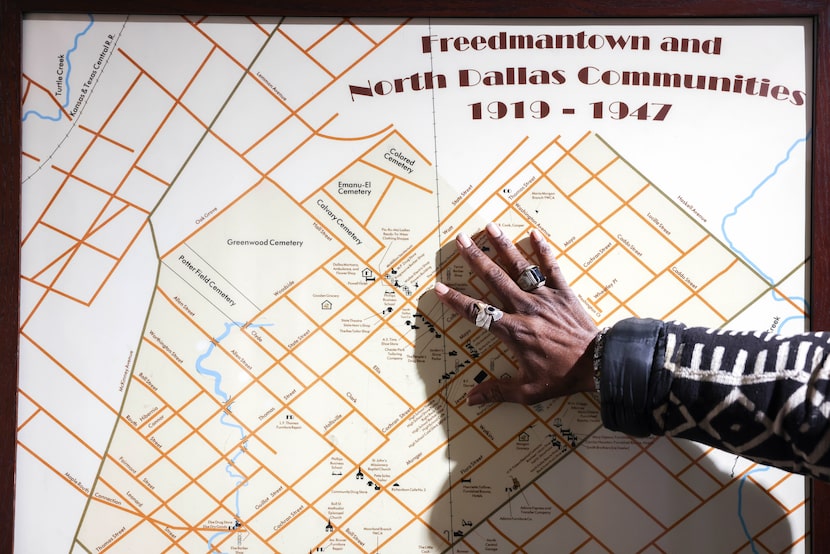
Professor Clarence Glover puts his hand on a map of Freedmantown as he shares insights about Black history in Dallas during Freedman’s Cemetery Facing the Rising Sun exhibition, on Saturday, Jan. 31, 2026, at African American Museum in Dallas.
Shafkat Anowar / Staff Photographer
Dallas created the Freedman’s Cemetery Memorial after the cemetery was rediscovered and dedicated it on Juneteenth 1999 to honor and remember the enslaved, formerly enslaved and their descendants who helped build Dallas.
Prior, 73, said when the cemetery was established, it was the only place where the city’s Black residents could bury their loved ones.
“They didn’t always have control over the burial of their loved ones,” Prior said. “They often didn’t have control over a lot of things.”
Kimberly Hill, an associate professor of African American History at the University of Texas at Dallas, said Freedman’s Cemetery represents a place where ancestors of the interred can honor their roots and connections to early Dallas.
The surrounding community was a place where people had “a chance at starting over with a life based on the type of work that they chose to do, rather than having to work on somebody else’s land picking cotton,” Hill said.
Understanding history can help us define our present and map out our future.
With many people around the world fighting for their freedom, Dallas’ historical cemetery stands as an example of how a group of people who were historically oppressed and enslaved could become free and prosperous.
“It’s just a reminder how fragile freedom can be and how important it is to protect it,” she said.
Where the past meets the present
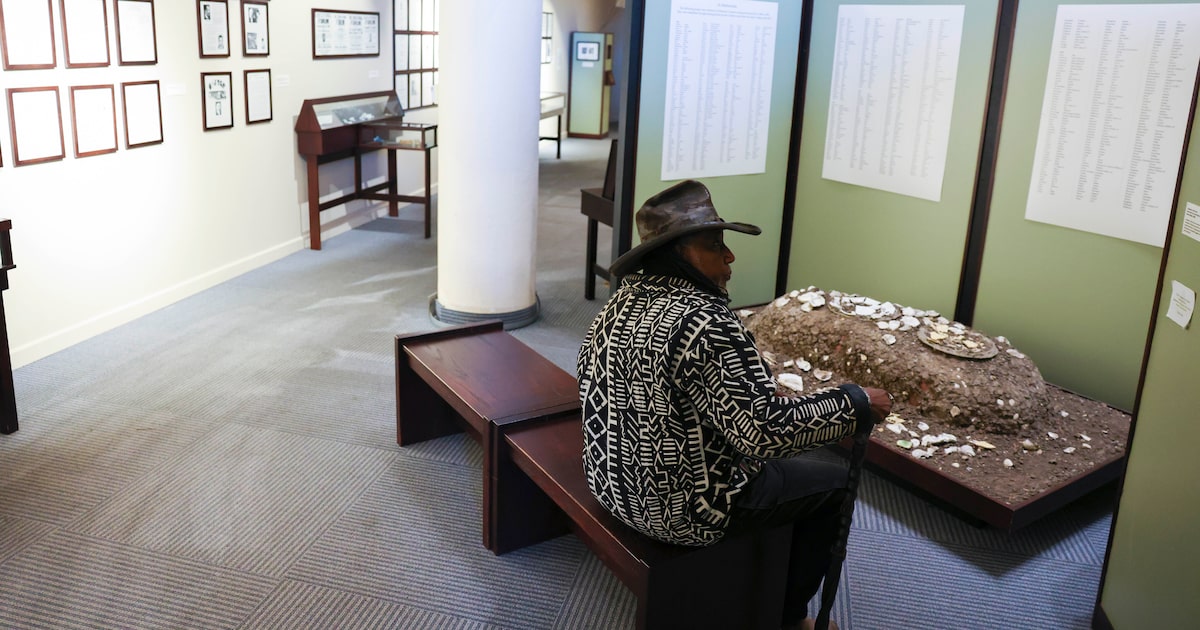
At the Dallas African American Museum, an exhibit called “Facing The Rising Sun” features photographs, objects and historical documents that provide a lens through which visitors can learn more about the community where the cemetery was located – Freedman’s Town.
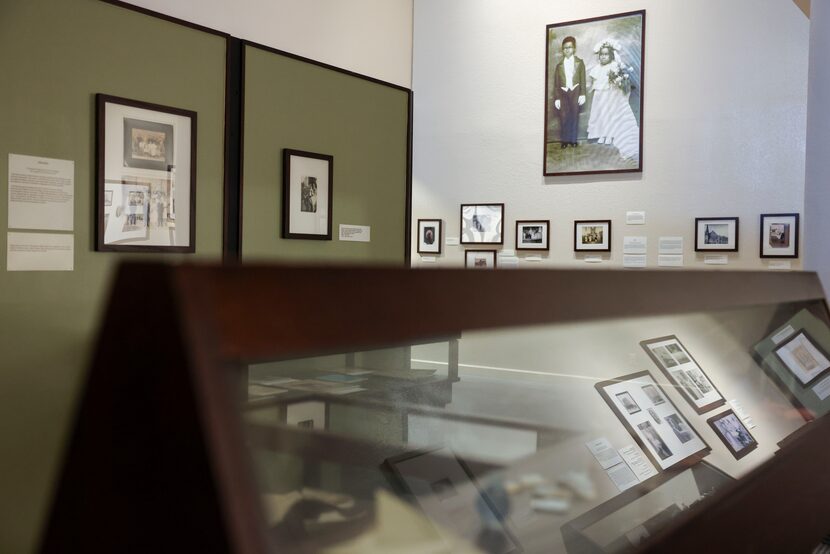
Exhibits at Freedman’s Cemetery Facing the Rising Sun exhibition, on Saturday, Jan. 31, 2026, at African American Museum in Dallas.
Shafkat Anowar / Staff Photographer
The community was born in the post-Civil War period when a group of freed African American people began purchasing 1-acre plots in a rural area adjacent to Dallas.
“They started these communities because they could not live anywhere else in the city of Dallas,” said W. Marvin Dulaney, historian and retired associate professor of history at the University of Texas at Arlington.
The area, once home to a vibrant Black community known as Freedman’s Town, is now a mix of residential and commercial high-rise towers, pulsing nightlife and pricey townhomes.
“Cemetery is not about the land,” said Clarence Glover, a historian and a member of the Dallas County Pioneer Association. “The cemetery is about the people who are buried in the land.”
Glover said the individuals buried in the cemetery were people who picked cotton, worked and built Dallas from the ground up. Their names are listed in the African American Museum’s exhibit, but not at the cemetery as there are no tombstones left there – except for a few.
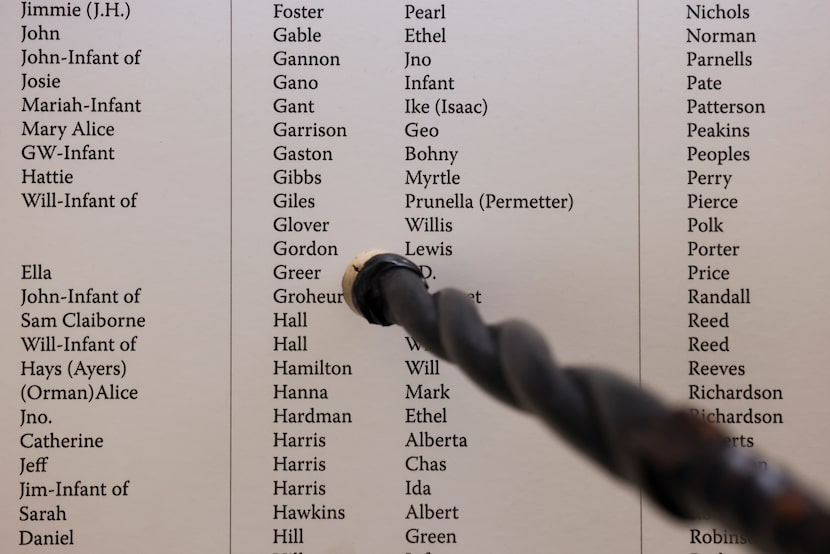
Professor Clarence Glover points out the name of his family member Willis Glover, among the display of names of people buried in the Freedom Cemetery at Freedman’s Cemetery Facing the Rising Sun exhibition, on Saturday, Jan. 31, 2026, at African American Museum in Dallas. The cotton signifies the Black cotton farmers and the family history of Professor Glover in cotton trade.
Shafkat Anowar / Staff Photographer
“I call them Sankofa pioneers,” Glover said. “Because we have to go back and reach … they were here as the early pioneers of Dallas County.”
The term “Sankofa,” Glover explained, is an African word which means to reach back and look at what is left behind, to move forward.
Glover said the names of those pioneers should be reflected in the Freedman’s Cemetery and the memorial for people to see as they walk the grounds of the historical site.
Dulaney said the Dallas Arts District was also a historic African American community.
He said now there are markers in that area, which includes the memorial near North Central Expressway, that designates this area as a historical site for African Americans in Dallas, but “unless you’re looking and have some understanding, you still will see it as an arts district in Uptown.”
Over the years, the cemetery has been impacted multiple times due to construction of roadways and railways, including the highway construction in the 1980s and 1990s.
Last October, the cemetery was vandalized with historical documentations and markers as well as plaques with poems being removed and torn down. In response to the incident, the city’s parks and recreation department enforced a curfew and increased security in the cemetery.
“It’s sad in a way, that we have people who are just so full of hate … that they will literally destroy a monument that has nothing to do with them,” Dulaney said.
Despite the recent vandalism, Freedman’s Town and its cemetery is a reminder of how African Americans during the time lived in isolated but vibrant communities where churches, businesses and a place to bury their loved ones flourished, Dulaney said.
“When you start to tell the story about African Americans in the city of Dallas, you have to start there,” Dulaney said.