
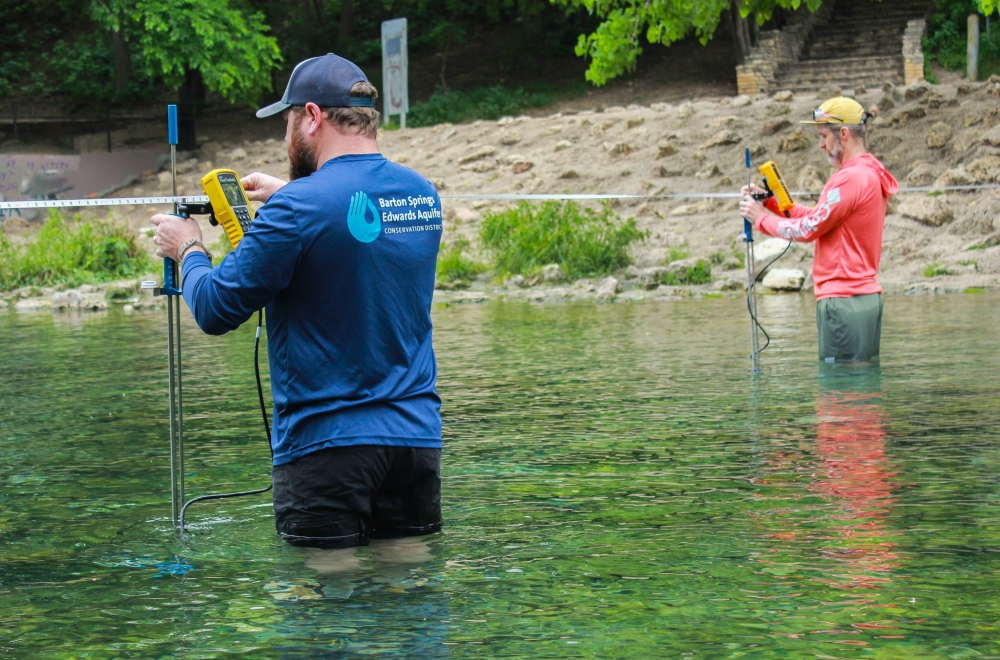
Well owners and residents from South Austin to San Marcos could soon see the region’s worst drought declaration in almost 40 years as the area approaches 44 consecutive months in a drought, increasing costs and labor for well owners.
Current situation
Groundwater conditions within the Barton Springs-Edwards Aquifer Conservation District are quickly nearing historically low levels, said Shay Hlavaty, Barton Springs-Edwards Aquifer Conservation District communications and outreach manager.
 The Barton Springs-Edwards Aquifer Conservation District coverage area stretches from South Austin to San Marcos. (Courtesy Barton Springs-Edwards Aquifer Conservation District)The district warns that without significant rainfall, it may soon issue a Stage 4 Emergency Response Period declaration for the first time in its 39-year history, the most extreme drought stage the district can issue.
The stages include:
Water Conservation PeriodStage 1 Alarm DroughtStage 2 Critical DroughtStage 3 Exceptional Drought (current stage)Stage 4 Emergency Response DroughtZooming in
The recent winter storm did not produce enough sustained flow in creeks or streams in the aquifer recharge zones, an essential aspect to reducing the drought effects, according to the district.
The district determines drought stages by examining groundwater levels at the Lovelady Monitor Well in South Austin and flow rates at Barton Springs. The Lovelady Monitor Well could drop below a Stage 4 threshold by late March, according to the district.
Groundwater levels in wells in the Edwards and Trinity aquifers throughout the district have seen a similar drop.
The local impact
About 50% of Texans rely on groundwater, Hlavaty said. Residents operating domestic wells in the district may be required to lower their pumps, a costly and time-consuming endeavor.
Residents receiving water from municipalities in the district’s coverage area will see increased water restrictions.
Affected municipalities will set restrictions to meet district requirements as they see fit, such as increased costs or fines for overconsumption. If they do not meet the district’s restriction needs, they may be fined or receive penalties, Hlavaty said.
Next steps
Hlavaty urged pump owners and residents to conserve water by avoiding outside watering, a major contributor to individual water consumption during the summer.
Residents should quickly fix any leaks in their homes to prevent unnecessary water usage.
Hlavaty said other small acts of water conservation can be crucial, including:
Turning off the sink while brushing teethTaking shorter showersEnsuring that laundry machines and dishwashers are full when running loads