
Tom Noonan, president & CEO of Visit Austin, and Trisha Tatro, director of Austin Convention Center, speak to CMW’s Iain Stirling about the city’s ambitious expansion plans and what makes the Texas capital a compelling destination for business events
Austin, Texas, is undergoing a transformation that few convention destinations can match. With a complete rebuild of its convention centre, a major airport expansion, and billions of dollars in urban development, the city is positioning itself as a serious contender in the North American meetings industry.
At PCMA Convening Leaders in Philadelphia, Tom Noonan and Trisha Tatro sat down with CMW to discuss the city’s ambitious plans and the philosophy driving one of the industry’s most significant infrastructure projects.
More than just a meeting
Visit Austin has launched a new advertising campaign that encapsulates the city’s unique proposition. “It’s called More Austin,” explains Noonan. “It’s our advertising pitch for the meetings industry about when you meet in Austin, you’re getting so much more than you used to get. We’re incorporating culinary and our music scene and nature and all that stuff into the offers.”
Tom Noonan
The timing is deliberate. Austin is investing heavily on multiple fronts at once. “We’re currently undertaking a 32-gate airport expansion,” says Noonan. “Scheduled for completion around 2031, the project will nearly double the airport’s current size.”
The airport expansion has attracted significant carrier investment. “Delta Airlines has made a huge investment, buying nine new gates. Southwest Airlines is buying nine new gates and bringing 2,000 employees to Austin, Texas,” Noonan reveals. “When they finish the airport, we’ll actually have more Southwest Airlines flights out of Austin than they have in Dallas or Houston.”
International connectivity is also expanding. “We’re actively working to secure new routes,” says Noonan. “We already have twice-daily service from London, flights from Amsterdam and Germany, extensive connectivity across Canada and Mexico, and a Copa Airlines service via Panama City. We’re currently exploring additional options, and we see international air access as a major driver of future growth.”
The live music capital gets louder
True to its reputation as the Live Music Capital of the World®, Austin is adding significant entertainment infrastructure. “We have a new AEG arena, about 4,000 seats, being built which will open in February 2027,” says Noonan. “It’s another music venue. We’re the live music capital, so it’s nice to have another 4,000 seats for concerts every single night.”
On the University of Texas campus, a new 6,500-seat arena has been proposed for women’s volleyball and concerts. “We opened the Moody Center a few years ago, and Billboard magazine over the last three years has ranked it number one in the world for arenas its size in terms of revenue and performances,” Noonan explains. “They’re going to build a smaller version of that same arena right next door.”
A fifth-generation convention centre
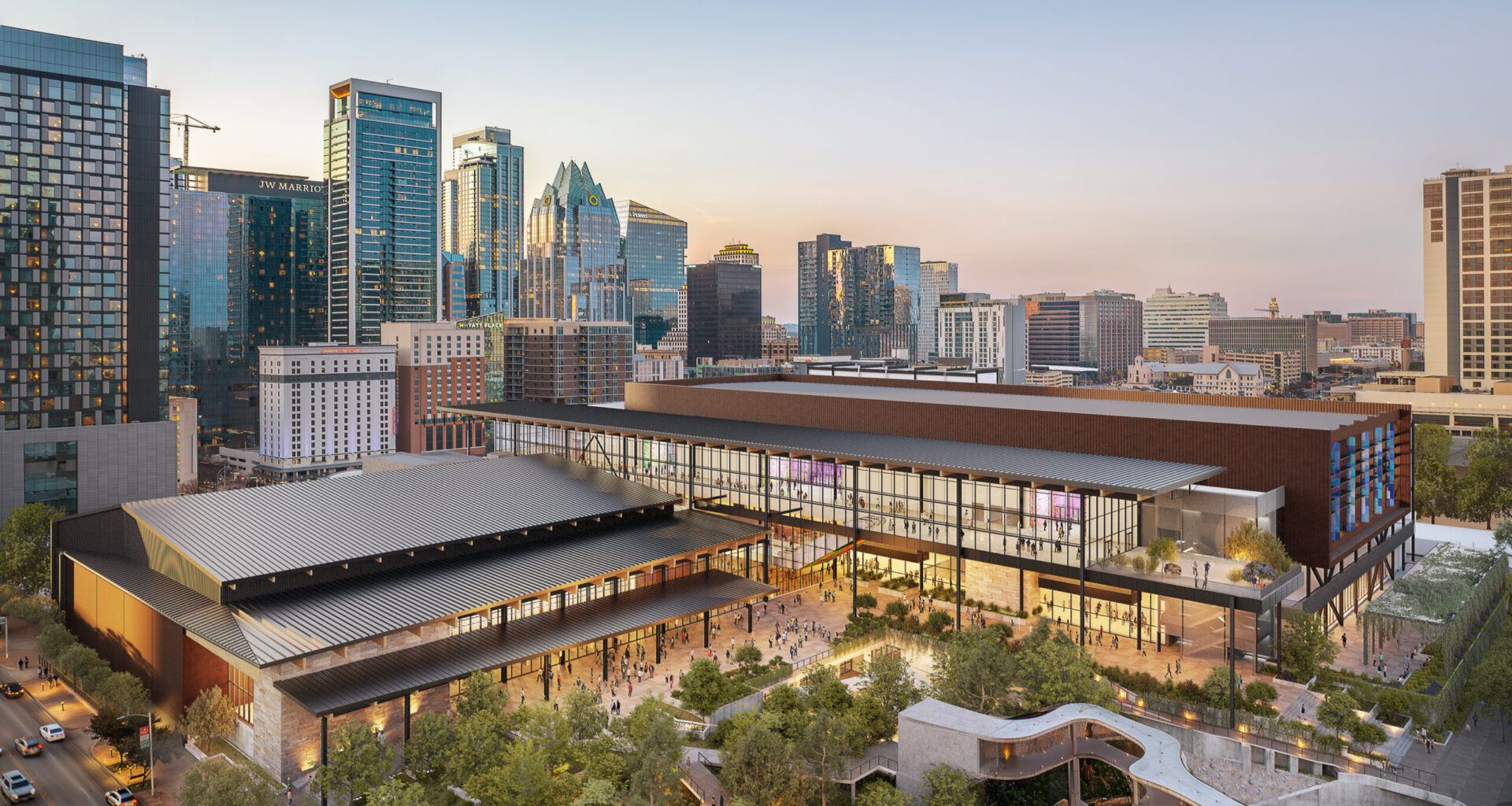
The centrepiece of Austin’s transformation is the complete rebuild of its convention centre – a project that closed the facility in March 2025 and won’t reopen until the end of the decade. It’s a bold move that reflects both ambition and necessity.
“We closed our convention centre in March last year,” confirms Tatro. “We’re doing a complete redevelopment. We tore down the existing convention centre in its entirety, and we are in the process of starting to excavate 55 feet deep below ground, six city blocks, to put in our exhibit halls.”
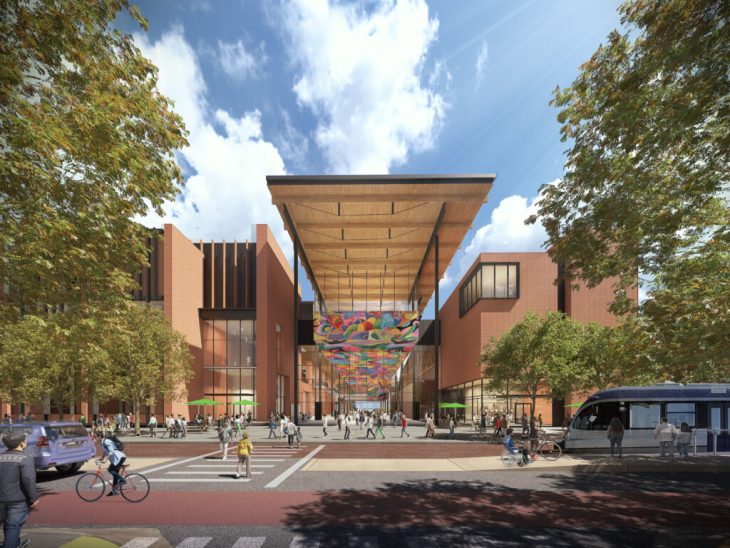
Austin Convention Center West view from 2nd Street and Trinity Street
The scale is impressive. “We’re nearly doubling the size of the convention centre on the same six city blocks that we were in before, plus having a half city block of outdoor event space,” says Tatro. The previous facility offered 365,000 square feet; the new building (620,000 square feet) will provide significantly more through vertical stacking.
But Tatro is adamant that this isn’t just about square footage. “We’ve been very busy the last two years designing a brand-new state-of-the-art convention centre that I believe will be different than anybody else. It is uniquely, authentically Austin.”
Designed by and for the community
What sets this project apart is its deep integration with Austin’s culture and values. “We’ve done a lot of community engagement,” says Tatro. “We’ve got a really unique city with art and food and green spaces. As we designed this facility, we wanted to make sure that every ounce of this building represented the culture and the people of Austin.”

Trisha Tatro
The design philosophy extends to every detail. “Our brand-new ballroom is themed and designed after an old Texas dance hall, with very high ceilings, natural wood exposures, and amazing views to the outside,” Tatro describes. “We’ve got a 92,000-square-foot flex hall on the top floor of the building with spectacular views, huge pre-function spaces, and an outdoor terrace.”
Connectivity to the surrounding urban fabric has been carefully considered. “We’ve got now a connection to the Waterloo Greenway on the Cesar Chavez side of the building. We built a new pedestrian access that will make it so you can walk right through the waterline to Rainey Street, which is a huge district for us,” says Tatro.
Art as architecture
Perhaps most remarkably, the new centre will feature $17.7 million in local art, but not in the traditional sense. “We’re doing it integrated into the architecture, which is another unique piece,” explains Tatro. “It won’t just be paintings and sculptures; it will be the actual architecture.”
She points to an example in the renderings. “This will run three city blocks outside of the building, in the building, and to the other side, and it will be three different artists working together.”
The philosophy extends to sustainability as well. “We are going to be the first certified carbon-free convention centre in the world,” says Tatro. “There will be no gas in our building, no boilers. Everything will be run from our chilled water plant that is part of the project.”
The construction process itself reflects these values. “Over 70 per cent of the building that came down has either been recycled or reused in some way,” Tatro notes. “Part of the dirt that is being excavated right now is going to be the foundation for a new high school out near the airport.”
Breaking the convention centre stereotype
Tatro is particularly proud of how the new facility will serve both visitors and locals. “A lot of convention centres get a bad rap in cities – that you only bring visitors there, you’re a big box, locals don’t want to come there,” she observes. “But this, there’s going to be street-level retail that will be public-facing. There’s an outdoor courtyard, or outdoor event space, which connects to the trail. We’ll be able to activate that for farmers’ markets and the local community.”
The art installation will also serve as a draw. “It’s going to become a destination that people may want to just come in and do the tour of the art,” says Tatro.
Third Street will be reinstated through the site. “That street itself is part of your event space, and then you walk right across the street to that outdoor event space, and it’s all fully integrated,” she explains. “The lenticular fins on the exterior will also be available for projection, so as you’re having your event here, you’ll be able to project onto the actual building what is happening.”
Tatro calls it a “fifth-generation convention centre. You’re building an urban, multi-level convention centre within the same six city blocks, but it’s much more walkable, it’s interesting, it’s integrated into the fabric of what Austin is. And there’s not a back side of the building. Every side is programmed and activated.”
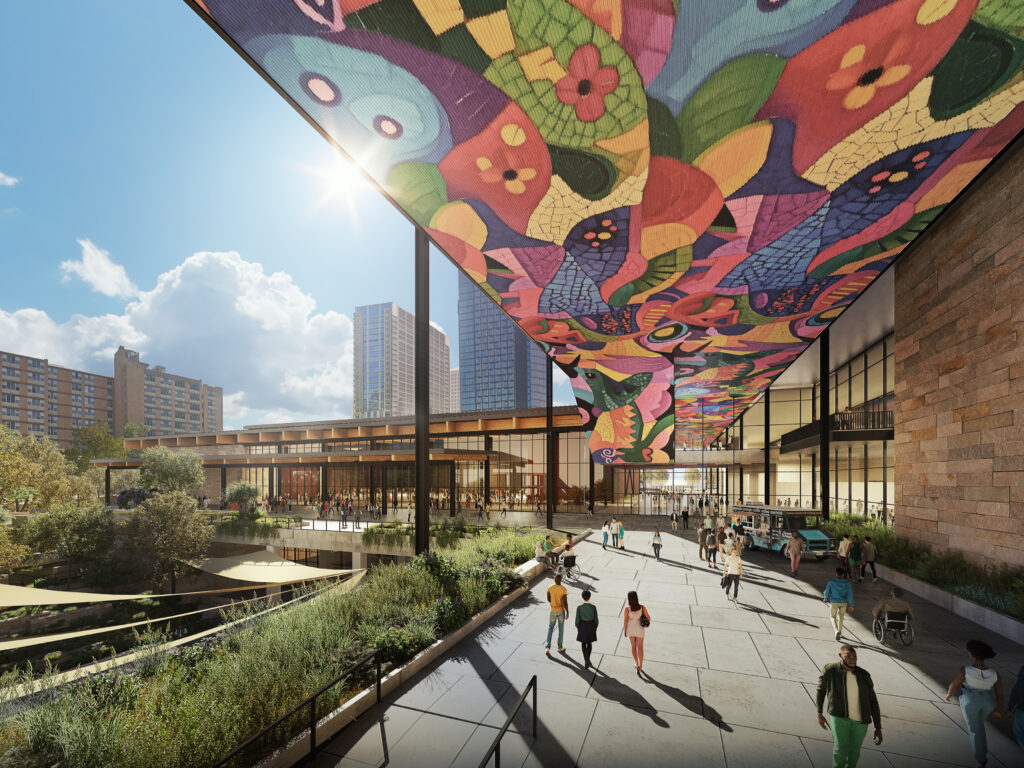
Austin Convention Center Outdoor event space in front of the ballroom and lobby
The market response
The need for expansion was clear. “The building was a great, functional building in the past, but it just wasn’t big enough,” says Tatro. “Half the time we were taking leads and just throwing them away because we were already booked.”
The booking pattern for the new facility has surprised even seasoned industry professionals. “We used to just start booking windows, usually three years and under,” says Noonan. “Somebody was booking us for 2040 – we’ve never done that before. We’re getting folks that really have a pent-up demand for the city who have never been able to get into our city because of the size of the building.”
Austin’s market mix is shifting as well. “We traditionally see a lot of corporate meetings that come to Austin,” says Noonan. “We’re big in corporate. But we’re also getting more medical, more association. We’re booking more sports business in this building – sports conventions and volleyball and things like that will take place here.”
The corporate sector has particular strength given Austin’s evolution as a tech hub. “We’re a huge tech centre – number one. You’ve got all the Google fibre, Apple, all these corporate headquarters,” says Noonan. “We’re the state capital. University of Texas is there. And about a decade ago, we built the first new major medical school in America at the University of Texas. We will become even bigger in medical because of that.”
Infrastructure to support growth
Hotel development has kept pace with demand. “Back in 2014 we were 1,600 rooms downtown. Now we’re over 15,000 rooms downtown,” says Noonan. “There’s also other hotel projects that are getting finished up right now, and we’ve got others having conversations about building as well. I think it’s safe to say we’re probably somewhere around 17,000 to 18,000 eventually.”
The walkability factor is crucial. “This building is surrounded by hotels – you’ve got the Fairmont, the JW Marriott, the Hilton Hotel, and the Four Seasons,” describes Noonan. “You’ve got Marriott Courtyards and Residence Inns, Hampton Inns – you’ve got high-end boutique, you’ve got big-box hotels – all walkable.”
Noonan adds with a smile: “I don’t remember the last time we ran a shuttle bus for anything in our town.”
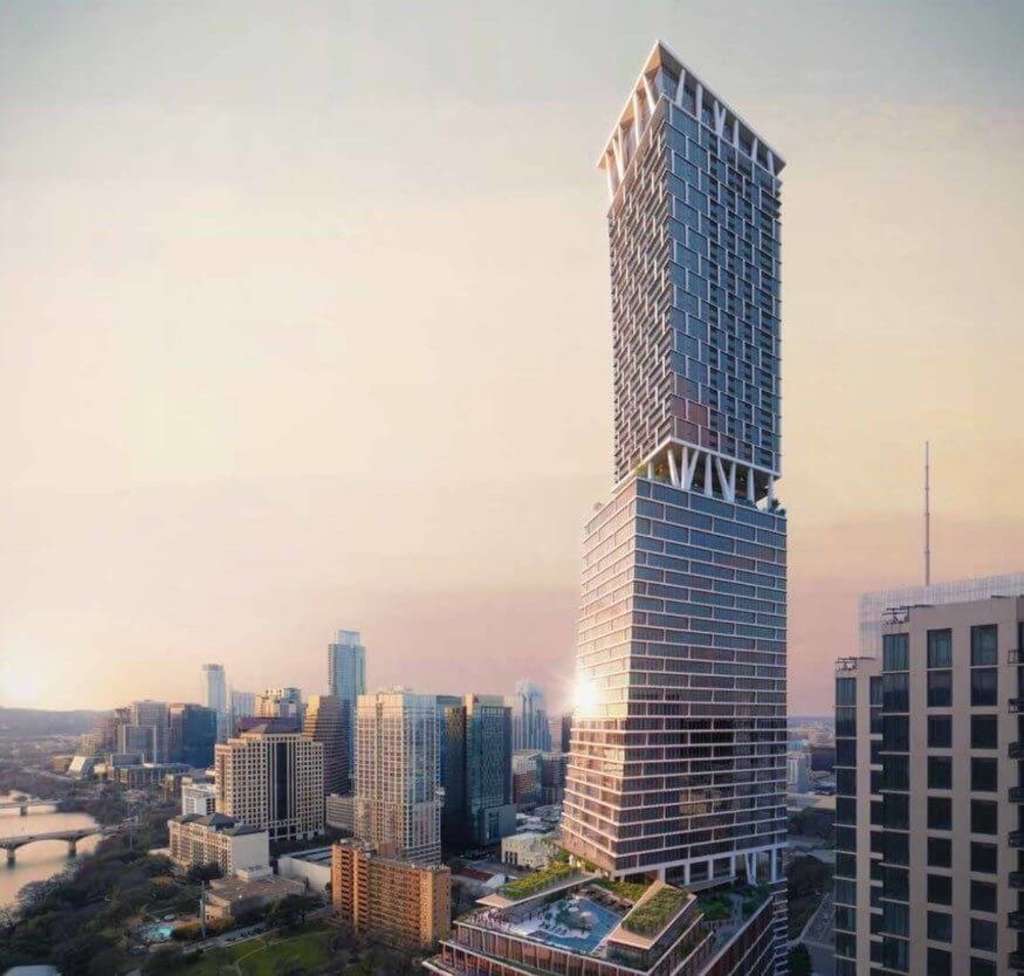
One Hotel Austin
Urban renaissance
Beyond the convention centre, Austin’s urban core is experiencing dramatic change. “Right across the street, there’s Rainey Street from the convention centre, and they just built the Waterloo building, which is the tallest building in Texas now at 1,025 feet, with a 1 Hotel in it and office space and condos,” says Noonan. “That whole Rainey Street area is getting redone.”
New pedestrian infrastructure ties it all together. “There’s a trail called Waterloo that goes right past the convention centre and goes on to UT campus,” Noonan explains. “Now you can walk from UT down to Lady Bird Lake and never cross the street. You have this kind of park setting that’s being put in, and then Sixth Street is getting redone with new restaurants, bars, attractions, and retail. That’s all bordering on the convention centre as well.”
Looking ahead
As construction continues on the convention centre and airport expansion, Austin is playing a long game. The city is betting that authentic integration of local culture, aggressive sustainability standards, and genuine community benefit will create not just a larger convention centre, but a fundamentally different kind of venue.
“The values of Austin – the things that we care about: art, sustainability, outdoor space, nature – those are all being incorporated into this new design,” says Noonan. “Which is why I believe it will be so transformative, because it truly represents the city and the culture of who we are as a people.”
For meeting planners looking beyond traditional convention destinations, Austin’s message is clear: when this transformation is complete, they’ll be offering something ground-breaking and genuinely new.
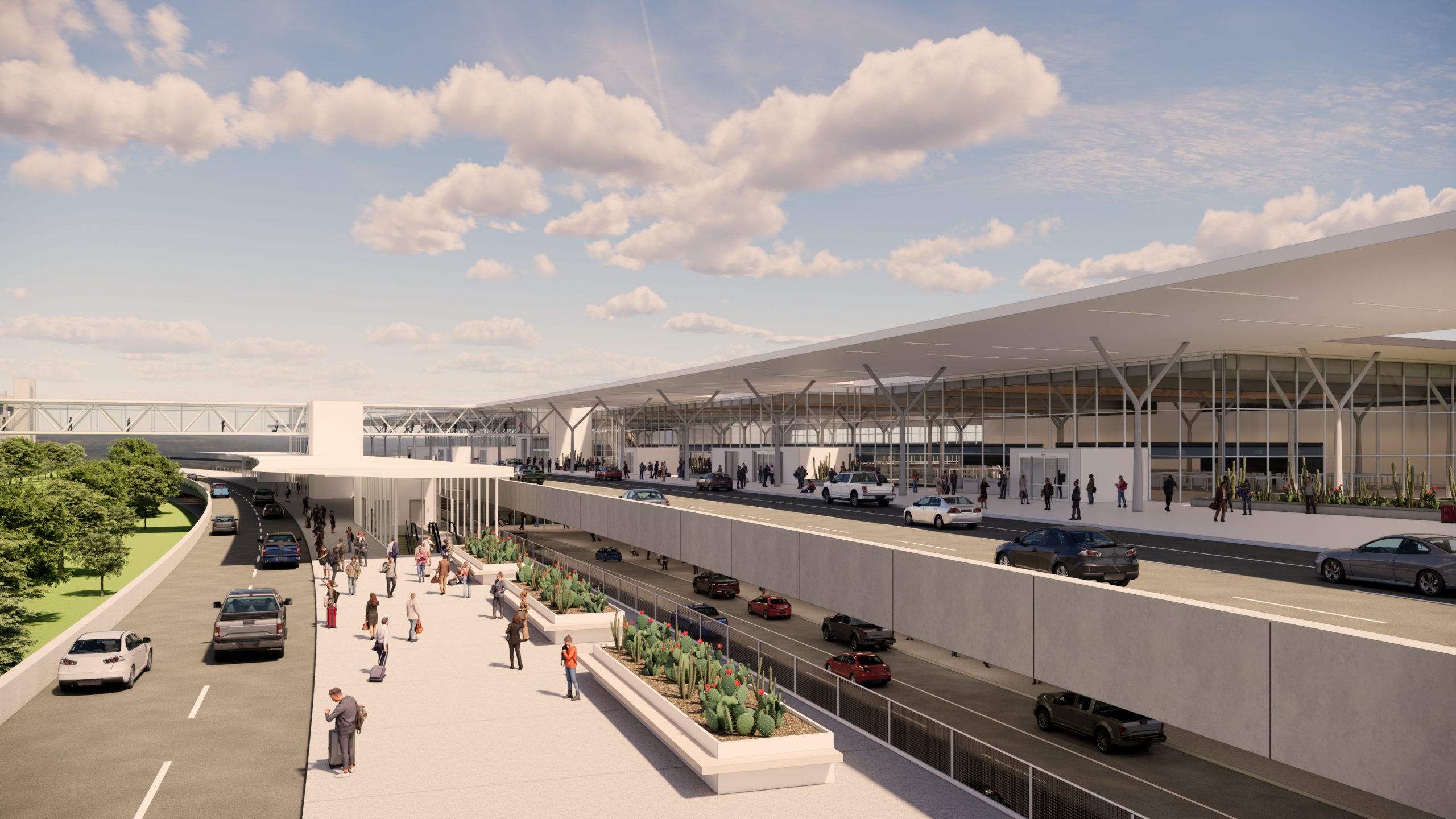
AD Hall Rendering Exterior. Credit Austin Bergstrom International Airport