
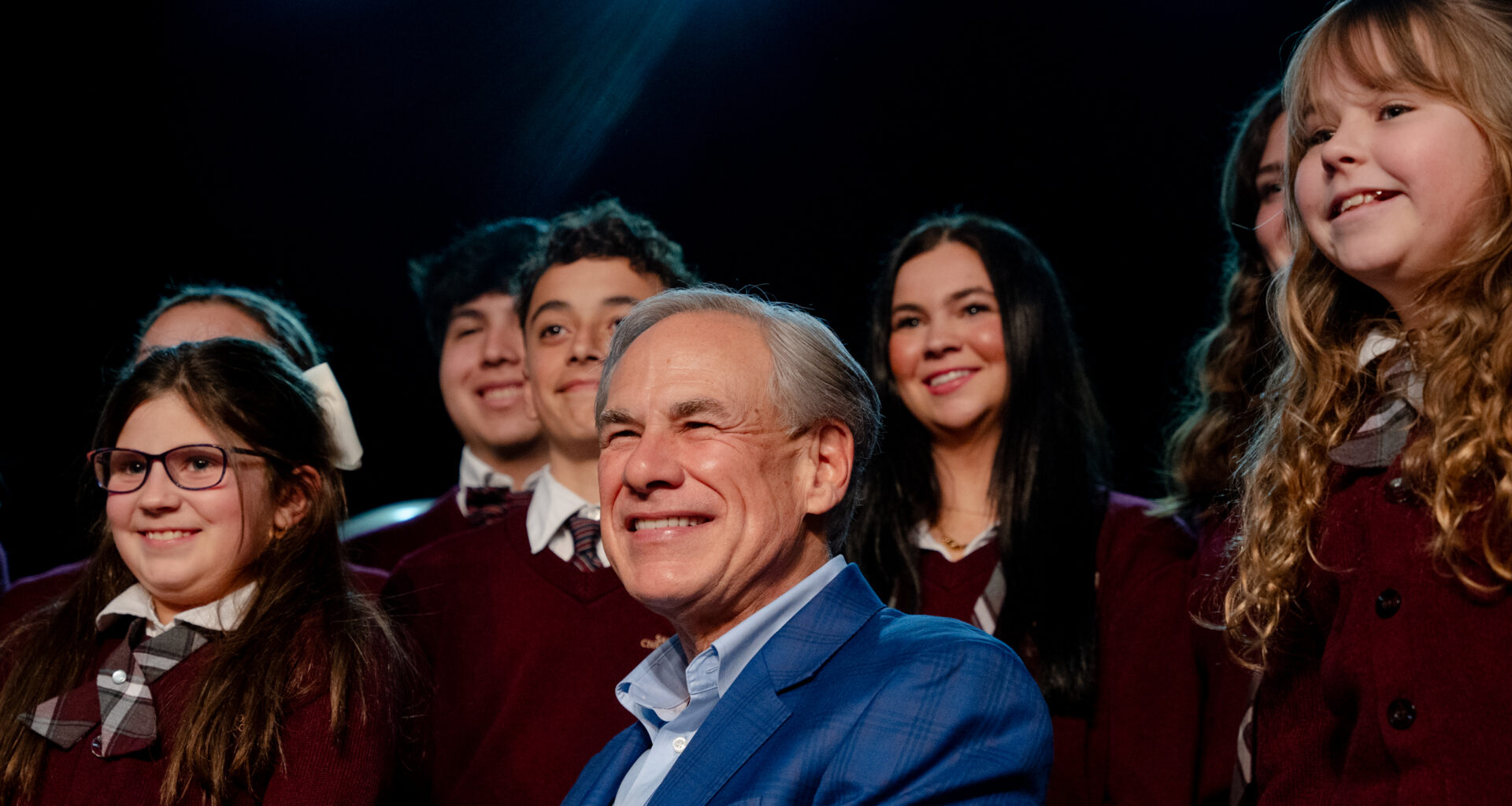
Texas families will soon be able to access $1 billion in taxpayer dollars through education savings accounts, also known as school vouchers, to pay for private school tuition, tutoring, transportation and several other education-related costs.
Passed during the 89th legislative session, the state is calling the universal program Texas Education Freedom Accounts. Families can start applying Wednesday, Feb. 4.
The application portal closes March 17 with selected families getting funds for the 2026-27 school year. State officials estimate the first year of TEFAs will serve about 100,000 families, with awards averaging about $10,000.
“The biggest variable is going to be the kinds of students who apply,” said Travis Pillow, the newly hired spokesperson for the TEFA program. Pillow oversaw similar efforts for the school voucher program in Florida.
While Texas is using a universal eligibility process, the application does have a prioritization system that puts siblings, low-income students and special education students at the top.
Over 1,500 private schools have been approved to receive TEFAs statewide — roughly 178 of them are in the San Antonio area, including New Braunfels, Floresville, Castroville and up to Kerrville.
Pillow said there is no deadline for schools or vendors to apply to receive TEFA money, so the list is growing every day.
The voucher-like program could also grow from $1 billion — already the most expensive such program to launch in the United States — to much more in the future, as officials analyze how many families apply, what kind of students they are and how much each student is awarded.
School voucher-like programs have also been launched in Arizona and Florida.
This isn’t the first time Texas has awarded taxpayer dollars for families to use on education, launching a much smaller version of the program years ago for students with disabilities who had to be homeschooled that awarded participants $1,500.
It may be the largest vouchers debut, however, since Texas is using universal eligibility on Day One, compared to a state like Florida, which first launched its program 25 years ago to support low-income students, later creating a program for students with disabilities in 2014 and finally moving to universal eligibility in 2023.
“There’s a sense of urgency,” said Inga Cotton, head of the School Discovery Network, a local group who promotes school choice and helps families find the right education fit for their children. Once the portal closes in March, families will have to wait until next year to apply, “raising the stakes.”
How to apply for a TEFA?
Undocumented children in Texas are not eligible to apply for a TEFA, but applications are open to everyone else.
To apply, families will need proof of their child’s legal status, a tax return form from 2024 or 2025 and proof of residency.
While families are expected to get $10,000 per student on average, special education students could receive up to $30,000. For prioritization purposes, families with special needs kids also need to submit a disability certification form signed by a licensed professional.
TEFA amounts are based on the school district a family lives in, equaling 85% of how much money that school districts get on average per student.
For additional funding, applicants also need to submit official individualized education plans, which are created after a local school district or charter school tests a child for special needs.
Pre-K eligibility is much narrower, following the same criteria Texas uses to determine whether a child is eligible for free preschool. Homeschooling families and families who enroll students in non-accredited private schools can receive $2,000.
TEFA awards are not on a first-come, first-serve basis, said Pillow, who oversaw similar work for the voucher program in Florida.
“We might see day one enthusiasm, but children will be treated the same,” he said. As long as applications are in before midnight on March 17, “timing of when you submit your application won’t affect priority.”
There is no deadline for private schools or vendors to get on the list.
Private school participation hinges on being an accredited school under the Texas Private School Accreditation Committee, being a “proven” operator that’s successfully run a campus two years that administers a standardized test.
As for vendors and education services, the state already fast-tracked about 200 vendors who were participating in the Parent-Directed Special Education Services Program, a one-time $1,500 online grant for parents’ and guardians’ special education student enrolled in a Texas public school.
Families will be notified of their award in early April getting at least a quarter of the funding by July 1, half of the money by October, and the rest by April of 2027.
Pillow said the TEFA portal were made to be as user friendly as possible: applications are available in Spanish, the site is working in partnership with other state agencies to verify documents quickly. The state comptroller’s office is currently undergoing “robust” testing to “meet Texas-sized demand.”
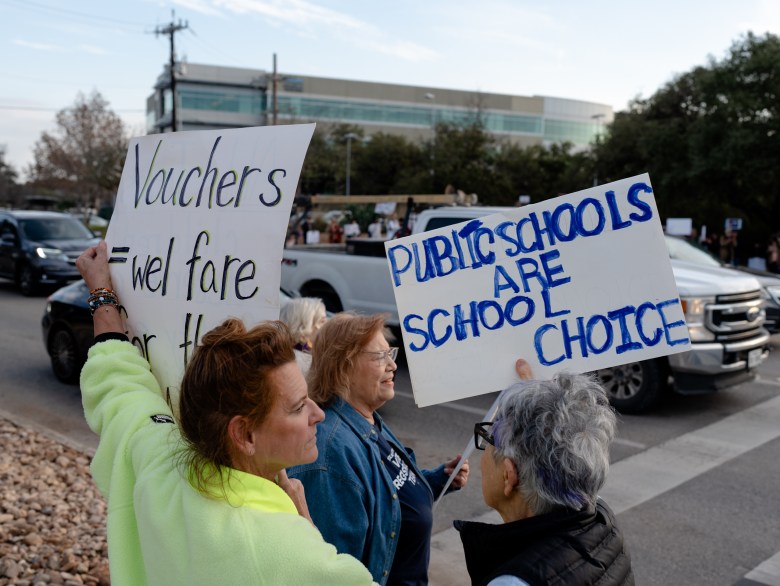 A group of protestors gathered across the street from a pro-school voucher event featuring Gov. Greg Abbott and Speaker Dustin Burrows in February 2025. Credit: Brenda Bazán / San Antonio Report
Effect on public education
The road to establish a school voucher program in Texas was long and hard-fought. Before passing through the regular 2025 Texas Legislature, Democrats and rural Republicans in the House routinely killed voucher efforts, an issue championed by Gov. Greg Abbott in the last few years.
In 2023, Abbott withheld additional public schools funds when lawmakers didn’t pass vouchers. He also campaigned hard against Republicans who opposed vouchers.
It was only until last year that vouchers had enough votes to get through the House and were passed and signed into law by Abbott before he signed off on a public school funding bill.
Now a reality, TEFAs are likely to keep getting scrutiny from state Democrats and public school supporters.
On Monday, the public education advocacy group Our School Our Democracy launched the Texas Center for Voucher Transparency as a “central, public-facing hub for research and data, policy recommendations, and a confidential system for Texans to report concerns” about the new program.
Voucher opponents predict that the program will take students away from traditional public schools, several of which are in financial pinches as student enrollment drops and costs keep going up.
In Texas, public school funding is based on average daily attendance. Public school supporters also say the state has not funded schools at the rate it should to keep up with inflation — base per-pupil funding only increased by $55 last year.
Most San Antonio schools districts are in multimillion budget deficits and are bracing for the surge in competition for students.
Last year, Northside ISD, the largest local district, announced it would open its boundaries to all students in the greater San Antonio area. At the time, Superintendent John Craft said the move was in direct response to the passage of school vouchers.
Other districts are dealing with the budget woes by closing under-enrolled campuses are putting more emphasis on “choice programs” or magnet schools hoping to pad enrollment.
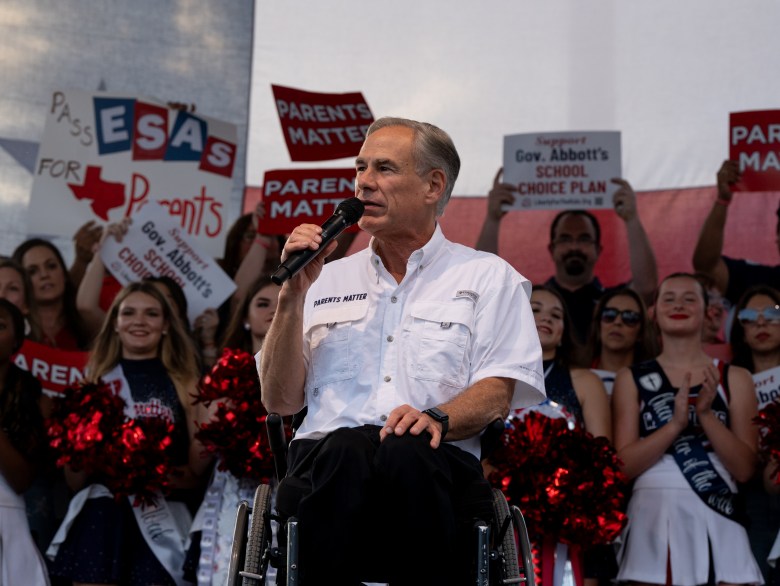 Texas Governor Greg Abbott at the Parent Matter Tailgate at Cornerstone Christian School in 2023. Credit: Brenda Bazán / San Antonio Report
Anti-voucher voices also worry about accountability standards. Unlike public schools, private schools are not required to accept all students regardless of background and aren’t required to issue state exams.
School districts are also required to perform special needs assessments for students upon parents’ requests, whether they’re enrolled at the district or not. This is the only way to get an approved individualized education plan needed to get more TEFA funding for special ed students.
“I went through this process with my own son, and I always got the feeling that the ISDS were stretched, like it’s hard to find qualified people to do those evaluations,” said Cotton, a mother of two.
Concerns over voucher implementation
While state officials are confident in the new program, concerns remain from anti and pro voucher voices alike.
Cotton, a longtime supporter of school choice, is worried about an “unequal distribution of information.”
She thinks that families who may need TEFAs the most — low-income households with disabilities — may not be aware of the new program, whereas families already in private school would be most likely “in the know” and may benefit more.
In fact, several private schools opting into vouchers are already communicating with parents, guiding them through the application process and preparing to see at least a small increase in students.
During a recent school fair put on by School Discovery Network, officials said there were more private schools present than ever before. The group has a waitlist for their next event in March.
Previously called the San Antonio Charter Moms, the School Discovery Network rebranded last year in part because of school vouchers.
“We knew it wasn’t enough just to talk about charter schools anymore, that the private schools were going to become an important section of what we covered,” Cotton said during a Jan. 24 event with dozens of private and charter schools present.
Cotton is also concerned about TEFA’s priority system. Families who enroll in the TEFA program but later drop out or move out of the state would be the least prioritized group if they re-apply, which could be a problem for military families forced to constantly move.
Still, Cotton says she’s enthusiastic about the program and what it could mean for families with special needs students in particular.
“It is the biggest change in education since we founded the [School Discovery Network] in 2012,” Cotton said.
What vouchers mean in San Antonio
San Antonio has a long history with voucher-like experiments. It’s here where local businessman turned policy leader James Leininger started the Horizon Scholarship program for poor San Antonio students to attend private schools in the 1990s. The controversial initiative only lasted a few years, leaving mixed results and bitter feelings among public school advocates.
School vouchers would go on to become Leininger’s white whale as he co-founded the Public Policy Foundation, a conservative think tank with heavy lobbying power.
Vouchers could also mean a stronger Catholic school system in San Antonio, affected by under-enrollment in recent years leading to a handful of closures. Last year, the Archdiocese of San Antonio announced all of its private schools could opt into the voucher program.
Currently, there are 9,000 students enrolled at schools across more than 30 schools in the San Antonio diocese, a number that could increase by the next school cycle.
Vouchers also mean an influx of new schools and service providers moving into Texas.
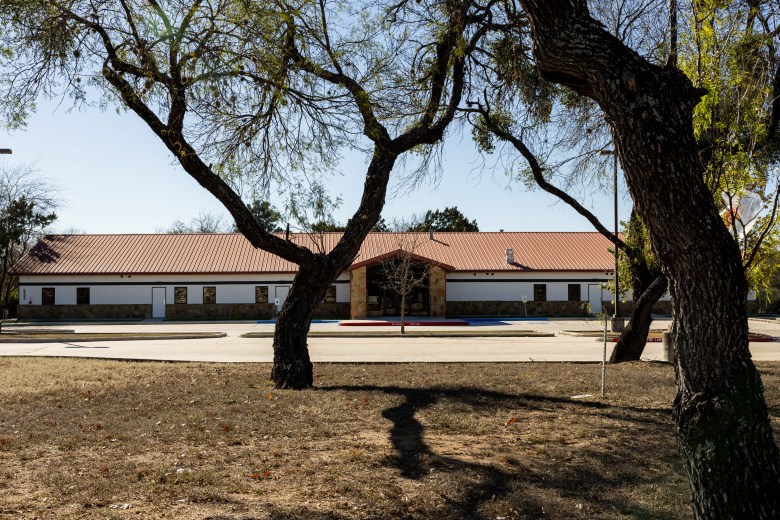 The former Montessori school that will be undergoing renovations for a new Primer Microschool located at 6506 W Hausman Rd. Credit: Amber Esparza / San Antonio Report
In San Antonio for example, out-of-state micro-school network Primer plans to open three new campuses in San Antonio by the 2026-27 school year, expecting most of its students to be TEFA recipients.
Educators wanting to make extra money could also apply to be on the vendor list for tutoring or therapy services.
Families who feel politically inclined to support public over private education may also take advantage of the new system.
Alex Mendoza is currently on the hunt for a school to enroll her 4-year-old in and recently attended a school fair to weigh her options.
Following the state’s priority funding model, Mendoza’s child may not fall high on the priority list — but Mendoza said TEFA is using her tax dollars, so she’ll apply even though she doesn’t agree with money being taken out of public schools.
“If the money is there for us to use, I’m gonna use it.”