
Daisy Espinoza / Houston Public Media
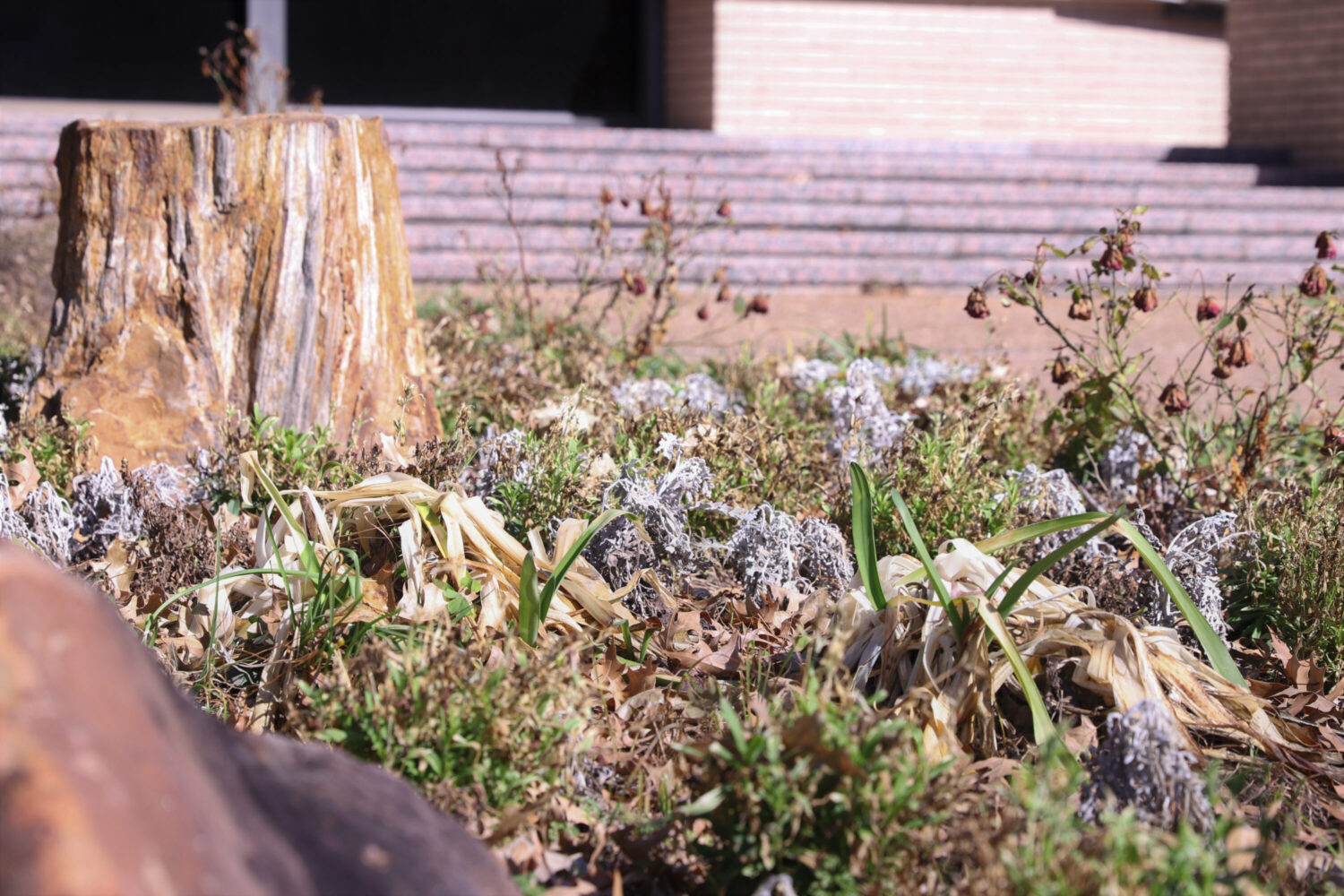
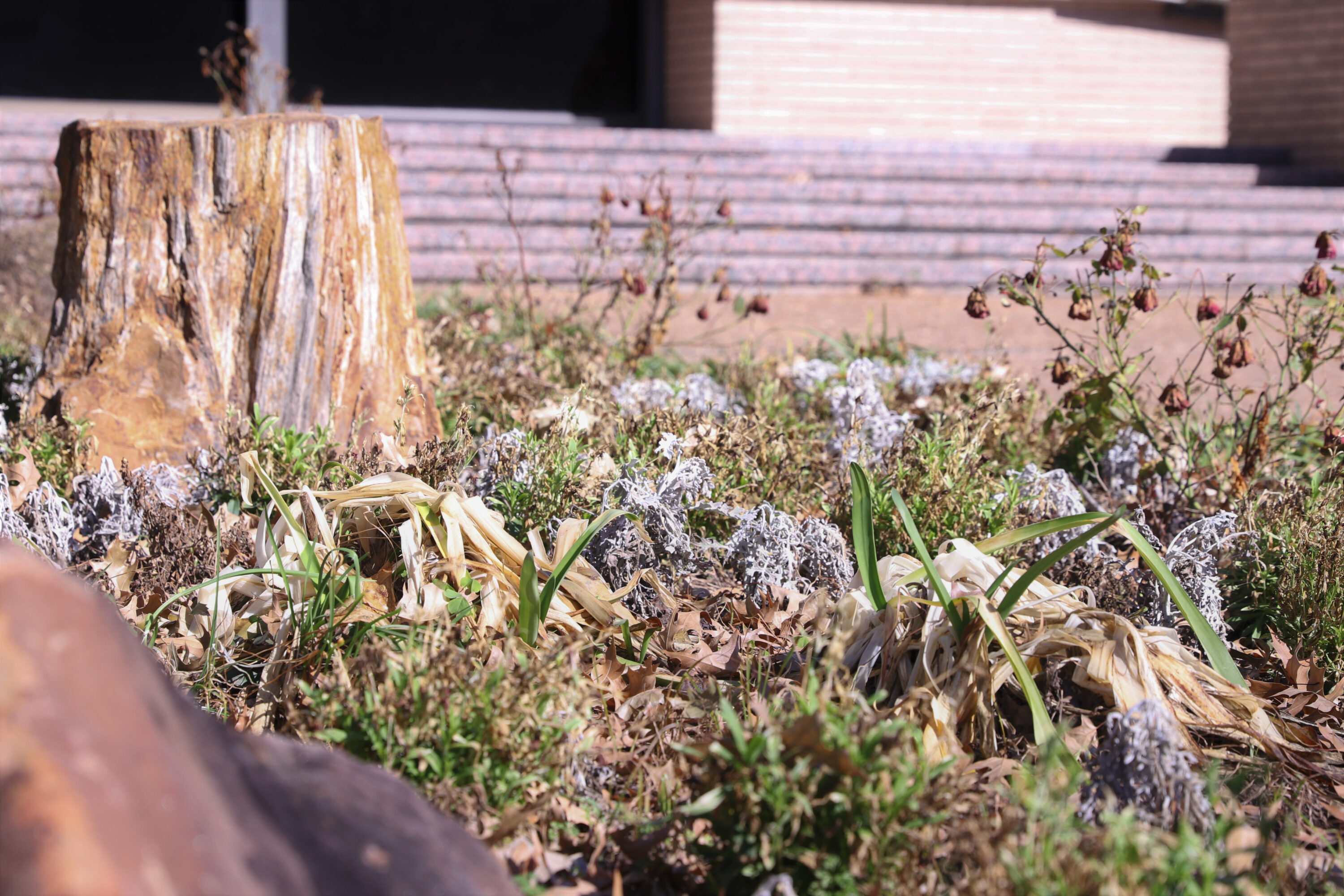
Plants that survived the freeze may need extra attention to ensure they bloom again.
Those with gardens or allergies may have noticed some plants already beginning to bloom before the hard freeze last month. According to experts, this phenomenon is becoming more common as average winter temperatures, not only in Houston but across Texas, continue to trend upwards.
According to historical data from the National Weather Service, four of the top five warmest Decembers and Januarys in Houston since 1892 were all recorded within the past 20 years. For February, all five of the warmest monthly averages recorded in Houston have occurred since 2012.
This year’s winter is also expected to be warmer than normal despite the recent hard freeze, according to John Nielsen-Gammon, the Texas State Climatologist and a regents professor of atmospheric sciences at Texas A&M University.
Sign up for the Hello, Houston! daily newsletter to get local reports like this delivered directly to your inbox.
“If we look at the temperatures in different seasons in the state, they’re essentially all doing the same thing.” he said. “They’ve all warmed by about a couple degrees Fahrenheit with no real distinction for the time of year. So, it’s a rising tide lifting all seasons, to mix metaphors.”
Nielsen-Gammon said this trend of warming temperatures is caused by climate change and can be seen in everyday plants.
“On our street, we’ve got spring wildflowers that are blooming right now,” he said. “It sort of screws up the timing for plants, which would not be a big deal if the only issue was plants … [but] when the timing gets off, it gets off in a different way for different plants and animal communities and can indeed cause ecological repercussions.”
Mike Arnold is a horticultural sciences professor and the director of The Gardens at Texas A&M. He said periods of warmer temperatures, periodically interrupted by hard freezes, can have a devastating impact on plants.
“What would be of the biggest concern is if we start seeing repeated damage, for instance, on trees and large shrubs,” Arnold said. “Those kinds of freezes are particularly worrisome because they’re damaging the trunks and the portions of plants that normally are not susceptible to that. And over time, you can create a weakened environment and end up contributing to [the] decline of those trees or those plants.”
Pollinators can also be adversely affected if plants bloom too early and either die or are damaged by a hard freeze, Arnold said.
Sophia Jozwiak/Houston Public Media
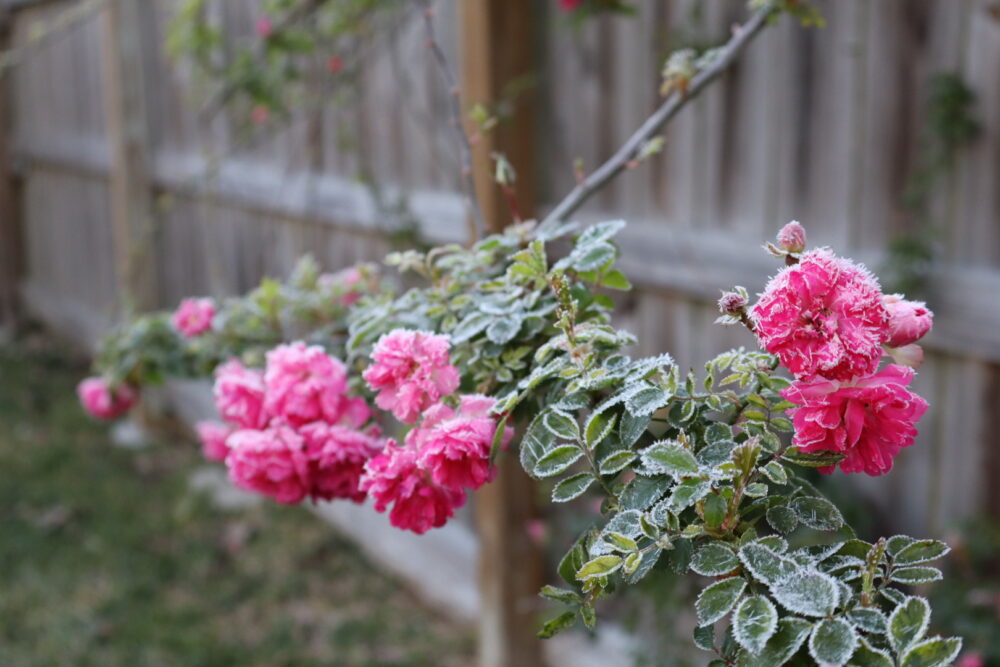
Frost-covered roses in Houston, January 2026.
“If you’re killing off early-season flowers when, say, honeybees are trying to come back out and get started in the spring … that can have a very negative impact on their populations [and] contribute to decline,” he said. “Ultimately, anytime you’re affecting the flowers and fruit development, any wildlife that’s dependent on that — birds, mammals, etc. — that’s one less food source they’ve got.”
Off-cycle blooming patterns also have the downside of potentially shifting when allergy season begins for some people, Arnold said.
“A lot of times in our area, folks will have ‘cedar fever’ … basically an allergy to juniper relatives and their pollen,” he said. “Those plants tend to bloom whenever we get warm cycles in the winter that occur. So, if we have unusual warm-ups, those plants may come out and bloom at an off-cycle time and that can result in allergy issues.”
However, Arnold said pollen can sometimes be blown hundreds of miles, meaning that if other regions of the state or country are experiencing off-cycle blooming, it can cause allergies in the other areas.
“So, you may get things that are blooming in West Texas or Colorado, and … it may come down into our area,” he said.
For those who have noticed their own plants appearing to bloom early, Arnold said it’s best to cover them before a potential hard freeze, but some larger plants could still have a difficult time regardless.
“What I would urge people to do, and this is something that is important, is there’s a tendency, if you’re a gardener, to want to get out and clean things up right away, and what you need to do is learn to love ugly a little bit,” he said. “I usually tell people, wait until you would normally begin, to be at a time when it would come out in the spring, and then it’s OK to go in and prune.”