
Corporate relocations, new headquarters and major projects fuel Plano’s continued rise
Plano’s story has always been one of intentional growth. Now, as the city moves deeper into 2026, that long-standing approach is paying off in the form of major corporate investments, large-scale redevelopment projects and renewed conversations about what the next chapter should look like.
During the State of the City on Feb. 3, 2026, city leaders outlined how Plano’s economic momentum continues to build, reinforcing its position as a regional leader for business, innovation and quality of life.
A City Built On Long-Term Vision
Plano’s rise didn’t happen overnight. From its early development in the 1840s to a population of just 3,700 residents in 1960, the city was already thinking decades ahead. Today, with more than 300,000 residents, those early planning efforts are evident in Plano’s infrastructure, neighborhoods and economic stability.
“Our legacy didn’t happen by chance,” Mayor John Muns said during the presentation. “It happened because our leaders, residents and community partners have always believed in planning for the future, serving with heart and striving to make Plano the best place to live, work and thrive.”
That mindset continues to guide decision-making as Plano balances growth with livability. Muns noted that while the core questions about making the city a great place to live, work and raise a family remain the same as they were decades ago, the difference today lies in the scale of growth and how the city adapts to the challenges and opportunities that come with it.
“So when we talk about our ‘next chapter,’ it’s really about honoring what’s worked, with smart planning, strong partnerships and a community that always looks forward,” Muns said.
Corporate Investment Continues To Shape Plano
Plano’s reputation as a business-friendly city was built by early innovators such as EDS, JCPenney and Frito-Lay, paving the way for later arrivals including Toyota, JPMorgan Chase and Liberty Mutual. That legacy continues to attract new global players.
Recent and upcoming investments include the arrival of Sally Beauty’s headquarters, Delta Electronics, Ryan, Simpson Strong-Tie, Nature’s Toolbox, USAA, Aligned Data Centers and Sysgration, along with the future Miyako Hotel. Plans are also underway to redevelop 2700 Plano Parkway into a hub for manufacturing, industrial use, office space and research and development.
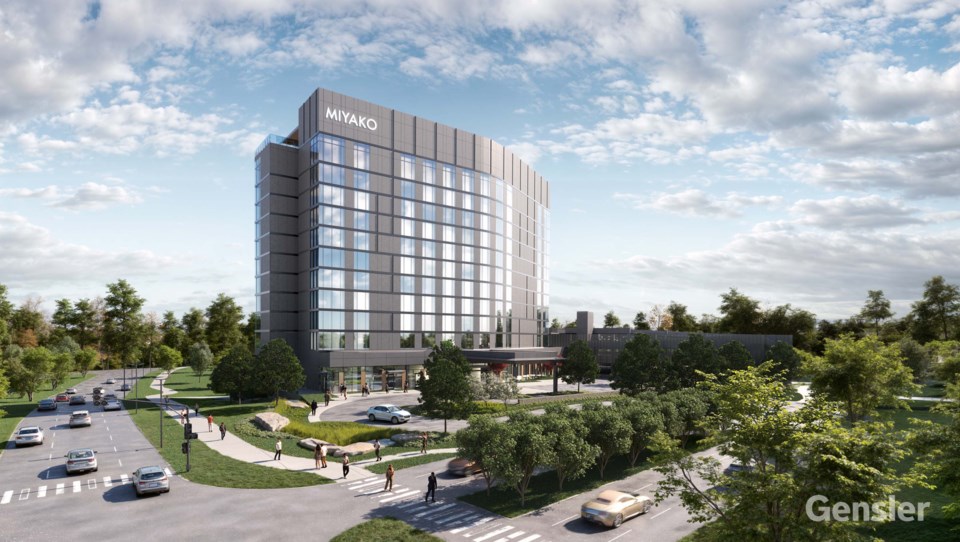
Photo: Gensler
Across the city, healthcare expansion mirrors that growth. Texas Health Presbyterian’s new tower, Medical City Plano’s expansion and renovations at Children’s Health underscore how corporate development supports services that benefit residents directly.
And more projects are on the horizon. Developments like AT&T’s new global headquarters and the Texas Research Quarter signal that Plano’s business landscape will continue evolving.
“Every time I drive past a construction crane or see a new sign go up on a building, I’m reminded that Plano is a place people still want to be,” said Muns. “Companies have big choices, and they’re choosing Plano. That says a lot about who we are.”
Rethinking Transit And Regional Connectivity
As Plano grows, city leaders are also examining whether existing systems still meet future needs. One of the most closely watched discussions involves Dallas Area Rapid Transit (DART).
Plano voters are expected to weigh a potential May ballot measure that would allow the city to withdraw from DART. City officials point to a funding imbalance — $109 million contributed in 2023 compared to $44 million spent locally — as a reason to reconsider the city’s role. The proposal would retain rail and express bus service while phasing out most other routes by 2029, returning a portion of sales tax revenue to the city.
“That’s why we’re having honest conversations about DART and regional transit,” said Muns. “It’s been over 40 years since Plano joined DART. The question now is, does today’s system serve the Plano of the future?”
Muns emphasized that transit decisions should rest with residents and that voters deserve clear information ahead of this year’s election, noting that effective mobility supports the economy, quality of life and the environment.

Photo: DART
“Our plan is simple: we move forward, keep listening and keep investing in systems that make it easier for everyone to get where they need to go.”
Public Safety And Quality Of Life
Economic growth in Plano is paired with continued investment in safety and preparedness. The city is advancing major public safety projects, including a new public safety campus, a training academy and a mobile command unit — all supported by voters.
Recent improvements also include the remodel of Fire Station 5 and the implementation of a 24-72 schedule, making Plano Fire-Rescue the first all-paid department in Texas to adopt the model. Training remains central, with Plano hosting regional emergency exercises such as Metro X to prepare first responders for large-scale incidents.
Since 2024, Plano has recorded a steady decline in both major and property crimes, reinforcing its standing as one of the safest cities in the country.
“We’re moving forward with purpose… building a city that’s not only ready for growth, but ready for what’s next,” Muns said.
Writing The Next Chapter
As cranes rise and new signs appear across the city, Plano’s leadership sees validation in the continued interest from businesses and families alike.
For the city, growth is not just about development, but about stewardship.
“Excellence isn’t a destination; it’s a mindset,” Muns said. “And it’s one we live every day. We are Plano. We are proud. And together, we’re writing the next chapter of excellence.”
Don’t miss anything Local. Sign up for our free newsletter.