
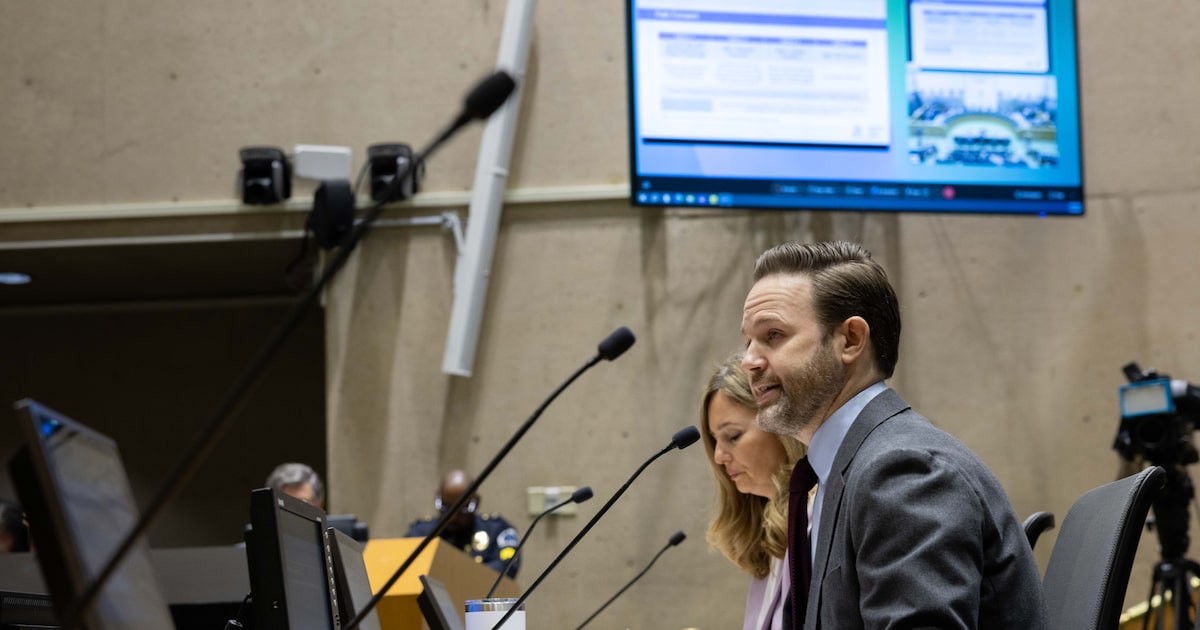
After years of garbage gridlock, Dallas City Council members on Wednesday debated keeping some alley service, shifting other routes curbside and charging different rates, but no final decisions were made.
The discussion centered on a city staff recommendation to adopt a hybrid trash collection system, even as council members remained divided over how far the city should go in changing alley service.
At the center of the debate were new survey results showing most respondents want to keep alley trash pickup and are willing to pay more to preserve it.
Council members asked why the city bought trucks that didn’t fit in alleys, whether private waste companies could take over some routes and whether it made sense to keep alley pickup when many already have curbside collection.
Political Points
Deputy Mayor Pro Tem Gay Donnell Willis, whose district had a high response rate in the survey, said if a neighborhood or block wants alley service and is willing to pay for it safely, then “they should be able to keep it.”
For years, city leaders have argued that narrow Dallas alleys, typically 8- to 10-feet wide, make it tough for trash trucks to maneuver, leading to damaged fences, tangled utility lines and safety risks for sanitation workers.
“This remains, first and foremost, a worker safety and efficiency issue,” said Clifton Gillespie, the city’s sanitation director.
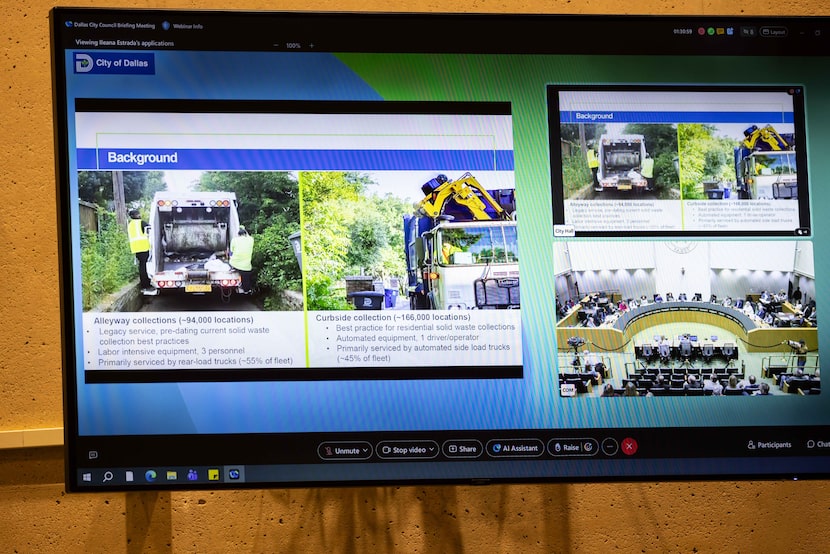
Director of Sanitation Clifton Gillespie presents a slide with background information about alleyway and curbside collections as he speaks during a City Council briefing on Wednesday, Feb. 4, 2026, at City Hall in Dallas. Dallas officials discussed results of city survey to gauge residents interest about moving from alley trash pickup to curbside.
Juan Figueroa / Staff Photographer
Wider trucks
Gillespie told council members that changes in federal standards dating back to the 1980s pushed cities toward wider, higher-capacity trucks. While the newer vehicles reduced trips, they also created new problems in tight alleys, including situations where workers cannot open truck doors during emergencies.
He said switching to smaller trucks would double the number of vehicles needed to service an area and require more staff. It can be done, he said, but at a higher cost to the city.
Instead of ending alley service wholesale, city officials said they want to preserve alley pick up where there’s strong community support, while making changes in areas where officials say alley pickup isn’t feasible.
The council considered four trash collection options:
Hybrid approach: Shift 26,000 customers with the most difficult and unsafe alley routes to curbside pickup while keeping alley service where community support is strongest.Reduced transition: Research and develop ways to move fewer than 10,000 households, all that have front driveways and a reasonable distance from front structure line to curb.Limited transition: Identify collection routes with the lowest survey response rates and evaluate them for transition, affecting fewer than 5,000 locations.No transition: Maintain current alley service.
City officials have fielded plans of a tiered rate structure separating alley and curbside collection for all options, beginning in fiscal 2026-27.
Fairness questions
Mayor Pro Tem Jesse Moreno said he wasn’t convinced by an opt-in and opt-out program, warning it could make services exclusive.
Council member Adam Bazaldua said a majority of residents already have curbside pickup, including his southern Dallas constituents, and he supports the option affecting fewer than 10,000 residents.
Council member Jaime Resendez said low survey response rates, particularly in southern Dallas, shouldn’t be mistaken for lack of preference.
“Low response rate doesn’t mean lack of preference,” Resendez said.
Council member Maxie Johnson said efficiency could be achieved without reducing services.
“We cannot put our constituents in harm’s way, especially when they have not asked for this change,” he said.
Council member Bill Roth, whose district also had a high response rate, said he wanted more data on worker safety, arguing the city should fix its problems “not by imposing additional costs on our residents” or “taking away fundamental city services.”