
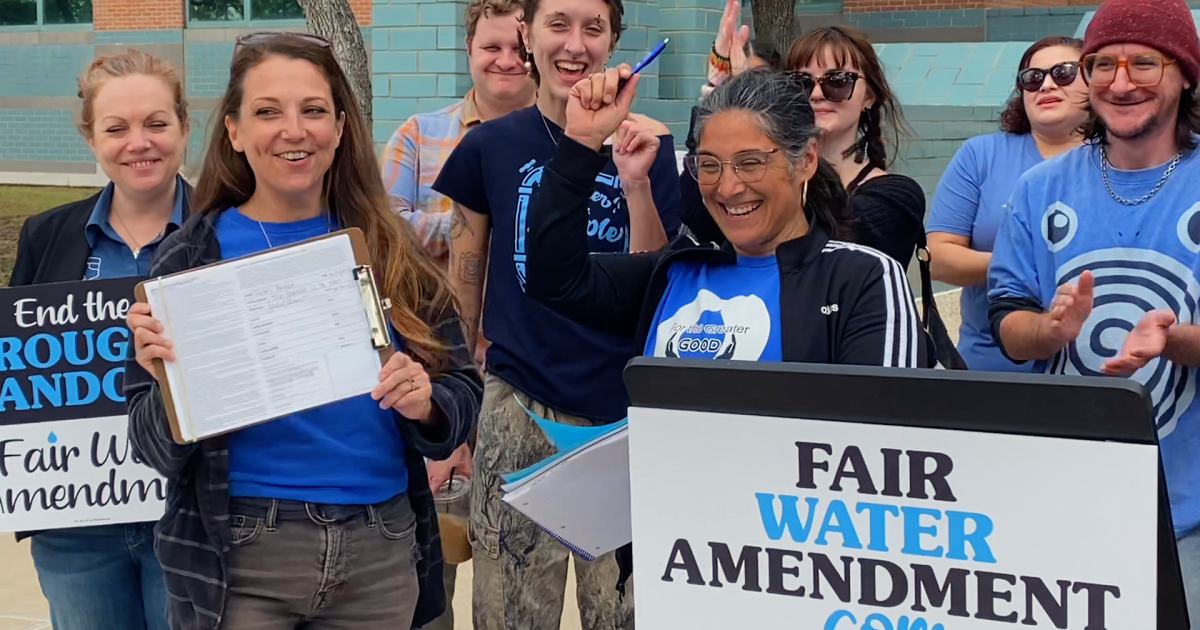
CORPUS CHRISTI, Texas — A new citizen-led petition launched Wednesday would allow Corpus Christi voters to decide whether large industrial water users should be required to pay drought fees and follow the same conservation rules as residents during drought.
The petition effort is being led by Texas Campaign for the Environment (TCE) and For the Greater Good, along with a coalition of local residents and community advocates.
Supporters gathered at City Hall to kick off the campaign, arguing that residents are already asked to cut back when water supplies tighten and that industrial users should be held to the same standard.
Corpus Christi petition targets drought fees for industrial water users
“We have decided to reclaim the sovereignty over the mismanagement of our water,” said Chloe Torres, with TCE.
Organizers also cited city data they say shows industry provides a small share of local jobs while using a majority of the city’s water supply.
“Industry accounts for only 4-percent of the jobs and uses 60-percent of the water.” said District 2 Councilwoman, Sylvia Campos, who’s also a founding member of For the Greater Good.
The proposed charter amendment would remove an existing option that allows large industrial water users to pay a fee instead of fully complying with drought surcharges and conservation requirements. If approved by voters, those fees and rules would become mandatory for industry during declared drought stages.
City policy already requires industrial customers to pay into the water system through existing contracts and fees. The petition would not change those payments or lower water rates. Instead, supporters say it would eliminate what they view as unequal treatment during drought.
The drought surcharge has not been implemented yet. It would only take effect if the city reaches a Level One drought emergency, which officials have said could happen as early as November.
Supporters acknowledge the proposal is not a quick fix to save water but say it removes the ability to pay instead of cutting back during drought.
“If there’s no water, there’s no industry,” Torres said. “But there’s also no mom-and-pop shops and no tourism economy, which has been the lifeblood of this city for a long time.”
To qualify for the ballot, organizers must collect signatures from about 5% of registered voters — roughly 10,000 people — which would require City Council to place the proposed amendment before voters in November 2026.
For the latest local news updates, click here, or download the KRIS 6 News App.
Catch all the KRIS 6 News stories and more on our YouTube page. Subscribe today!