
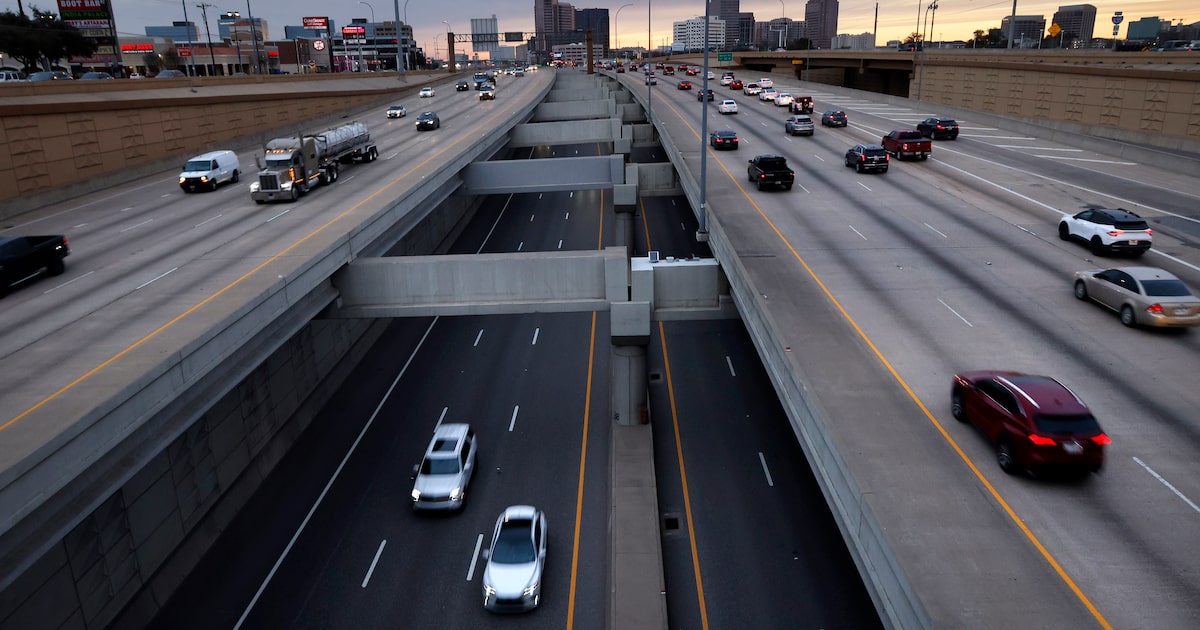
North Texans will be saying “Howdy” and “Welcome” to a lot more new neighbors in the next 25 years.
The region will expand from 8.5 million residents now to 12.4 million residents by 2050. That’s a lot of new folks headed our way — and a lot more cars on our highways.
The Texas Department of Transportation keeps a close eye on growth forecasts. Keeping traffic moving requires dedication from many agencies — and TxDOT has already committed itself to meeting the challenge.
Recent headlines reinforce the need for continued action. The Texas A&M Transportation Institute’s 2025 Texas Top 100 Congested Road Segments Report shows, however, that despite more vehicles on the road, TxDOT’s targeted congestion-relief transportation investments are helping drivers spend less time stuck in traffic and saving Texans millions of dollars each year. The data show that while there’s been about a 12% increase in travel since 2017, traffic congestion statewide has dropped by 12%.
Opinion
Plus, about half of the Top 100 congested road segments were under construction in 2024. This includes many local projects from Texas Clear Lanes, the congestion-relief initiative launched by Gov. Greg Abbott in 2015.
In North Texas, progress continues: The $1.7 billion LBJ East project will be finished this summer; the $888 million Interstate 30 Canyon project starts this year; more than $1 billion in projects are under way and finishing in Denton County; and $700 million in major projects along U.S. 80 in eastern Dallas County and western Kaufman County have started, and a similar amount of projects is in planning for U.S. 80 improvements. On the western side of Dallas-Fort Worth, the $2.2 billion Southeast Connector project southeast of Fort Worth is addressing a notorious bottleneck that has existed for years.
TxDOT also has plans to address the demands created by the influx of new Texans. In Collin County, construction on Spur 399 began this year in McKinney, and final design is underway for the U.S. 380 corridor from the Denton County line to the Hunt County line. In fact, the first frontage road projects along a new U.S. 380 alignment in northern McKinney should begin in about five years.
Overall, plans call for $11.4 billion in road projects in TxDOT’s Dallas District and $5.3 billion in the Fort Worth District in the next 10 years. I know we all still sit in traffic, but could you imagine how tough our traffic challenges would be if TxDOT had not invested in targeted congestion relief projects over the last several years?
Statewide in the past year, TxDOT contracted an average of $1 billion per month for road improvements and maintenance. Currently, a record $63 billion in projects are under construction.
The TTI study also shows these improvements saved Texas commuters an estimated $1.8 billion in 2024 in terms of delay and fuel costs compared to eight years ago. That’s about $240 annual cost savings per commuter.
Additionally, the recently released national 2025 Urban Mobility Report found Texas is seeing lower traffic delays compared to other states. Delay per mile of travel in Dallas–Fort Worth and Houston was about 39% lower than in similarly sized cities across the nation, while San Antonio and Austin experienced about 16% less delay.
This reflects how we’re planning to meet the demand of our growing population and economy decades into the future. By looking at increasing connections in rural areas and providing people with more options to travel, we can make a significant impact in connecting communities and improving the quality of life for all Texans.
We have a lot more work to do. Every day, more than 1,500 people call the Lone Star State their new home. Many of those who move here are lured in part by a robust economy and the state’s wide-open spaces, helping the state lead the nation in growth.
While we are seeing improvements, we need to do more to help both those who live here today and those who will live here 30 years from now. To maintain this progress, investments in our transportation system must continue. The Texas Legislature has already been a great partner in reducing congestion through significant investments, but inflation and a growing population continue to put increasing demands on these resources.
Texas also needs continued support from the federal government, especially as a new nationwide transportation funding bill is set to be considered in 2026. And, Texas needs to get back a greater share of the federal gas tax funds that it sends to Washington, D.C.
It is critical that we continue to invest in our infrastructure. Our economy demands it, and our ability to enhance the quality of life for millions of current and future Texans demands it.
Robert C. Vaughn is a member of the Texas Transportation Commission.