
For more than a decade, Texas’ 35th Congressional District was easy to describe. It ran like a political spine between Austin and San Antonio, linking two liberal urban centers through a corridor of heavily Latino and working-class neighborhoods. It reliably sent a Democrat to Washington.
In 2026, the district barely resembles that version of itself.
After Republican lawmakers unveiled new congressional maps in 2025, TX-35 was carved away from Austin almost entirely and reshaped into a district anchored in Southeast Bexar County and extending through Guadalupe, Wilson, and Karnes counties, along with smaller portions of surrounding rural areas. Analysts now rate the seat as Republican-leaning, a dramatic shift for a district that had long been considered safely blue.
The map’s political impact has been matched by legal chaos. In November, a three-judge federal panel in El Paso blocked Texas from using the 2025 congressional map for the 2026 cycle, finding that the new lines amounted to unlawful racial gerrymandering and ordering the state to use its 2021 map instead. Texas Attorney General Ken Paxton quickly appealed, and in early December, the U.S. Supreme Court granted Texas a stay, effectively allowing the new map to be used while the case continues, leaving campaigns and election officials to plan around a district map that remains under active litigation.
The new map is part of a broader redistricting effort that election analysts say was designed to shore up Republican control of the U.S. House by dismantling Democratic strongholds in urban Texas and diluting that voting power across multiple districts.
Inside Elections described the map as one of the most aggressive partisan gerrymanders in the country, noting that multiple Democratic-held seats were redrawn specifically to make them more competitive or to flip. The Texas Tribune similarly reported that Republican leaders targeted districts anchored in Austin, Dallas, Houston, and San Antonio to bleed Democratic voters into neighboring Republican districts, while creating new GOP-friendly seats in fast-growing suburban and rural regions.
Nowhere is that shift more evident than in TX-35.
Under previous maps, TX-35 consistently elected Democrats by comfortable margins, powered largely by voters in East and South Austin and central San Antonio. That coalition sent progressive Democrat Greg Casar to Congress in 2022.
Casar no longer lives in the newly drawn district and is now running in Texas’ 37th Congressional District, a newly configured Austin-based seat that remains solidly Democratic, which Rep. Lloyd Doggett currently holds.
Casar’s departure leaves TX-35 open for the first time in years and strips the district of its most visible progressive anchor.
Under the new lines, TX-35 is rated R+4 by the Cook Political Report, meaning Republicans hold a four-point structural advantage based on past election results and partisan composition. That shift has transformed what was once a safe Democratic seat into a battleground and given Republicans their best chance in years to flip it.
Republicans See a Pickup Opportunity
Several Republican candidates have entered the race, campaigning heavily on border security, inflation, and support for President Donald Trump. GOP strategists view the redrawn district as a natural fit for a conservative message that resonates in rural and exurban communities outside San Antonio.
For Democrats, the math is daunting.
The new district pulls in counties that have voted Republican by wide margins while removing much of Austin’s reliably progressive electorate. Even strong Democratic performance in Bexar County may not be enough if Republican turnout surges elsewhere.
Still, Democrats argue that the district’s core remains majority-minority and heavily working class and that the assumption of a Republican takeover is premature.
Democrats Say the Map Weakens Representation
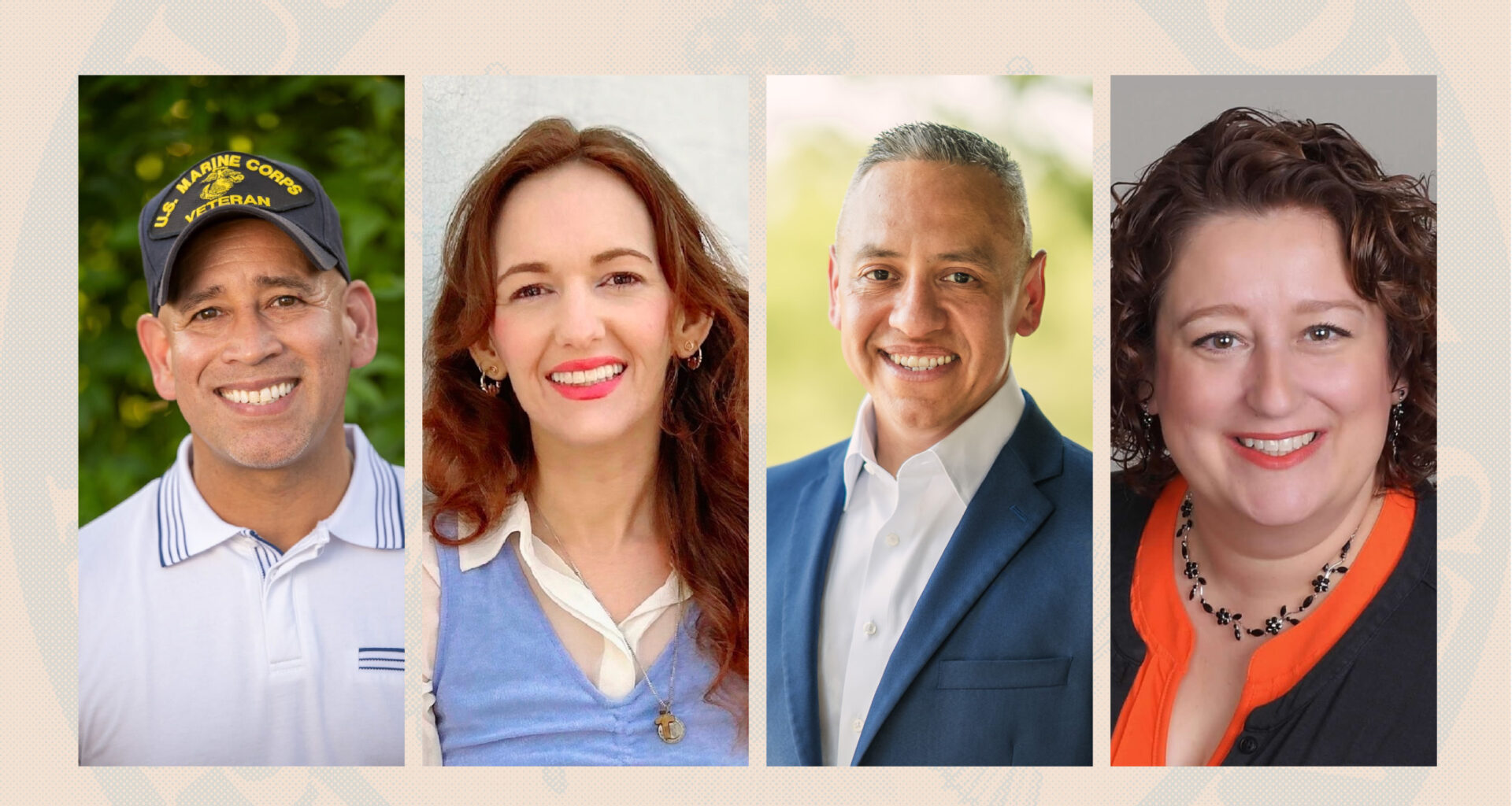
All four Democratic candidates running in the March primary argue that the new lines dilute the political power of communities that once defined TX-35.
“I believe it weakens representation,” said John Lira, a Marine veteran and former Biden administration appointee. “Black and brown political power is being diluted by design. Communities that have worked for generations to build political voice are now being offset by entire red counties.”
Lira says lawmakers drew the district assuming Latino voters were trending toward Republicans, an assumption he says is increasingly outdated. “These districts were drawn with Latinos for Trump in mind,” he said. “But poll after poll shows Latino support for Trump in Texas has deteriorated. That tells me this district is still in play.”
Maureen Galindo, a longtime San Antonio housing organizer, called the map’s intent unmistakable. “The fact that it was created to be a Republican district weakens it right away,” Galindo said. “Gerrymandering in Texas has consistently reduced the voice of Democrats and independents.”
Whitney Masterson-Moyes, a former public school teacher and small-business owner, echoed that sentiment. “Forty to forty-five percent of Texans vote for Democrats, but that is not reflected in representation,” she said. “These districts were meant to reduce that voice.”
Johnny Garcia, a Bexar County sheriff’s deputy, framed the issue more bluntly. “They overplayed their hand with this gerrymander,” Garcia said. “They did not anticipate a pissed-off Democrat deputy sheriff saying, ‘Not on my watch.’”
A Battleground Shaped by Lines and Turnout
Still, structural factors favor Republicans.
Ballotpedia classifies TX-35 as a battleground race because control of the seat could affect the balance of power in Congress. The Democratic Congressional Campaign Committee placed the district on its list of targeted races, signaling potential national investment.
The new map allows GOP candidates to lose parts of Bexar County while making up ground in rural counties that vote Republican at high rates. For Democrats, success hinges on rebuilding a multiracial, working-class coalition and driving turnout in San Antonio. If no candidate receives more than 50% of the vote, a runoff will be held on May 26.
In a state where redistricting increasingly determines electoral outcomes before any ballot is cast, the TX-35 Democratic primary offers a test of whether voter mobilization and candidate appeal can overcome lines drawn to predetermine defeat.
Meet the Dem Candidates for TX-35
Maureen Galindo: Grassroots Organizing and Housing Justice
Maureen Galindo comes from the world of tenant organizing and community psychology. She ran last year for San Antonio City Council, Place 1, in the city’s nonpartisan municipal elections, an experience she says helped her build a coalition that crossed party lines.
Eight years ago, as a single mother, she became housing insecure after learning her apartment complex would be redeveloped. That experience pushed her into organizing, where she helped secure millions of dollars in local rent relief funds and fought for safer public housing conditions.
“My background is in understanding root causes,” Galindo said. “We keep offering Band-Aids instead of fixing broken systems.”
Her top priorities include participatory democracy, limiting the influence of wealthy donors in politics, and curbing speculative investment in housing and other essential markets.
“I do not want to be someone who speaks for people,” she said. “I want to be someone who gives people the tools to speak for themselves.”
Johnny Garcia: Public Safety, Affordability, and an “Old School Democrat”
Johnny Garcia spent nearly two decades in law enforcement, serving on patrol, as a SWAT hostage negotiator, and now as spokesperson for the Bexar County Sheriff’s Office.
He describes himself as an “old school Democrat” focused on kitchen-table issues. “My profession was drifting away from protecting and serving and being used to divide,” Garcia said. “At the same time, everyday costs were skyrocketing for working-class families.”
Garcia argues tariffs function as a hidden tax on consumers and hurt South Texas manufacturing workers in particular. He supports negotiating drug prices, protecting the Affordable Care Act, and investing in both law enforcement training and mental health response programs.
He says his working-class background and law enforcement experience make him uniquely positioned to compete in a Republican-leaning district.
John Lira: Federal Experience and a Turnout Strategy
John Lira’s campaign centers on his background in military service and federal policymaking. He enlisted in the Marine Corps at 17, deployed twice to Iraq, and later earned degrees in political science and public policy.
Lira previously ran for Congress in Texas’ 23rd District, stating that experience makes him “battle tested” and better prepared for another high-stakes federal race.
He has worked at AmeriCorps during the Biden-Harris administration, the U.S. Small Business Administration, and on Capitol Hill managing veterans, defense, and international affairs portfolios. “I have been on the front lines of military service and the front lines of policy,” Lira said. “People want someone who knows how government works and knows how to deliver.”
Lira’s top priorities include permanently extending Affordable Care Act subsidies, increasing affordable housing supply, raising the minimum wage, and creating government-backed loans for small businesses.
He believes Democrats can win by maximizing turnout in Bexar County, which he estimates will account for roughly 70% of Democratic votes in the district.
“This is going to be a turnout game,” Lira said. “We have to excite the electorate.”
Whitney Masterson-Moyes: Opportunity, Affordability, and Local Ties
Whitney Masterson-Moyes has lived in Guadalupe County for six years and previously lived in Bexar County. She owns a sporting clays range that hosts nonprofit fundraisers and youth teams, giving her regular contact with families across the district.
She says her decision to run was driven by concerns about growing executive power and declining trust in government. “I have two little boys,” she said. “I cannot imagine them growing up without liberty.”
Her campaign focuses on health care affordability, pharmaceutical competition, and reducing administrative burdens on providers.
“Doctors and patients should be the ones making medical decisions,” she said.
This article appears in February 6 • 2026.
A note to readers: Bold and uncensored, The Austin Chronicle has been Austin’s independent news source for over 40 years, expressing the community’s political and environmental concerns and supporting its active cultural scene. Now more than ever, we need your support to continue supplying Austin with independent, free press. If real news is important to you, please consider making a donation of $5, $10 or whatever you can afford, to help keep our journalism on stands.