
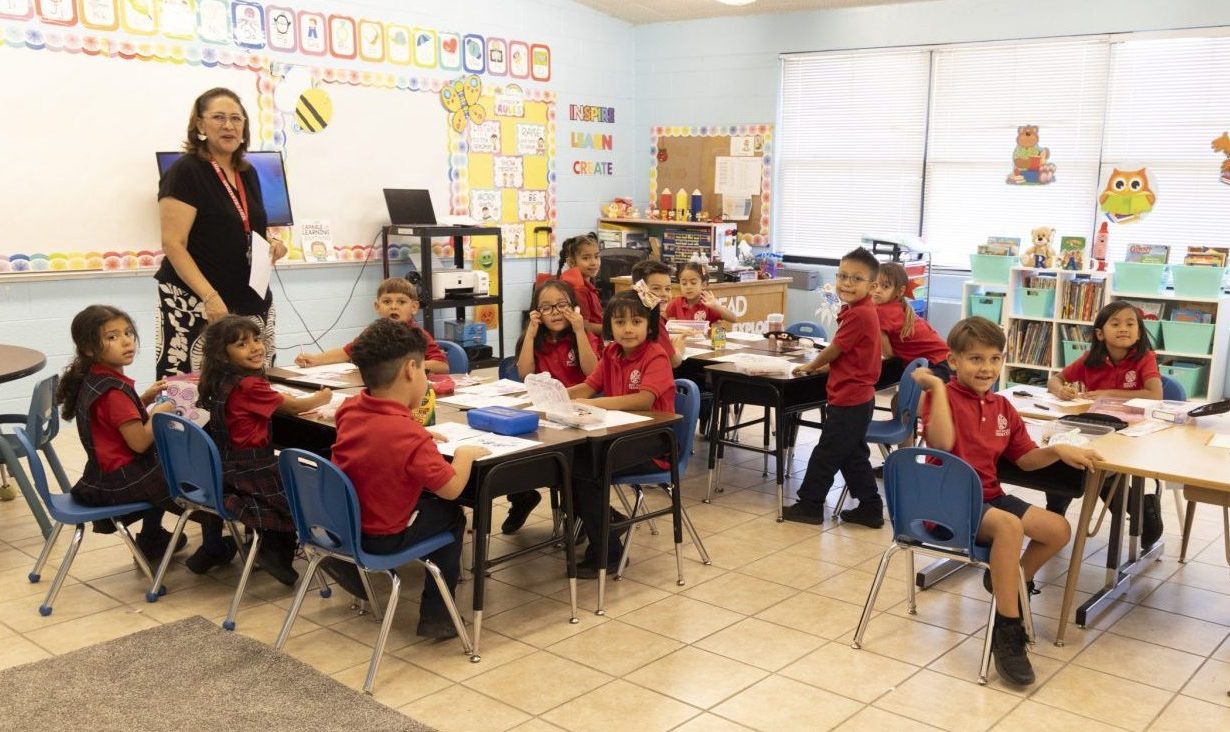
Parents can now apply for a new voucher-like program that gives eligible families state funds to homeschool their children or enroll them in over two dozen El Paso private schools.
Applications for the Texas Education Freedom Accounts program, an initiative that provides state-funded, flexible education savings accounts for students to pay for private school tuition, opened Wednesday. Applications close March 17.
As of Wednesday, 27 private schools in the El Paso region are listed in the state’s database as eligible to accept vouchers under the program.
Eleven focus on teaching middle and elementary school, eight offer high school-level classes, and six teach all grade levels from kindergarten through high school. Eight are daycares that offer pre-kindergarten and kindergarten.
More than half of the private schools in El Paso approved for the program are religious institutions, most of which are Christian or Catholic. Eight, or about 30%, of schools in the program are owned by the Catholic Diocese of El Paso, which operates some of the county’s oldest schools.
Diocese schools Superintendent Blanca Garcia said the program will offer relief to families who choose a faith-based education for their children, noting that some already rely on income-based scholarships or grants. She did not say how many students are under those assistance programs.
“It would be a blessing for them to have this. And then for those that are paying out of pocket, I think it’ll free up that money for them to do other things,” Garcia said.
Meanwhile, leaders of El Paso’s only Islamic school, the Palm Tree Academy, have been left in limbo after applying for the program.
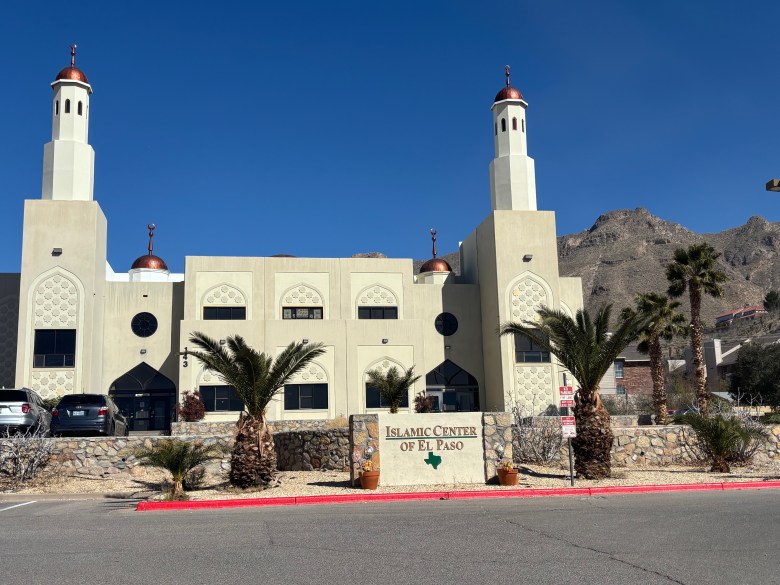 Palm Tree Academy officials said they want the school, located at the El Paso Islamic Center, to take part in the Texas Education Freedom Accounts program, but have not heard back from the state after applying.
(Claudia Lorena Silva/El Paso Matters)
Palm Tree Academy Director Nazmi Masoud said the school, located at the El Paso Islamic Center, wants to take part in the Texas Education Freedom Accounts program, but neither he, nor the school’s accreditors, Cognia, have heard back from the state.
“After so many different messages that have been sent, no one is responding to us. So, I’m not really sure how it’s going to be,” Masoud told El Paso Matters.
Competing for students
El Paso’s Catholic schools have seen a decline in enrollment in recent years, primarily spurred by low birth rates, Garcia said.
Diocese officials said their schools’ enrollment declined from over 3,000 students during the 2016-17 school year to 2,000 the current school year.
Garcia hopes the voucher program will boost enrollment in its schools, but worries they will have to compete for funding with the hundreds of private schools in large metropolitan areas across Texas.
If demand for the program exceeded the $1 billion approved by lawmakers during the most recent legislative session, the state plans to prioritize low-income students and students with disabilities.
“We anticipate an increase in enrollment, that’s really our goal. How many students? Well, we won’t know until later,” Garcia said. “It’s going to be competitive, and it’s going to be a lottery, so we’re encouraging our parents that the sooner they apply, the better.”
The Houston and the Dallas-Fort Worth areas combined house over 1,000 private schools eligible for Texas Education Savings Accounts, the state database shows.
The voucher-like program became available as school districts throughout El Paso also face declining enrollment, raising concern among public school advocates that it will create more competition.
Garcia said she understands those concerns, but does not think it will make schools any more competitive than they already are.
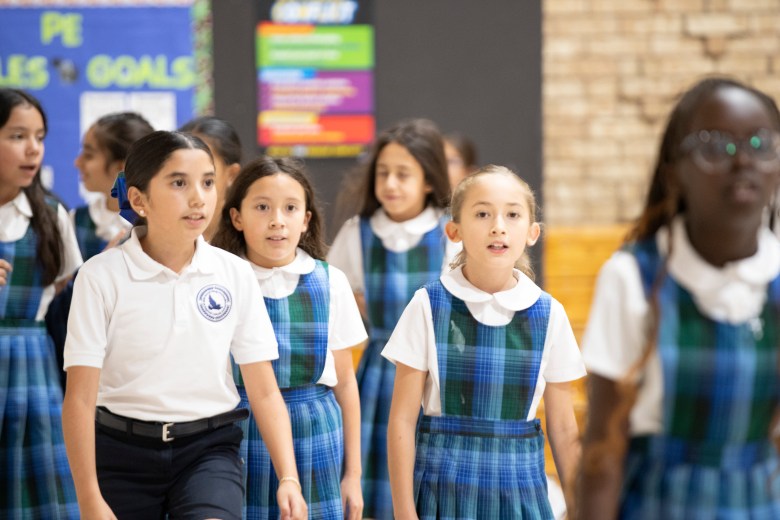 Eight schools operated by the Catholic Diocese of El Paso are eligible to receive student vouchers under the Texas Education Freedom Accounts program. (Courtesy Catholic Diocese of El Paso)
“The fact that enrollment is low across the board, for private and public schools, means it is going to be competitive because we’re fighting for the same pool of students,” Garcia said. “I don’t think this program is going to be a reason why we say it increased the competition. We’ve always had to compete for our kids.”
Islamic private school left in limbo
While Palm Tree Academy officials waited to find out if they could take part in the voucher program, the state’s comptroller’s office in December sought permission to block some Islamic institutions from doing so.
The comptroller’s office, which administers the program funds, pointed to some institutions hosting know your rights events run by the Council on American-Islamic Relations, or CAIR. A month earlier, Gov. Greg Abbott designated CAIR, a Muslim civil rights group, as a terror group.
Texas Attorney General Ken Paxton in late January said the comptroller can exclude private schools from using the voucher program if they violate laws banning material support for foreign terrorist groups or are owned by a foreign entity.
CAIR’s leaders sued Abbott for defamation in response to the designations and have said that delaying or excluding Muslim from the program for hosting an event with the organization would be considered discrimination.
The comptroller’s office did not respond to El Paso Matters’ questions about the status of the Palm Tree Academy’s application or how many schools have been affected.
Masoud said Palm Tree Academy is not associated with CAIR and has not hosted events for them.
“Here in El Paso, there are no offices for CAIR,” Masoud said. “I know of them, but they have no activities here.”
Masoud said he is not sure why the state hasn’t reached out or if the school is facing discrimination.
“I cannot really say that we were targeted, but I know we were not approached and come to find out today that obviously we’re supposed to reach out to the schools,” Masoud said.
“The only thing I could say is we would like to have that voucher program. It’ll help our school, and it’ll help the El Paso community in general,” he added.
What parents need to know
Under the Texas Education Freedom Accounts program, families can receive $10,500 per student a year to pay for tuition and other approved expenses. Students with disabilities may be eligible to receive up to $30,000.
Homeschool students may also be eligible to receive $2,000 a year. Approved expenses include textbooks, uniforms, transportation, meals, supplies, academic assessments and tutoring.
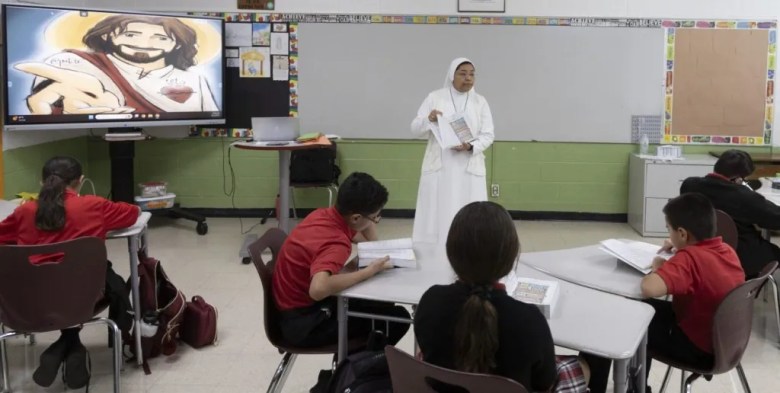 Eight schools operated by the Catholic Diocese of El Paso are eligible to receive student vouchers under the Texas Education Freedom Accounts program. (Courtesy Catholic Diocese of El Paso)
Tuition at some El Paso private schools ranges from about $5,000 to about $14,000 a year. Some also charge for additional application fees, school uniforms and other expenses.
Any Texas resident eligible for public school can apply for the program.
To apply, parents need to provide proof of residency, proof of their child’s citizenship or immigration documents and proof of income.
Students with disabilities must also have an individualized education program — or IEP — a document that outlines their support needs and accommodations to qualify for additional funding.
Children as young as 3 can qualify for the program if they meet the state’s public pre-k eligibility requirements. This includes emergent bilingual students who do not speak English, economically disadvantaged students, homeless students and foster children, among others.
Schools taking part in the program must be recognized by the Texas Private School Accreditation Commission or an accreditor recognized by the Texas Education Agency.
They need to have run successfully for at least two years and must administer annual standardized tests.
Preschool programs must also be licensed by the Texas Department of Family and Protective Services and accredited by an organization approved by the Commissioner of Education, among other requirements.
Homeschool students will not be required to take standardized tests or follow new curriculum requirements under the program.
Related
LISTEN: EL PASO MATTERS PODCAST