
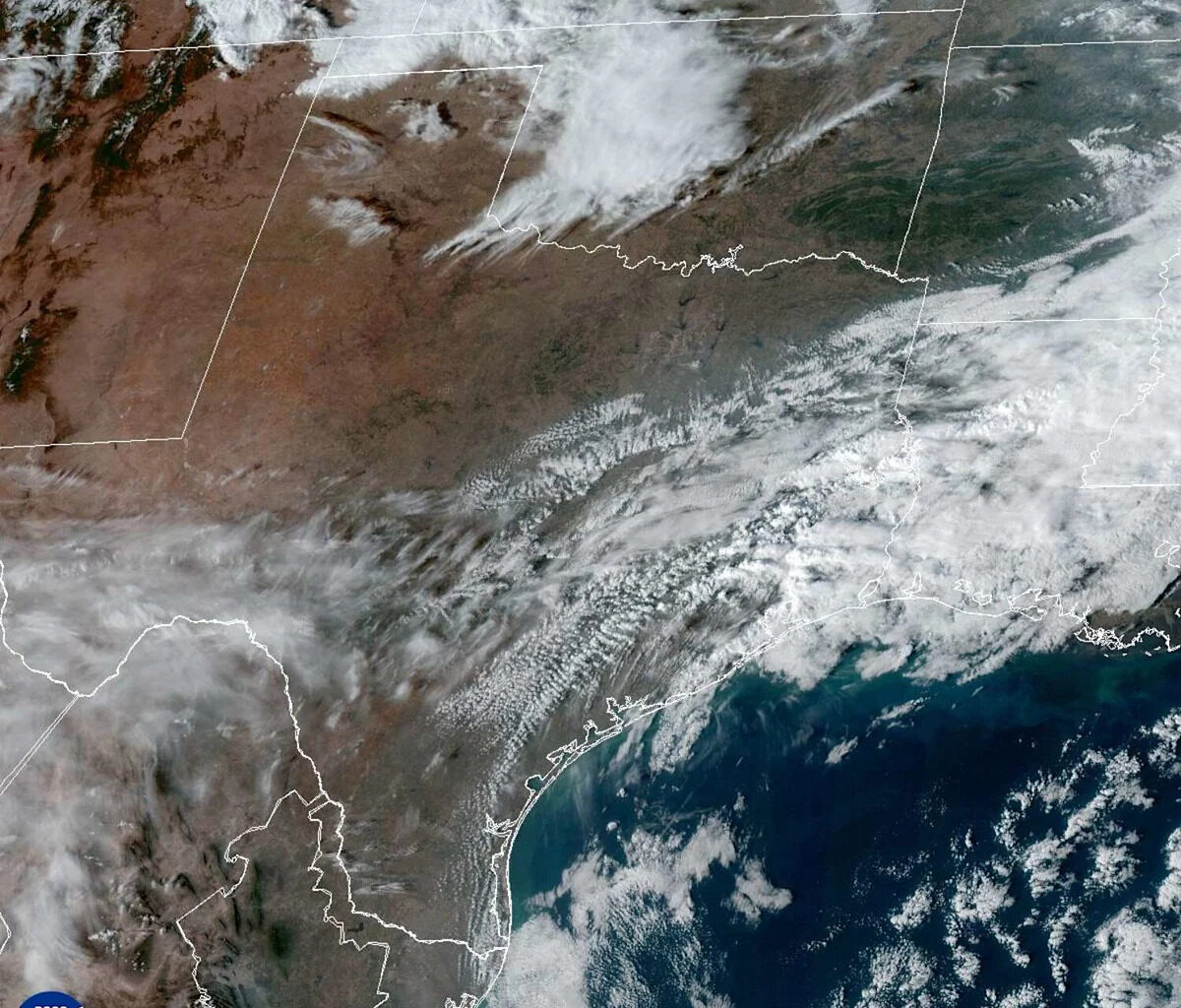
Houston’s persistent gray skies in recent days aren’t a fluke, despite the occasional sunny interruption.
We’re currently in what weather history shows is one of the city’s cloudiest times of the year, when sunshine often takes a back seat and overcast skies become the norm.
February is one of Houston’s cloudiest months
So far this month, Houston’s official climate observation site at Bush Intercontinental Airport has recorded just one clear day and two partly to mostly cloudy days. In January, nearly 66% of the month brought partly cloudy or overcast skies.
That tally fits neatly into the city’s long-term climate patterns. While Houston is often associated with heat and humidity, the cooler half of the year is when clouds quietly dominate the skyline.
UPS AND DOWNS: La Niña could be driving Houston’s swings from warm to cold. Here’s what to know.
January and February are climatologically among the cloudiest months in Houston, even as the exact rankings can vary from year to year. In some years, March competes closely or even surpasses them.
Regardless of the order, this part of the calendar consistently delivers fewer blue-sky days than many residents might expect.
Why are the winter months so cloudy?
The main driver behind Houston’s cloudy reputation is atmospheric moisture – and lots of it.
When winds flow in from the Gulf of Mexico, they carry warm and humid air inland. Dew point temperatures, or how cool the air needs to get for dew to form, frequently hover in the 60s during this time of year. When they reach that level, as they did ahead of Tuesday’s cold front, it means the air is holding a high amount of moisture.
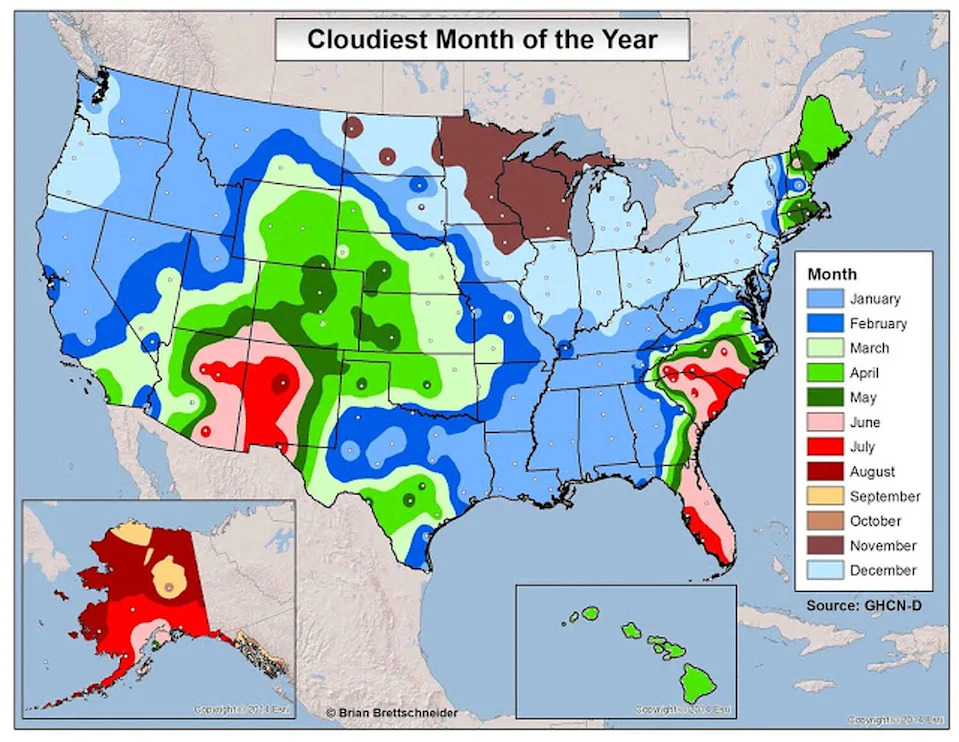
This map of the United States shows the cloudiest month of the year. In Southeast Texas, January and February frequently rank among the cloudiest months of the year. (Brian Brettschneider)
That moisture makes cloud formation easy and cloud breakup difficult. Skies can stay stubbornly overcast for long stretches, even in the absence of widespread rain, keeping sunshine limited and giving days a muted, gray appearance.
Cloudy season can last a long time
All of this falls within Houston’s informal cloudy season, which spans roughly from December through May. During that period, the city typically records about 60% to 70% of its cloudy days for the entire year. While it’s not an official meteorological season, it’s a well-documented feature of the local climate.
Recent years offered a good reminder of that variability. In 2023, nearly 70% of March was spent under cloud cover, proving that Houston’s gray season doesn’t always follow a strict script.
For now, the clouds are simply doing what they’ve always done and showing up right on cue.
This article originally published at Houston is in one of its cloudiest stretches of the year – here’s why that’s normal.