
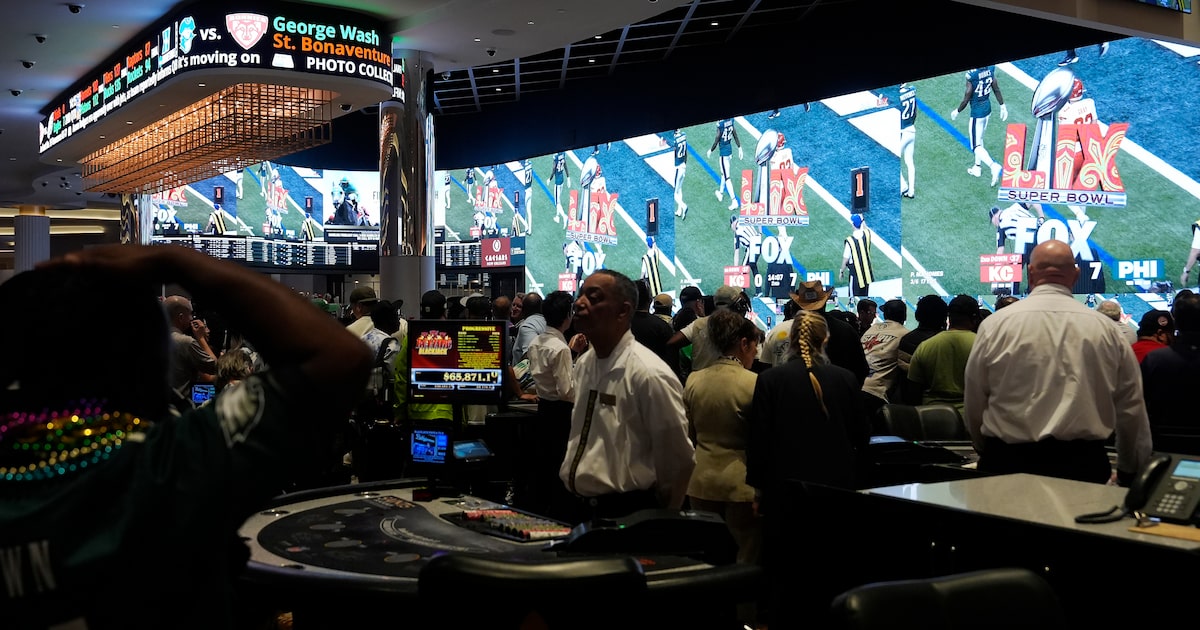
Gambling is illegal in Texas, but it’s not stopping football fans from wagering millions of dollars on this year’s Super Bowl as an emerging industry of prediction markets and daily fantasy companies takes advantage of betting loopholes.
Prominent companies such as Kalshi and DraftKings are making a play in states such as Texas where there are bans on betting on the outcome of sporting events. Texans still can make money on the outcome of the game, the score, player performances and halftime show cameos.
They are inundating airwaves and streaming platforms with advertisements and sponsoring podcasts to promote the platforms ahead of the biggest betting event of the year.
The American Gaming Association projects more than 67 million Americans will bet more than $1.76 billion on the game with U.S. legal sportsbooks, which operate in 39 states (not Texas) and the District of Columbia.
Business Briefing
That doesn’t account for prediction markets, which are regulated by the Commodity Futures Trading Commission (CFTC) and mimic traditional sports betting. Those who take part buy and sell yes and no contracts with each other on events that run the gamut from politics to sports and culture.
For instance, Kalshi offers the chance to put money on everything from the winner of the game and traditional prop bets like who will score a touchdown to what will the NBC broadcasters say during the game.
Will NBC’s broadcast tandem of Mike Tirico and Cris Collinsworth say “tush push?” Fifty-nine percent of traders say yes.
Kalshi spokesperson Laura Frank told The Dallas Morning News that the $167 million traded on the Super Bowl outcome this year represents more than five times what was traded on last year’s game ($27 million). She also said 84% of states — all except New England, Georgia and South Carolina — have picked the Seattle Seahawks to win.
“Federally certified prediction markets exploit a legal loophole to bring online sports betting to Texas, and other states, without regulated betting,” Brian Pempus, who founded GamblingHarm.org last year after working in the gambling industry for more than 15 years, told The News.
“This backdoor should be closed. This stock-market-style sports betting, marketed as ‘trading,’ is really just gambling and poses similar problem gambling risks as traditional, house-banked betting apps. For years, many young people have wrongly believed they can consistently profit from sports betting, and prediction markets have only fueled this misconception. They typically assert that this form of betting is predominantly skill-based.”
In response to criticism, Kalshi told The News in a statement Thursday: “We agree that consumers should steer clear of unregulated prediction markets. Our members’ platforms are all regulated by the CFTC, similar to how the SEC regulates the stock market.
“Regulation comes with many of the guardrails the [New York] Attorney General outlines — a ban on insider trading, self-exclusion, and responsible trading guidelines. We all want the same thing: safe, fair, and legitimate products.”
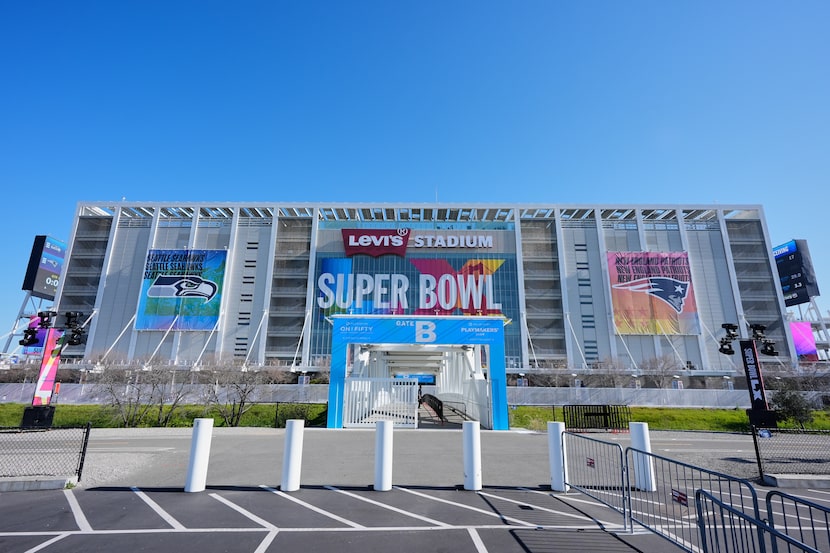
A view of Levi’s Stadium ahead of Super Bowl LX between the Seattle Seahawks and the New England Patriots, in Santa Clara. Calif., Wednesday, Feb. 4, 2026. (AP Photo/Godofredo A. Vásquez)
Godofredo A. Vásquez / AP
‘Significant risks’ of prediction markets
Prediction markets have ignited fierce criticism from lawmakers as well as the NFL.
New York Attorney General Letitia James kicked off Super Bowl week by saying in a statement Monday that there exists “significant risks with unregulated prediction markets. It’s crystal clear: so-called prediction markets do not have the same consumer protections as regulated platforms.”
The NFL has also expressed concern. Jeff Miller, the league’s executive vice president, said in a written testimony to a congressional committee in December that the league “has no plans to participate in prediction markets due to several outstanding legal, regulatory, and commercial concerns on how these markets operate and the possible impact on the integrity of sporting events.”
Pempus of GamblingHarm.org said Texans should not expect to make a profit long term through prediction markets and to use them, if at all, for entertainment purposes. He cited a study last year that revealed that for Kalshi, the average user return across all contracts is negative 22% after platform fees.
“Prediction markets have yet to make a significant dent in the traditional sports betting industry, at least in terms of betting handle,” Pempus said. “But they’re growing in popularity, and it’s important that people who use them do so with realistic expectations. The NFL allows up to six sports betting commercials during the Super Bowl but won’t allow prediction markets to advertise, which also speaks to the risks they pose to consumers and their lack of legal clarity.”
DFS apps offer another option for fans
Another legal option for Texans seeking a financial stake in the game are Daily Fantasy Sports apps. With DraftKings Pick6 and PrizePicks, there is a focus is on individual player statistics instead of game outcomes.
A DraftKings Pick6 spokesperson stressed to The News that Pick6 is not sports wagering, but rather a “peer-to-peer DFS variant.” Customers compete against each other by predicting whether or not their selected athletes will outperform a statistical projection.
A spokesperson from PrizePicks stressed that the platform does not offer “wagers” but event contract trades. As of Thursday, 51.5% of trading volume is on Seattle to win; 44% of trading volume is on Seattle quarterback Sam Darnold to win the MVP and 49% of trading volume is on Cardi B to perform with Bad Bunny at halftime.
And finally, there are free-to-play social sportsbook apps like Thrillzz, which allows users to compete with friends and climb leaderboards in what it calls a “safe online gaming environment.” Users can climb loyalty levels and earn rewards, such as Thrillzz coins.
“It’s not real money sports wagering,” a Thrillzz spokesperson told The News when asked how it’s legal in Texas. “We don’t have any really bets like how long the national anthem will be. This is our busiest day of the year. We’re gearing up to see what will happen in the social sportsbook.”
 The SEC is distributing more than $1B to its schools for the 2024-25 fiscal year
Oklahoma and Texas, which joined the conference in July 2024, received distributions well below the $72.4 million average for schools with full year financial participation.
 PGA of America names Terry Clark new CEO
Clark, who has been an independent director on the association’s Board of Directors since 2024, assumes his role March 2.