
The Cibolo Center for Conservation, or The Cibolo, traces its roots to the late 1980s, when Carolyn Chipman Evans and her husband, Brent, sought to create a place for Boerne residents to learn about and connect with nature along Cibolo Creek.
Now, the nonprofit has become a “model of conservation education,” owning two educational campuses complete with walking trails, weekly classes, special events and more, according to their website.
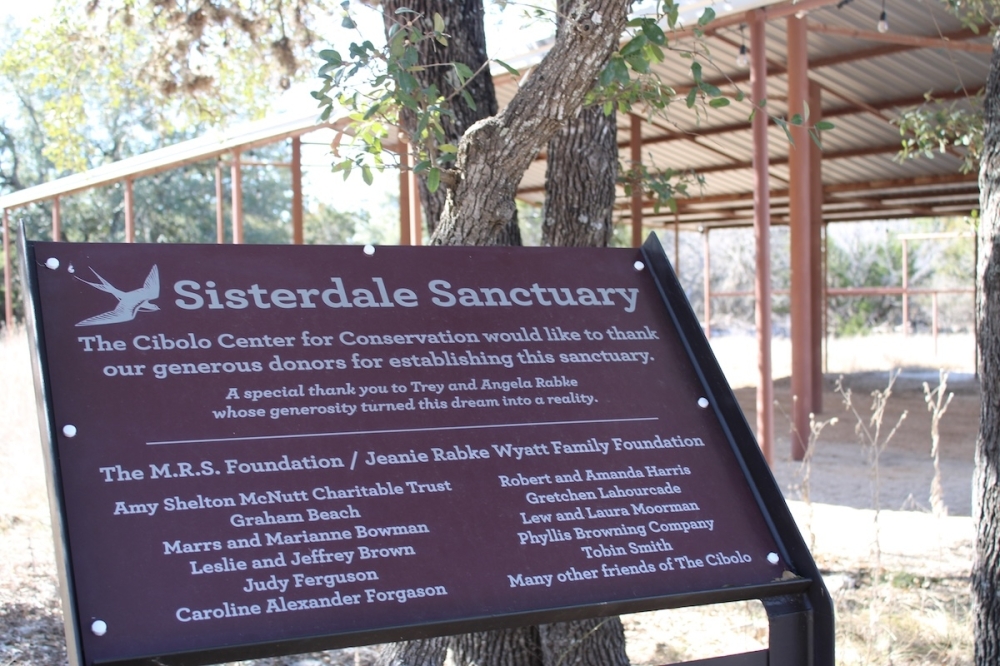
Additionally, the group owns and manages several private wildlife sanctuaries scattered across Kendall County, one of the newest being the 32-acre Sisterdale Sanctuary that was acquired in late 2023.
 The sanctuary’s western edge is defined by riparian creek beds lined with cypress and shrubbery. (Andrew Creelman/Community Impact)What the experts say
Kel Hoffman, the land conservation director for The Cibolo, told Community Impact that protecting land is crucial for both preserving it from development and educational purposes.
“Protecting the Sisterdale Sanctuary secures a critical piece of the Guadalupe watershed as growth accelerates across Kendall County,” Hoffman said.
The property features several unique areas that represent the flora and fauna found throughout the Hill Country.
“This place allows you to see this really wide breadth of ecosystems in such a short amount of time,” Hoffman said.
An area of upland forest can be found along the eastern side of the property, featuring live oak, Texas persimmon, prickly pear cactus and more. The western side is dominated by a riparian ecosystem, whereas the east branch of Sister Creek is lined with cypress and surrounded by Hill Country savannah.
A 25-foot-tall limestone escarpment divides these two distinct areas of the sanctuary and is home to a small bat colony, Hoffman said.
 Nest boxes are scattered throughout Sisterdale Sanctuary to help with bird migration studies and community science projects. (Andrew Creelman/Community Impact)What’s being done
Along with the scenery, the sanctuary is home to several private research projects and volunteer opportunities for Boerne residents.
“We’ve got a robust community science program around the creeks here at the sanctuary,” Hoffman said.
Currently, Hoffman and other researchers are working on several priorities:
Native grassland restorationRiparian vegetation recoveryInvasive species managementLong-term ecological monitoring with emphasis on birds, pollinators, grasses and water qualityHoffman said more dedicated volunteers are needed to form a friends group that will be heavily involved with many of the planned projects at the sanctuary. The 25-foot escarpment at the sanctuary is home to a small colony of Mexican free-tailed bats. (Andrew Creelman/Community Impact)The future
In the future, Hoffman said the sanctuary’s long-term goal is to become a publicly accessible, community-focused area for residents across the Hill Country to utilize and learn from.
“This landscape offers a rare opportunity to study and demonstrate how proactive land stewardship can sustain water quality and habitat before development pressures intensify,” Hoffman said.
To learn more about The Cibolo and to see upcoming volunteer opportunities, visit their website below.