
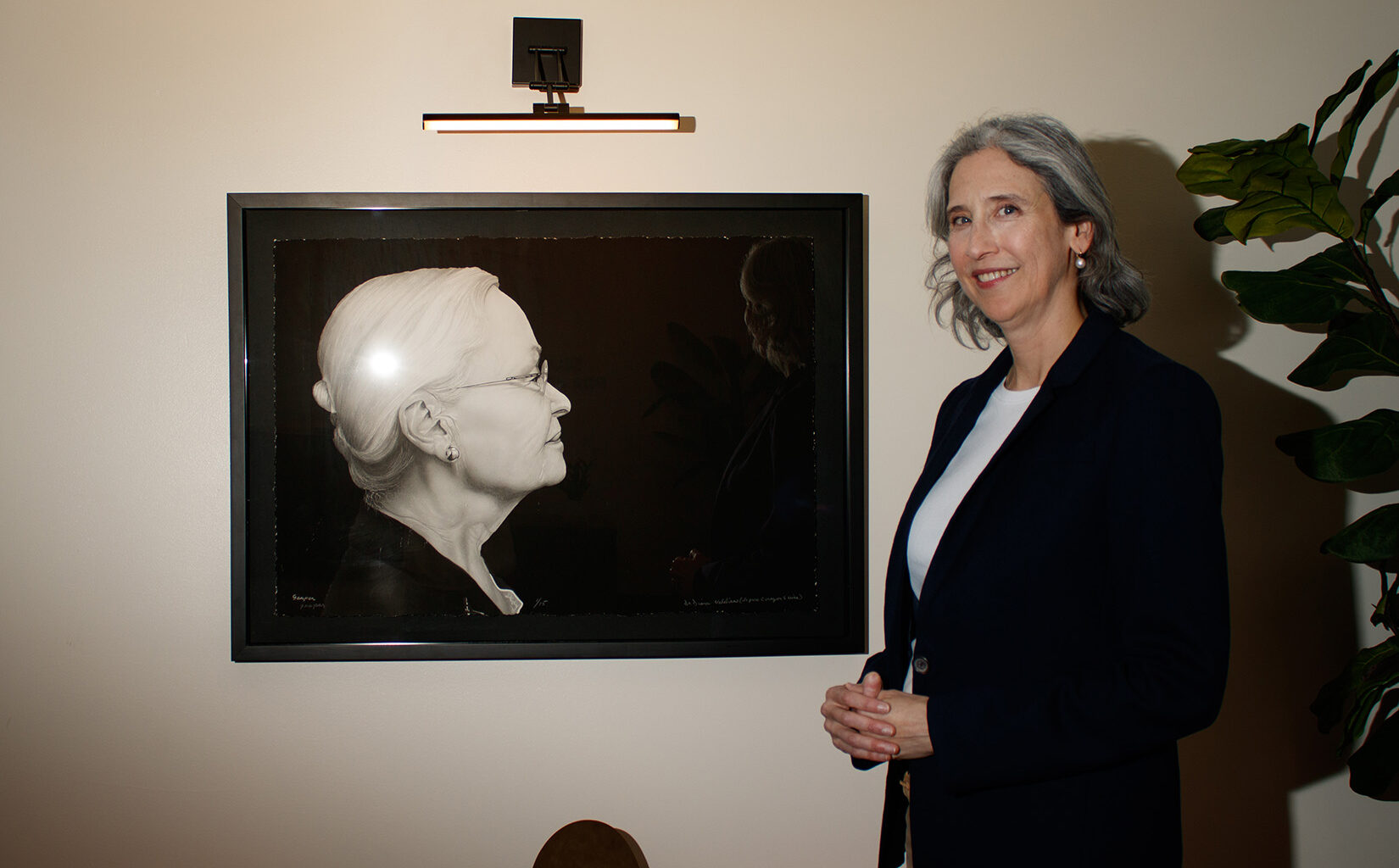
Four years after her death, Natalicio’s influence remains deeply rooted at The University of Texas at El Paso (UTEP), the nation’s leading Hispanic-Serving Institution (HSI). The Diana Natalicio Institute for Hispanic Student Success seeks to guide how HSIs like UTEP can advance student success through research, collaboration and social mobility initiatives.
Anne-Marie Núñez, Ph.D., is the executive director of the Diana Natalicio Institute for Hispanic Student Success. Núñez emphasized Natalicio’s impact on both the university and higher education nationwide.
“She was the beloved president of UTEP for 31 years and had endured impact on the university and also on the El Paso community at large,” Núñez said. “She also had an even more significant impact on higher education in the nation. In the spirit of what she used to say, ‘talent is everywhere, opportunity is not’ she worked really diligently to bring those opportunities to students at UTEP.”
Through Natalicio’s leadership, UTEP became the nation’s top open access R1 university as identified by the Carnegie Classification of Institutions of Higher Education. The institution has also gained national recognition for promoting social and economic mobility while prioritizing student achievement.
“When Diana Natalicio passed away, there was a lot of interest in continuing her legacy. There was an idea that UTEP should house an institute where research could be generated and created and spread to be able to improve opportunities for all students,” Núñez said.
The Diana Natalicio Institute advances student success by using research and practical experience from other institutions and HSIs to improve higher education through collaboration among universities. The institute analyzes effective practices within HSIs and examines how those strategies can be adapted across institutions.
“What students and faculty here can take away, is the power of integrating this idea of providing access to higher education and excellence and believing in the assets of the community of the students who come here and how to build on those assets,” Núñez said.
Today, UTEP serves a student population that is 84% Hispanic, a foundation established during Natalicio’s presidency.
“People were not talking about integrating access, excellence and opportunity the way that Diana was then. She was a pioneer. Now, a lot of people talk about it, but back in the day, she was really the person highlighting that. She really built this operational approach to build student success,” Núñez said.
Community members, alumni and media were invited to the ninth floor of the Education Building for the institute’s open house, celebrating the newly renovated space and honoring Natalicio’s continued legacy.
“She was nationally and internationally renowned because she was such a distinctive leader,” Núñez said.
The event brought together scholars and institutional leaders to reflect on Natalicio’s initiatives at UTEP and discuss how her work can further shape the future of higher education.
“I really hope that students will realize the importance of the opportunities that they have available to them here,” Núñez said. “What I hope the students will take from the institute is this campus’s commitment to reaching out to students, trying to meet students where they are and trying to really lift success.”
The Diana Natalicio Institute continues to conduct research and data analysis that are shared with universities nationwide to promote Hispanic student triumph. The institute’s renovated location was funded by a $12.7 million estate gift from Natalicio and an additional $1 million from The University of Texas System Board of Regents. Awards and memorabilia honoring Natalicio’s legacy are displayed throughout the institute.
Vanessa Orozco is a contributor for The Prospector and may be reached at [email protected].