
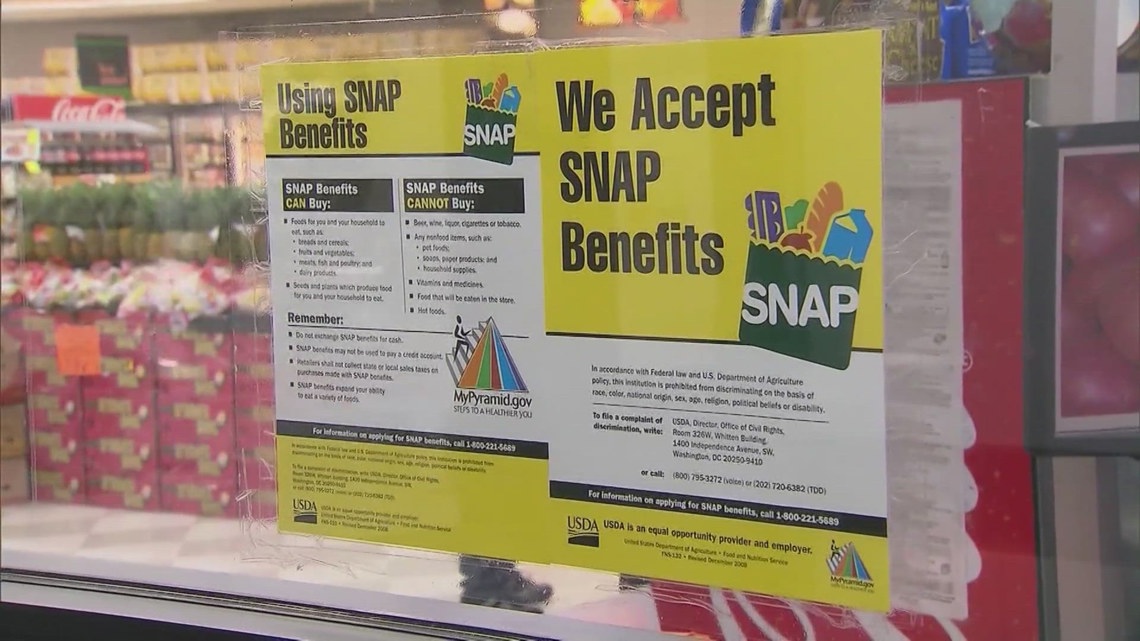
Individuals who do not meet the work requirements may only be allowed to receive SNAP benefits for three months within a three-year period.
AUSTIN, Texas — Austin residents who rely on the Supplemental Nutrition Assistance Program (SNAP) are expressing concern as a new set of federal work requirements approaches its enforcement deadline.
Following the enactment of the One Big Beautiful Bill Act, updated federal regulations mandate that certain SNAP recipients verify participation in work, volunteer, or job training activities for a minimum of 80 hours per month to remain eligible for benefits. Individuals who do not meet this requirement may only be allowed to receive SNAP benefits for three months within a three-year period, unless they qualify for an exemption.
Previously, the work rules applied to adults up to age 54 who were physically and mentally able to work and did not have children under 18 living with them. The updated rules now apply to adults up to age 64 and include parents whose youngest child is 14 or older.
The changes also remove work exemptions for several groups, including people experiencing homelessness, veterans, and young adults aging out of foster care.
Chivas Watson, a SNAP recipient, told KVUE these changes impact his family. “We got the letter about two weeks ago, and it made us cry,” he said.
Watson said he’s been out of work since his previous job shut down and has struggled to find full-time employment before his three months of benefits expire.
“Really nervous. I mean, we’re we’re we’re not eating as much. We’re having to really watch, you know, the consumption,” he said. “The fact that, you know, this is really coming to the end has us really worried, has us in fear.”
Celia Cole, CEO of Feeding Texas, said food banks are preparing for a rise in demand as more Texans struggle to meet the new requirements.
“Even when there’s a small change in SNAP, we always see more people needing help,” Cole said. “We are already stretching our resources thin. There are a lot of people needing our help right now due to persistently high food prices, so we are very worried that this will mean more people in our lines and a greater strain on our resources.”
Cole explains some national estimates suggest about 275,000 people in Texas could lose benefits as a result.