
A judge sided with the city, allowing a project to build a new downtown convention center to continue as planned. Opponents are now considering next steps.
AUSTIN, Texas — Critics of Austin’s new convention center said on Monday they’ll decide within the next day or two whether to appeal after losing a lawsuit aimed at putting the project’s future on the May ballot.
Over the weekend, a judge ruled the City of Austin acted lawfully when the city clerk rejected petition signatures collected by Austin United PAC. The group argued those signatures should have triggered a citywide vote on what happens to the convention center site.
The petition drive ultimately fell about 500 signatures short of the number needed to qualify for the ballot.
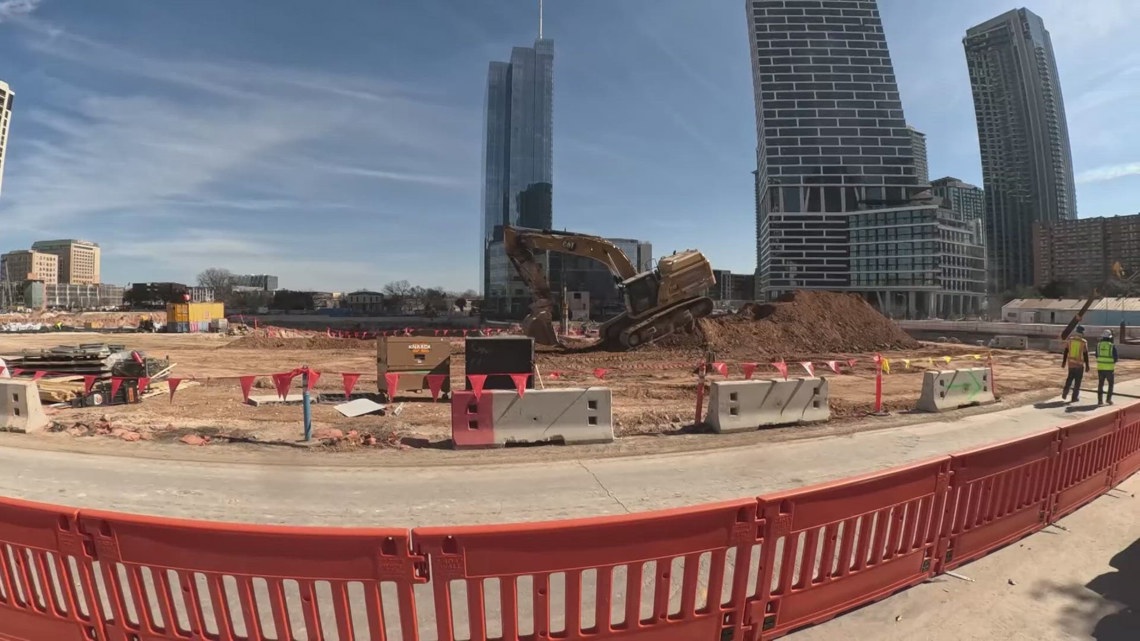
Downtown, the former Austin Convention Center is already gone, replaced by a massive construction site that stretches across six city blocks. Despite the demolition, which began in May 2025, opponents say voters should still have a say in what replaces it.
On Monday, construction activity continued, just days after the judge’s ruling cleared another legal hurdle for the city’s plans.
Bill Bunch, a lawyer for Austin United PAC, said the group was disappointed and surprised by the decision. He argues signatures from people living in areas just outside Austin city limits, known as extraterritorial jurisdictions or ETJs, should have been counted in the ballot petition. Any appeal, he said, would focus on that issue.
“With those signatures counted, even the clerk agrees we had enough over the 20,000-signature requirement provided by the city charter,” said Bunch on Monday.
Bunch said the group is watching a narrow window that could still allow a court-ordered May election. If that doesn’t happen, he said the group could pursue a slower appeals process to try to force a vote in November. Another option under consideration is launching a second petition drive.
On Monday, Mayor Kirk Watson’s office pointed to a statement emailed to KVUE following the ruling. In it, Watson called the decision “a good win for Austinites,” praising the city clerk’s handling of the petition process. The mayor also emphasized the importance of the convention center expansion, calling it a key part of Austin’s tourism economy and the city’s future.
The project is being funded through hotel occupancy taxes and convention center revenue. City leaders estimate the cost at $1.6 billion. Opponents argue the long-term price tag could reach $5.6 billion once 30 years of interest payments and operating losses are factored in.
For now, construction continues as planned, even as critics decide whether their legal fight is over.