
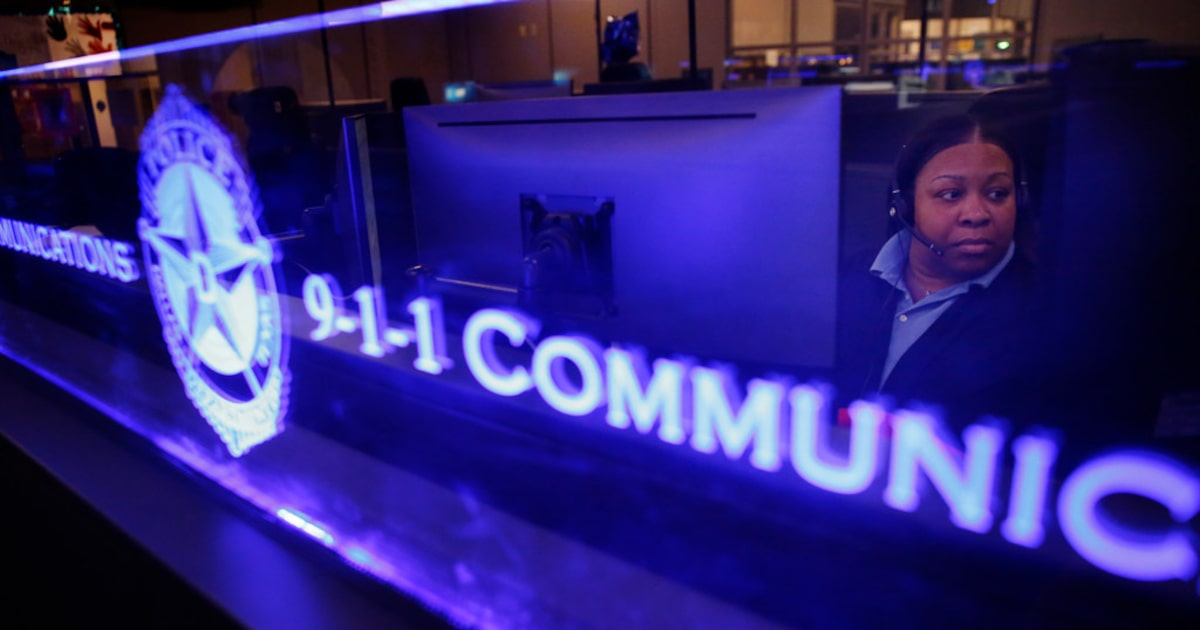
Dallas police are considering leveraging technology alongside a public-awareness campaign as they look for ways to curb random gunfire across the city.
Police briefed the City Council’s Public Safety Committee on Monday about the tools they could deploy — and the response times they’re aiming for — to deter random gunfire. Officials have said gunfire reports are often difficult to trace, rarely leads to arrests and can, at times, turn deadly.
Maj. Yancey Nelson told council members that police have logged fewer random gunfire reports each year since 2022, but are still looking for ways to tighten their response. He said the department is working to integrate its noise-based gunshot detection sensors, drones and surveillance cameras into a coordinated system aimed at responding to gunfire calls within 30 seconds to two minutes.
The briefing follows mounting discussions at City Hall over the problem. Nelson, who oversees the department’s patrol division spanning South Dallas, parts of Oak Cliff and Pleasant Grove, did not offer a timeline for when the more integrated system could be rolled out.
Breaking News
It also comes as response times have remained a sticking point, with average arrival times exceeding the department’s goals in recent years across all call-priority categories.
Dispatchers classify 911 calls by urgency, with Priority 1 reserved for the most serious emergencies and the fastest response. Reports of random gunfire are typically coded as Priority 3, the same category as minor crashes, missing-person cases, intoxicated-person calls and drug-house complaints.

Dallas police respond to a scene in the 4300 block of Woodhollow Drive on Monday, Feb. 2, 2026, in Dallas.
Smiley N. Pool / Staff Photographer
Related

The department’s goal for Priority 3 calls is a 30-minute response. So far this year, officers have averaged about 122 minutes on those calls, an improvement from roughly 233 minutes over the same period last year, according to police data.
Gunshot-detection systems are used in cities across the country, but the technology has drawn skepticism in some places over accuracy, cost and whether it meaningfully reduces shootings or boosts arrests.
In recent years, cities like Chicago and San Antonio have cut short or declined to renew contracts with ShotSpotter, a major vendor, citing concerns about expense, effectiveness and other issues.
Dallas has wrestled with the issue for years. Before the city signed a contract with a vendor in 2024, city officials had spent more than a decade circling gunshot-detection technology. Council members and other officials have described random gunfire as one of the most common complaints they hear from residents.
In December, Nelson told the committee the sensors from the city’s vendor, Crime Gun Intelligence Technologies, were falling short of their expectations in part because of their narrow coverage area. He added at the time that the department was exploring alternative vendors offering trials of their technology.
During Monday’s meeting, Nelson said data shows random gunfire reports have been concentrated in patrol divisions serving southern Dallas more than in other parts of the city. He showed council members an internal dashboard that plots the calls on a heat map, highlighting where the reports have historically clustered.
A public awareness campaign would precede the buildout of the gunshot detection system. Nelson said the plan includes billboards and a presence at neighborhood events to educate residents about the dangers and penalties associated with celebratory or random gunfire.
Council member Cara Mendelsohn, who represents District 12 in far North Dallas and chairs the Public Safety Committee, has been among the most vocal on the issue. She said her Nextdoor feed is routinely filled with residents posting about gunshots and argued that any public-awareness push should more directly warn about the criminal consequences of firing a gun outside.
“I hope we go strong on this, meaning the billboard should not be these great, data-driven solutions you’re telling us,” Mendelsohn said. “It needs to tell people to stop.”