
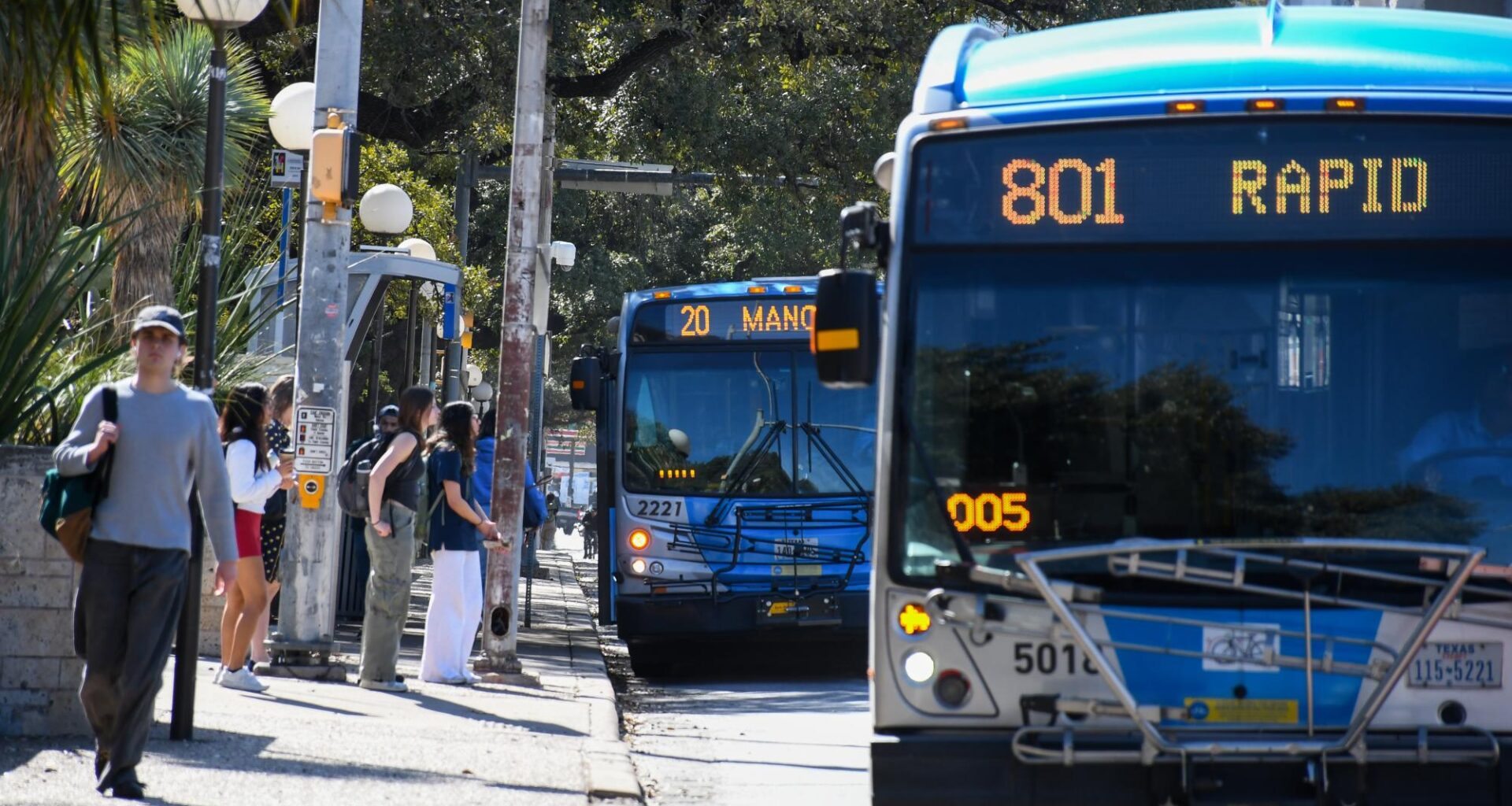
CapMetro began allowing passengers to use tap-to-pay on Feb. 1, meaning riders can use contactless cards or phone wallets to pay for their fares.
Peter Breton, senior community engagement coordinator for CapMetro, said the system aims to make riding easier and faster, especially for visitors and infrequent riders. Passengers who use the same card for multiple trips in a day benefit from daily fare capping, meaning they won’t pay more than the maximum daily fare of $2.50 on local buses, he said.
“If you have ridden the bus, I’m sure you have also experienced seeing people fumble for how they will pay, whether it is cash or trying to pay with a credit card or their phone,” Breton said. “(Tap-to-pay) makes boarding more efficient because it is quicker.”
Breton said CapMetro is looking to expand tap-to-pay on Rail, a train for riders traveling between Leander and Downtown Austin, along with Pickup, a shared shuttle service.
Blythe Nebeker, communications and public information officer for CapMetro, said the initiative has received great feedback from riders.
“It’s something a lot of people were looking forward to when we did our fare program overhaul last spring,” Nebeker said.
CapMetro launched the fare program overhaul in March 2025 to make riding more efficient for passengers, according to its website. The change included new validators and an improved mobile app, but the tap-to-pay initiative was delayed due to technical difficulties.
University students, faculty and staff can swipe their UT ID to ride mainline buses for free, according to the UT Parking and Transportation Services website. However, Breton said the implementation of tap-to-pay helps those who may have forgotten their UT ID, and may not have cash or the Umo App, to pay for their fare.
UT alumnus Richard Marks rides CapMetro buses often and pays the fares since he no longer has a UT ID. He has the Umo app, but said tap-to-pay is more convenient.
“You have to load funds on (the Umo app) and you forget,” Marks said. “It’s much easier to tap a card.”