
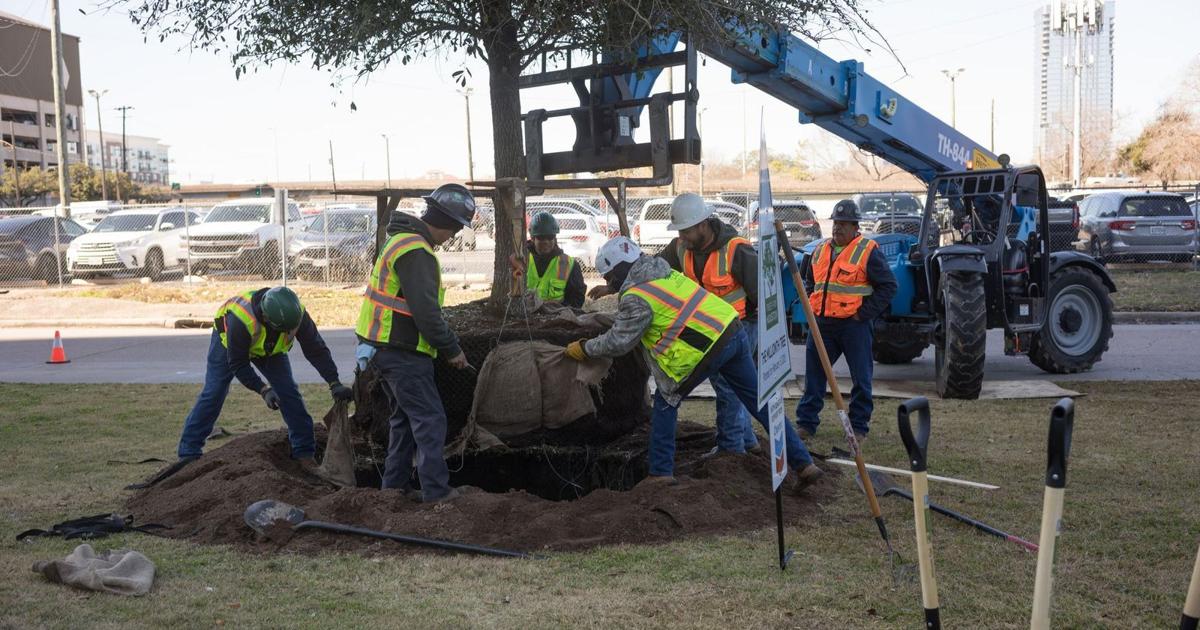
Oak Forest nonprofit Trees For Houston (TFH) has reached a major milestone, planting its one-millionth tree. In partnership with Chevron, the organization marked the occasion with a live oak planted at the historic 1847 Kellum-Noble House in Sam Houston Park.

Local nonprofit Trees For Houston (TFH), working alongside Chevron, marked the planting of its one-millionth tree by placing a live oak at the historic 1847 Kellum-Noble House in Sam Houston Park. (Photo by Daniel Ortiz)
Community leaders and elected officials, including Mayor John Whitmire, attended the event to recognize the organization’s urban forestry efforts across Greater Houston.
“Reaching one million trees is a milestone built over four decades by volunteers, supporters, and partners who believed Houston’s neighborhoods deserve a healthier, greener future,” said Barry Ward, Executive Director of Trees For Houston.
In an emailed statement, Ward said the Kellum-Noble House was chosen for its symbolism, linking Houston’s built history with living nature. Sam Houston Park, the city’s first municipal park, connects historic homes and cultural heritage with Houston’s natural patrimony through its trees and canopy.
Left to right: Abner Lyons, district liaison for Rep. Harold V. Dutton; Leah Casey, Chevron; Mayor John Whitmire; Barry Ward, Trees For Houston; Mister McKinney, The Heritage Society; Commissioner Rodney Ellis; Ashley DeLeon, Harris County Precinct 4; Sallie Alcorn, Houston City Council. (Photo by Daniel Ortiz)
“Trees bring beauty and shade to our neighborhoods and improve the air we breathe,” said Mayor John Whitmire. “Each tree is a symbol of our resilience and reflects who we are as a city today—and the legacy we are building for the future.”
Houston’s tree canopy
From cleaner air and cooler neighborhoods to lower energy bills, trees deliver measurable health and environmental benefits that multiply as the city’s canopy grows.
Using U.S. Forest Service i-Tree analysis, Houston’s tree canopy is estimated at 18.4%, Ward said. The city’s tree cover is unevenly distributed, and many fast-growing areas still require large-scale planting to keep pace with development. If a school or neighborhood has little to no shade, it’s a priority for planting, Ward said.
“Trees For Houston didn’t just plant trees, they showed up for Houston’s East End,” said Abner Lyons, district liaison for Rep. Harold V. Dutton and long-time TFH community partner. “They listened, they partnered with people who live here, and they followed through. That kind of care leaves a mark. I’m grateful the community is greener today because of their work.”
Downtown tree efforts focus on replacing lost trees, Ward said, while the highest potential for large-scale forestation exists in fast-growing suburban communities such as Katy, Fulshear, Sugar Land and Missouri City.
“This milestone is a moment to reflect and to take the next step: planting and distributing more trees, strengthening the care that helps them thrive, and growing partnerships that can extend this impact beyond Houston over time”, said Barry Ward, Executive Director of Trees For Houston. (Photo by Daniel Ortiz)
TFH generally uses a “right tree, right place” approach—matching species to site conditions, space, and long‑term maintenance, Ward said. For Houston‑area streets and public sites, commonly recommended, hardy options include live oak, cedar elm, bald cypress, and several oak species (among other native species.)
About Trees For Houston
TFH was founded in 1983 as the Live Oak Society, with the mission to plant, protect, and promote trees throughout the greater Houston area.
Ward said the live oak was chosen as the millionth tree both for practicality and symbolism: the native species is hardy in Houston’s climate and complements the park’s historic surroundings, while its centuries-long lifespan represents a lasting investment in the city’s future.
“Live oaks can live for centuries, so planting one is a literal commitment to Houston’s future,” Ward said. “The oldest tree in Houston is said to be a live oak around 500 years old, underscoring the ‘outlive us’ time horizon.”
Over the decades, TFH has led or supported landmark initiatives such as Trees For Downtown (2,400 live oaks), The Parkway Project (tree planting across 50 miles of major thoroughfares), and Freeways to Treeways (9,000+ trees and seedlings along Houston’s major freeways — one of the first major reforestation programs in a US city).
“Chevron’s partnership with TFH has grown into a more than 25-year collaboration rooted in long-term impact, “said Margaret Cooper, director and senior vice president, Global Corporate Affairs, Chevron. “Through more than $1.3 million in giving and the operation of Chevron-supported tree nurseries, we are proud to be part of Trees For Houston’s growth and distribution of trees across the region. In 2024 alone, Chevron’s giving enabled the planting of 8,000 trees, strengthening Houston’s urban canopy and public spaces.”
Trees For Houston established its first permanent home in 2023 with the opening of The Kinder Campus, housing the Kyle and John Kirksey Center, Chevron Tree Nursery and Bauer Education Center.
Ward estimates the organization planted about 25,000 trees in its first 15 years and then scaled dramatically, planting the remaining approximately 990,000 in the years after as programs, partners, and funding expanded.
There are two long‑term constraints that shape TFH’s strategy. Ward said:
(1) Maintenance capacity. (“You don’t want to plant anything you can’t take care of,” he said.)
(2) Physical space in the built environment.
To learn more about Trees For Houston, make a contribution, volunteer or sponsor tree planting events, visit TreesForHouston.org.