
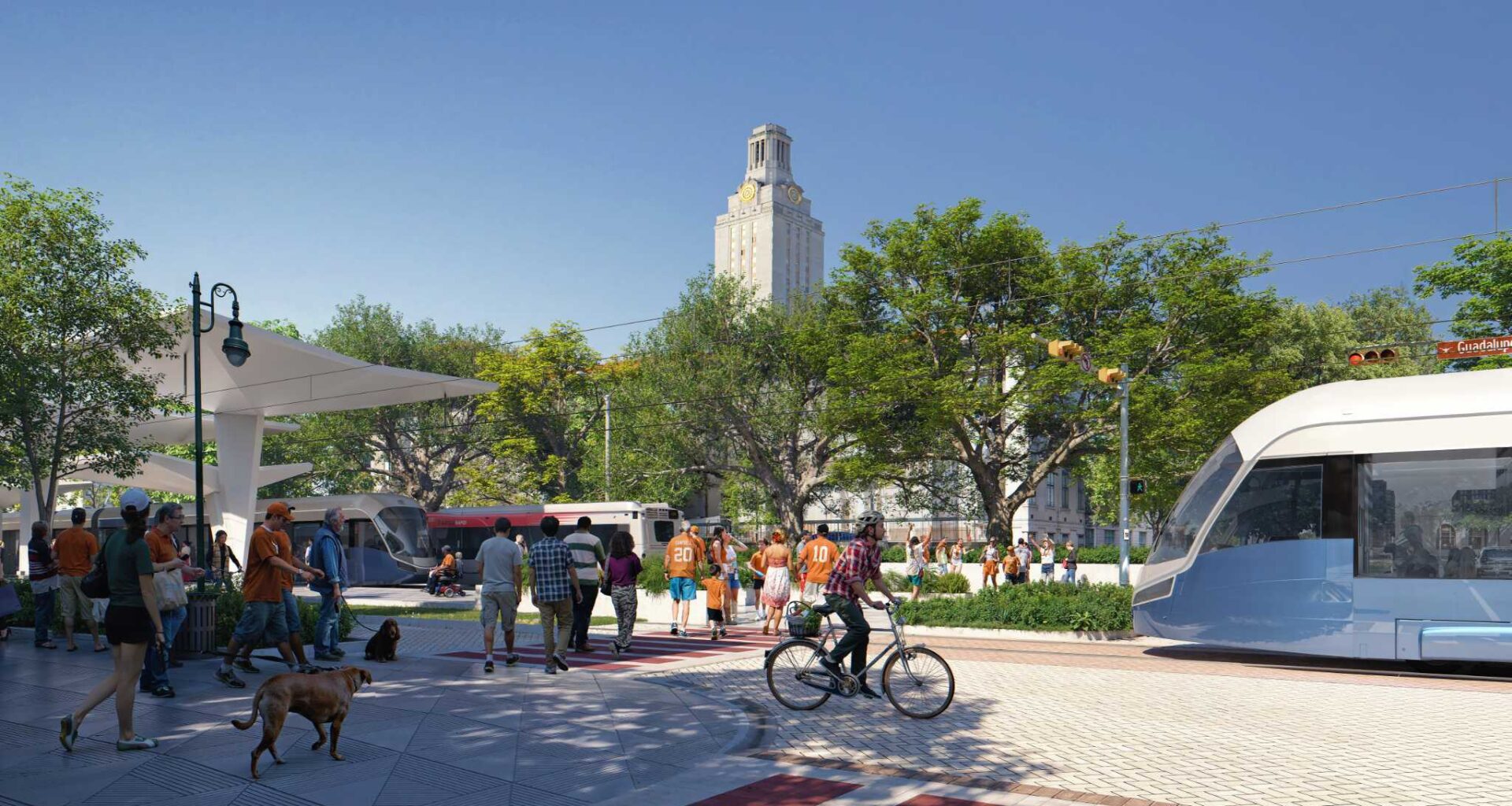
The underlying dispute centers on the funding mechanism for the more than $7 billion project, which Texas Attorney General Ken Paxton and other plaintiffs argue is unconstitutional.
The case stems from two lawsuits filed in 2023 that were later consolidated. The first was brought by a group of residents that included business owners, current and former elected officials and social justice advocates who argued that the light-rail project has been scaled back so significantly that it no longer reflects what Austin voters approved.
Voters overwhelmingly endorsed the light-rail plan in 2020 as part of Project Connect. Early proposals envisioned as many as 28 miles of track across the city. Local officials later reduced the plan to fewer than 10 miles, citing rising construction costs.
The 2020 ballot measure authorized a 20% increase in Austin’s property tax rate dedicated to transit improvements. Under the plan, the city would transfer that revenue to Austin Transit Partnership, which would use the funds to repay bonds issued to finance construction.
The second lawsuit was filed by Austin Transit Partnership itself. Known as a bond validation suit, it seeks a court’s approval to issue the bonds. The two cases were combined and scheduled for trial in Travis County before jurisdictional disputes sent them into the appeals process.
Lawyers for the city of Austin and Austin Transit Partnership, the governmental entity overseeing the project, argued Tuesday before the state’s highest civil court against attorneys from Paxton’s office.
The justices are not being asked to rule on the merits of the underlying legal challenge. Instead, they are weighing a procedural question: whether the attorney general’s office was allowed to file an early appeal that halted the case before it could be tried locally.
If the court sides with the city and Austin Transit Partnership, the case would likely return to Travis County for trial. A ruling in favor of the attorney general could send the case back into the appellate process. The court did not issue a ruling Tuesday; decisions typically come weeks or months after oral arguments.
The project recently received federal environmental clearance, a key step toward securing a planned $4 billion federal grant.
Austin Transit Partnership CEO Greg Canally said earlier this year that he remains confident in the outcome of the case.
“We have complete confidence in the court system to hear that case in expedited fashion,” Canally told the American-Statesman in January. “But none of that has stopped us from progressing the work.”