
Austin and Texas Department of Transportation officials reached a new agreement for management of state highways throughout the city.
The big picture
Austin and TxDOT share maintenance responsibilities for state roads within city limits. Those duties were laid out decades ago in a Municipal Maintenance Agreement, or MMA, executed in 1986.
The city and state coordinate to oversee both controlled access highways that are only accessible via ramps, and noncontrolled access highways that have direct entryways from other streets and properties. Controlled access highways include I-35, MoPac and US 183, and noncontrolled TxDOT roadways include stretches of Menchaca and Bee Caves roads as well as Loop 360, FM 969 and RM 620.
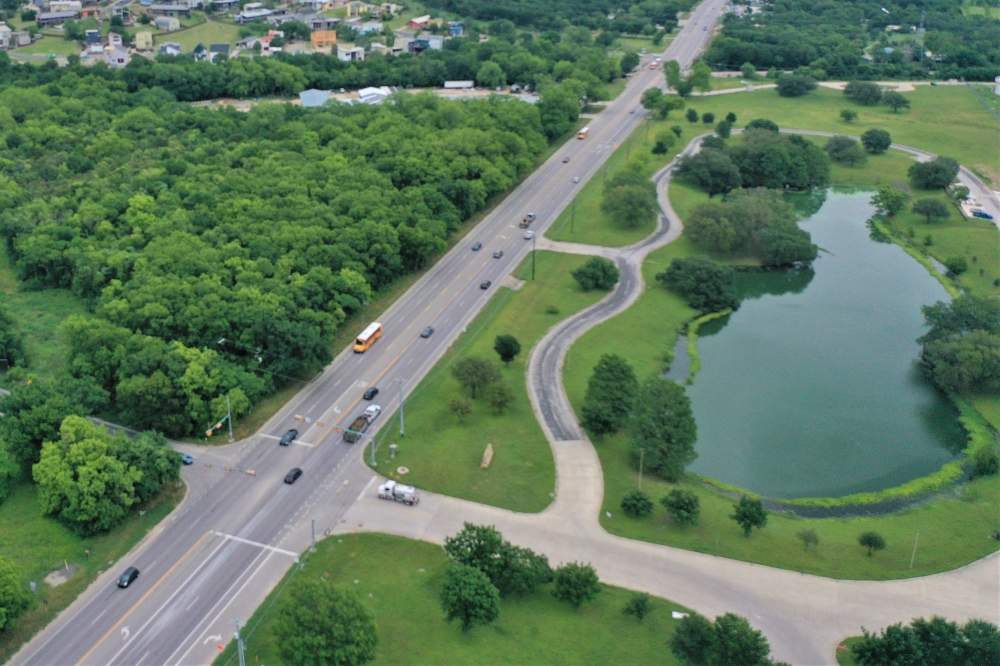
 Austin and the Texas Department of Transportation have a new agreement for management of state roadways in the city. (Courtesy city of Austin)Austin and TxDOT recently worked to lay out a new MMA given updates to roadway conditions and relevant regulations. The new agreement was approved by City Council on Feb. 5 to reflect some of those changes and formalize the entities’ working relationship after years of collaboration, according to the city.
Zooming in
The Austin-TxDOT agreement covers road and bridge upkeep such as preventative maintenance, resurfacing and rehabilitation work. It also applies to roadside landscaping and litter removal, signal and street lighting service, pedestrian features like sidewalks, and nearby drainage facilities.
The 2026 agreement is meant to clarify some aspects of the 1980s version, including responsibilities for features like signage, signals and pavement markers. It also updates the list of state roadways and outlines maintenance requirements for pedestrian infrastructure under the Americans with Disabilities Act.
Generally, the state’s responsibilities on the controlled access highways cover various daily maintenance needs like surface upkeep and pavement marking. The city’s include pedestrian and bicycle assets, traffic signals and any needs related to the enforcement of local ordinances like the ban on public camping or parking enforcement.
The state is also responsible for most maintenance along travel lanes and shoulders of noncontrolled access highways, and TxDOT can assist the city with its sweeping, ice mitigation and mowing duties if requested. Austin is tasked with those maintenance items and parking enforcement, management of signals and driveways, signage and pavement markings and crosswalks.
The new agreement was developed after review by several city departments that share oversight of the roadways and adjacent areas. Transportation Director Richard Mendoza previously said the MMA remains “largely the same” as the one established decades ago and isn’t expect to carry any budget impacts for the city, although the aging of older roadways and construction of new infrastructure will add to overall local maintenance needs.
As work progresses on TxDOT’s largest local project—the multibillion-dollar I-35 expansion and reconstruction—a separate MMA is also anticipated to outline maintenance on Austin’s planned caps and stitches that’ll bridge the widened highway.