
Arlington has proposed a “technology-based” transit authority in a letter from city manager Trey Yelverton to the Regional Transportation Council.
The document asked for “exploratory discussions” for a transit agency under the leadership of the Regional Transportation Council, a committee of the North Central Texas Council of Governments, and its Transit 2.0 subcommittee.
Currently, Arlington — home to the Dallas Cowboys and the Texas Rangers — is the largest American city without mass transit.
The idea will be discussed with Michael Morris, transportation director for the council of governments, and the Regional Transportation Council at a Feb. 12 meeting, according to its agenda.
Breaking News
“I think the days of fixed-route bussing is limited, and it’s not for every single community that’s out there. But that doesn’t mean we can’t be on the cutting edge of what’s available to people,” said Arlington Mayor Jim Ross.
“The purpose of this is to continue to explore a variety of different transportation options in the future,” he added.
“Is there going to be a Jetsons era where we’re going to have air taxis flying around out there, and if that happens, how does that look? Where does the North Texas region fit in something like that? Those types of things, I think, warrant an exploration of this technology-based authority.”
Arlington is one of several Metroplex cities not already part of a transit authority — DART, Trinity Metro and Denton County Transit Authority — having voted down public transportation three times between 1980 and 2002.
Cities are allowed to levy a 2% local sales tax, 1% of which typically goes toward a city’s general fund to pay for public safety and other programs. Member cities of DART pay in with the remaining 1%, while member cities of Trinity Metro and Denton County Transit Authority pay 0.5%.
Arlington, meanwhile, has used a portion of its local sales tax— in addition to hotel and rental car taxes — to fund its stadiums, AT&T Stadium, Globe Life Field and the former Globe Life Park.
While Globe Life Park and, as of last summer, AT&T Stadium are paid off, the sales tax will remain to pay off Globe Life Field, which opened in 2020. This means Arlington likely couldn’t join one of the existing transit authorities as a full member, even if it wanted to.
However, Arlington does want to become a stop on a high-speed rail line connecting Dallas and Fort Worth, which would require membership in a transit authority. Ross said that the city has made a commitment to “become involved” with a transit authority “if and when” high-speed rail becomes reality in North Texas.
“We remain committed to working with regional partners to bring this project to fruition,” the letter echoed.
“To that end, the City of Arlington reaffirms its intent to participate financially in this project once state and federal clearances are secured and a viable, approved business plan is in place,” the document read.
“A technology-based governance mechanism could facilitate Arlington’s financial participation while supporting the broader advancement of next-generation mobility solutions.”
‘More than one way to skin a cat’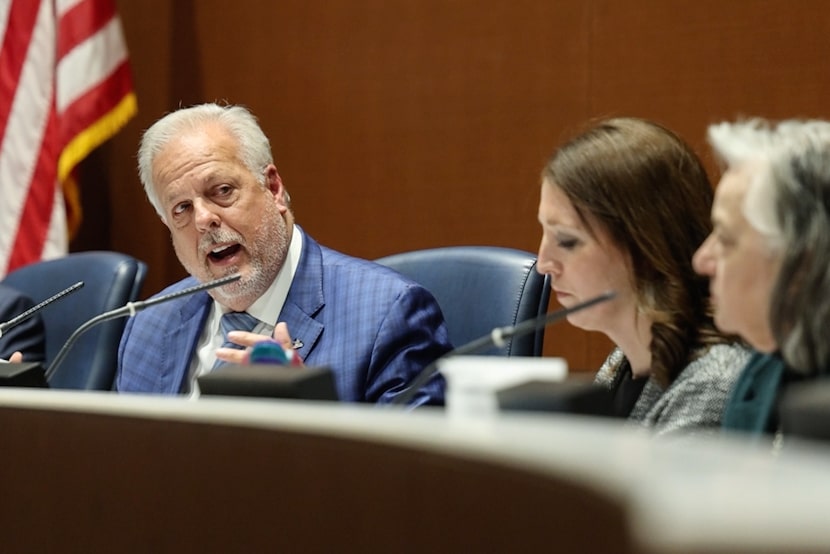
Arlington mayor Jim Ross reassures residents after the anti-discrimination ordinance failed to be re-instated during a City Council meeting on Tuesday, Dec. 9, 2025, in Arlington. The vote failed 5-4.
Christine Vo / Staff Photographer
Ross said it’s still too early to think about a funding mechanism, sales tax or otherwise, for the proposed technology-based transit agency. Rather, the city was inviting discussion with other North Texas communities on how to bring next-generation transit solutions to the region.
Still, he said Arlington is likely to be restricted financially on what it can do for the time being. Though Globe Life Field is on track to be paid off 15 years early relative to its initial 30-year period, legal obligations and the voter-approved and -extended sales tax still remain.
“However, there’s more than one way to skin the cat, as the old saying goes, and given the right program at the right time, we can find ways to fund good ways of getting involved,” he continued.
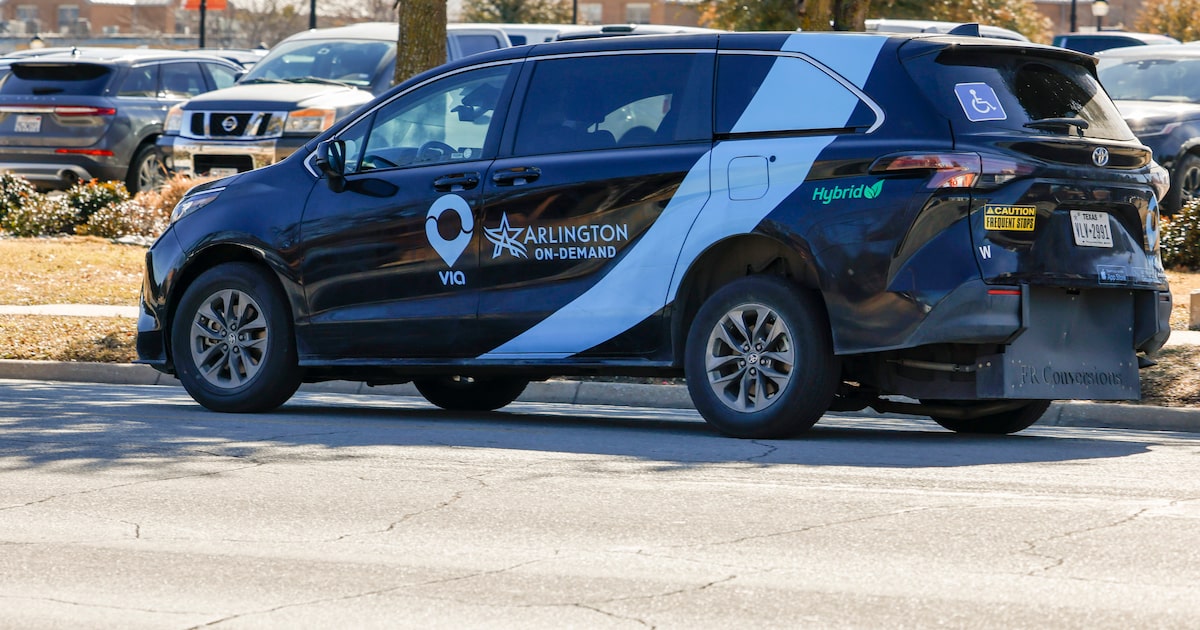
Arlington has already pioneered public rideshare through a $22 million contract with Via, and previously announced plans for flying taxis that use electronic vertical take-off and landing, though those have not received Federal Aviation Administration approval yet.
Meanwhile, a high-speed rail proposal between Dallas and Fort Worth is stuck in limbo, stemming from objections to where a route would connect in Dallas, per KERA.
In the meantime, Arlington will host thousands for the nine FIFA World Cup games being played at AT&T Stadium this summer. A transportation plan is in place to facilitate visitors to the city’s entertainment district through collaboration with the Trinity Railway Express, North Texas World Cup organizing committee, Via and a network of charter buses.
Staff writer Lilly Kersh contributed to this report.