
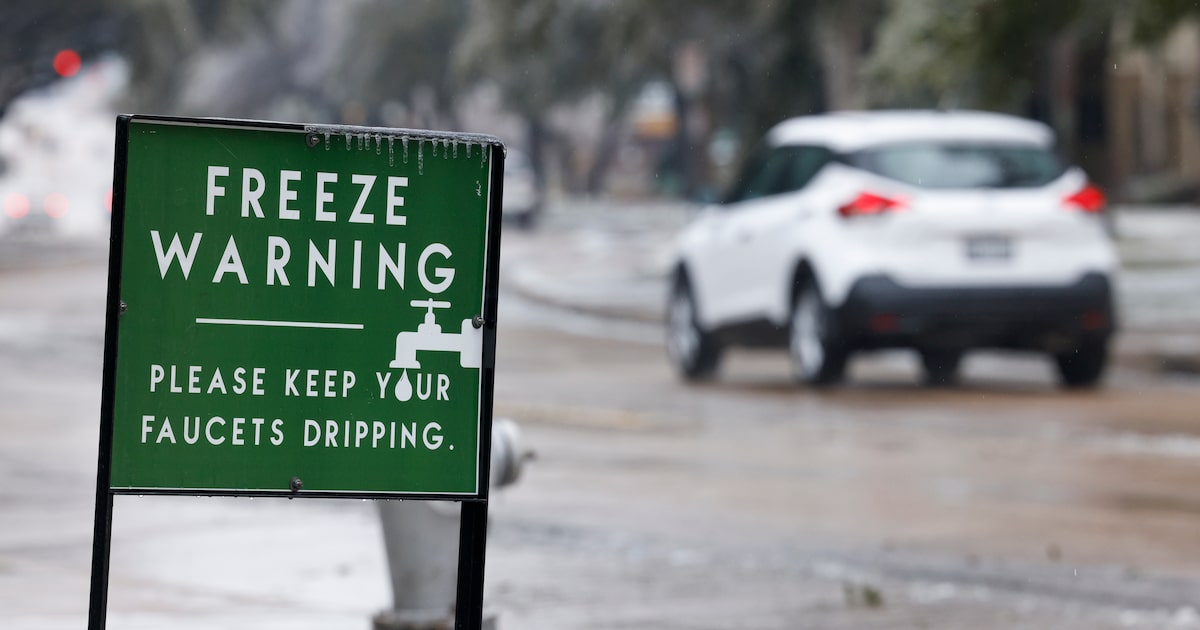
You’re often advised to drip your faucets before a big cold snap to avoid freezing pipes and costly damage.
One reader asked Curious Texas, “How much water does dripping your faucets use?”
Here’s a look at the math, as well as expert tips on how to drip your faucets efficiently.
Water usage
Curious Texas
In short, it depends on how you drip your faucets.
There are several variables to consider, including how many taps you drip and how fast the water comes out. When a single household drips three faucets at a speed of one drip every two seconds, about 11.4 gallons of water are used in a day, according to estimates from the U.S. Geological Survey.
With approximately 534,000 households across the city of Dallas, about 6 million gallons of water could be used in a day on dripping faucets. However, it’s difficult to know exactly how much water is used since small changes to these variables can have big impacts.
Ace Hardware’s Home Services said it’s not necessary to drip every faucet in the home and suggests focusing on those along exterior walls or in unheated areas. Freeze Miser, a company that sells freeze prevention products, recommends dripping the faucet furthest from your main water supply.
Related

Industry professionals recommend faster dripping speeds, with many suggesting one drop, or more, per second to ensure a steady water stream.
Whether you drip two faucets at double the speed or four at half the speed, your additional gallons of water per day would be the same.
Avoiding burst pipes
A consistent stream of water can be essential to preventing burst pipes, and the cost-benefit analysis favors dripping faucets.
The additional charge for dripping faucets is about 2 to 3 cents a day on your water bill. Estimates from Angie’s List indicate the plumbing work to repair a broken pipe can range from $200 to $3,000, depending on the location of the pipe. That cost can also increase if significant water damage is present.
Other strategies to prevent pipes from freezing include ensuring there’s proper insulation and opening cabinet doors to allow warmer air to circulate.