
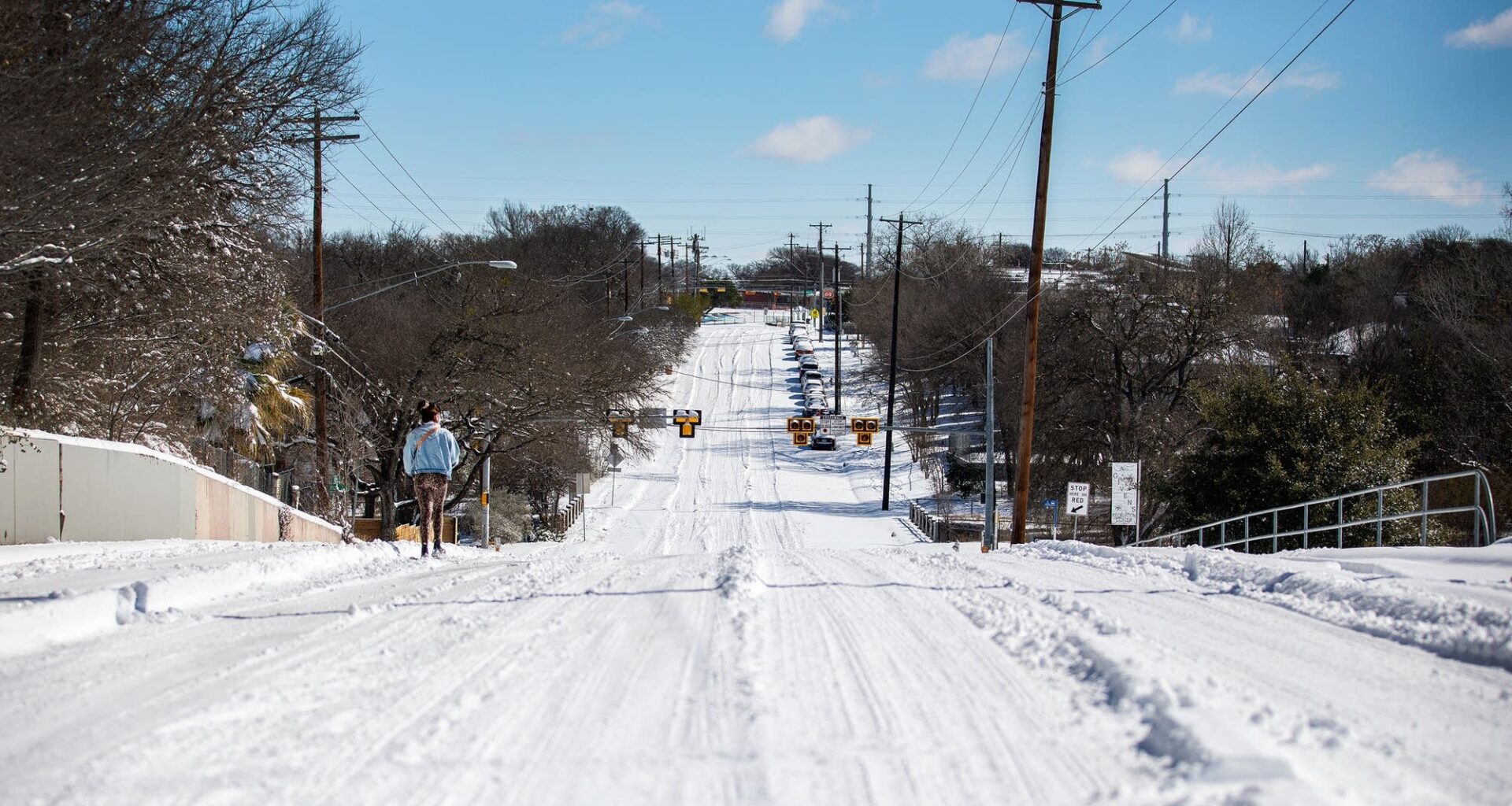
Hundreds died when Winter Storm Uri took out the lights across the Lone Star State five years ago this week. After billions in losses, the storm spurred big investments in energy infrastructure.
When Winter Storm Uri hit five years ago, Ed Hirs, an energy fellow with the University of Houston, was at his apartment.
“[I] lost power for more than 24 hours straight, and then for the next four days. You know, average, maybe four hours of electricity per day,” he said.
Millions of Texans had cranked up the heat, spiking demand. At the same time, “we lost about half of our power plants during that time,” said Joshua Rhodes, a research scientist with UT Austin. “And no grid is resilient to losing half of its generation capacity.”
The cold knocked off power that was being produced by natural gas, coal and nuclear plants, and wind turbines.
Now, a lot of that infrastructure has been winterized. And “we have a lot more things like energy storage,” Rhodes said. “We have a lot more solar, a lot of resources that don’t rely on a fuel supply chain.”
But there are still questions about whether companies who produce and deliver natural gas have sufficiently weatherized their infrastructure, he said.
And Ed Hirs said that the structure of Texas’ unique market means there’s less incentive to build up a cushion of extra electricity. “It doesn’t pay to add capacity, doesn’t pay to add reliability.”
But, he added, that cushion can save lives when extreme weather hits.
More on Texas’ energy gridRelated Topics