
Daisy Espinoza / Houston Public Media
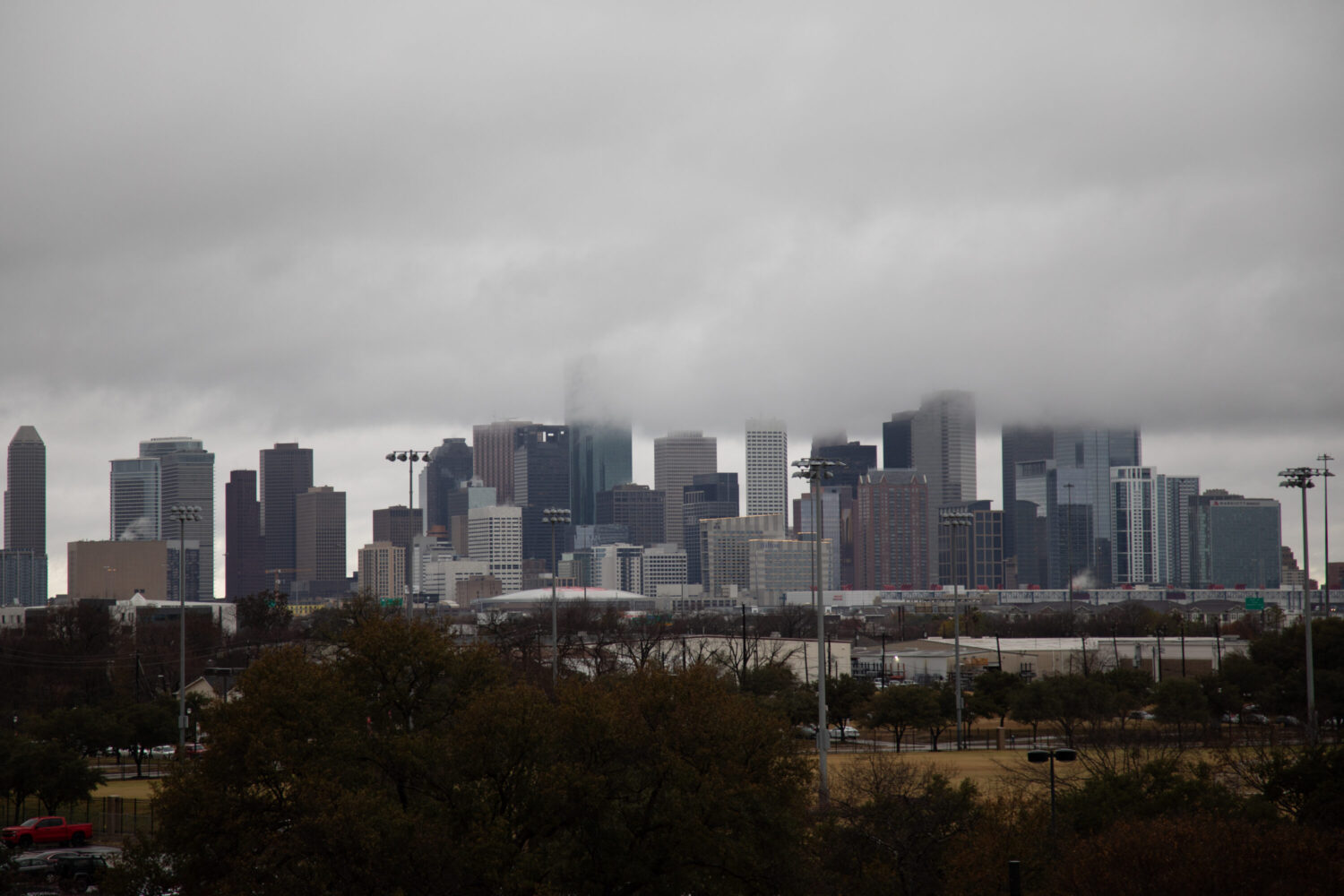
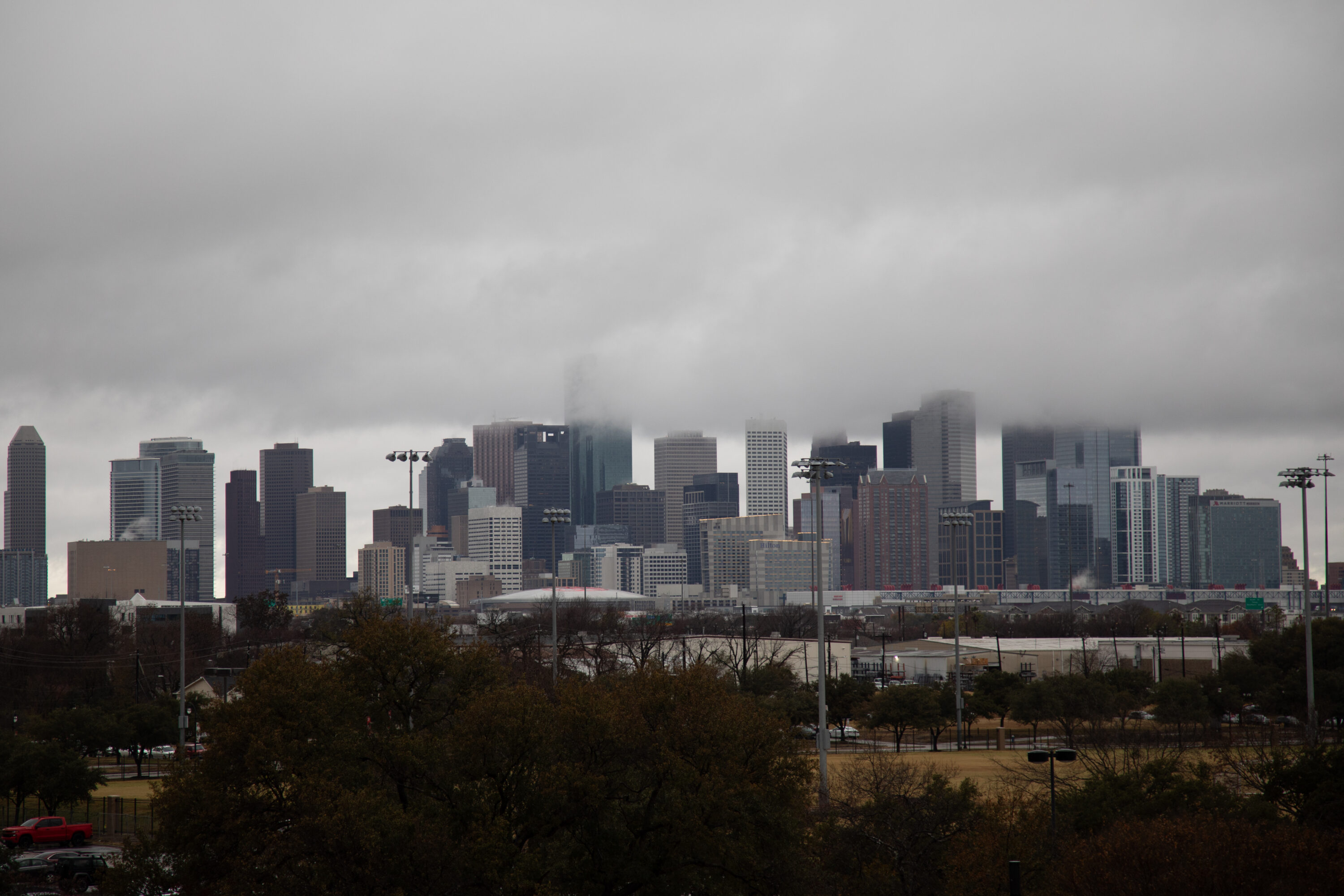
Clouds hang over the Houston skyline on Jan. 23, 2024.
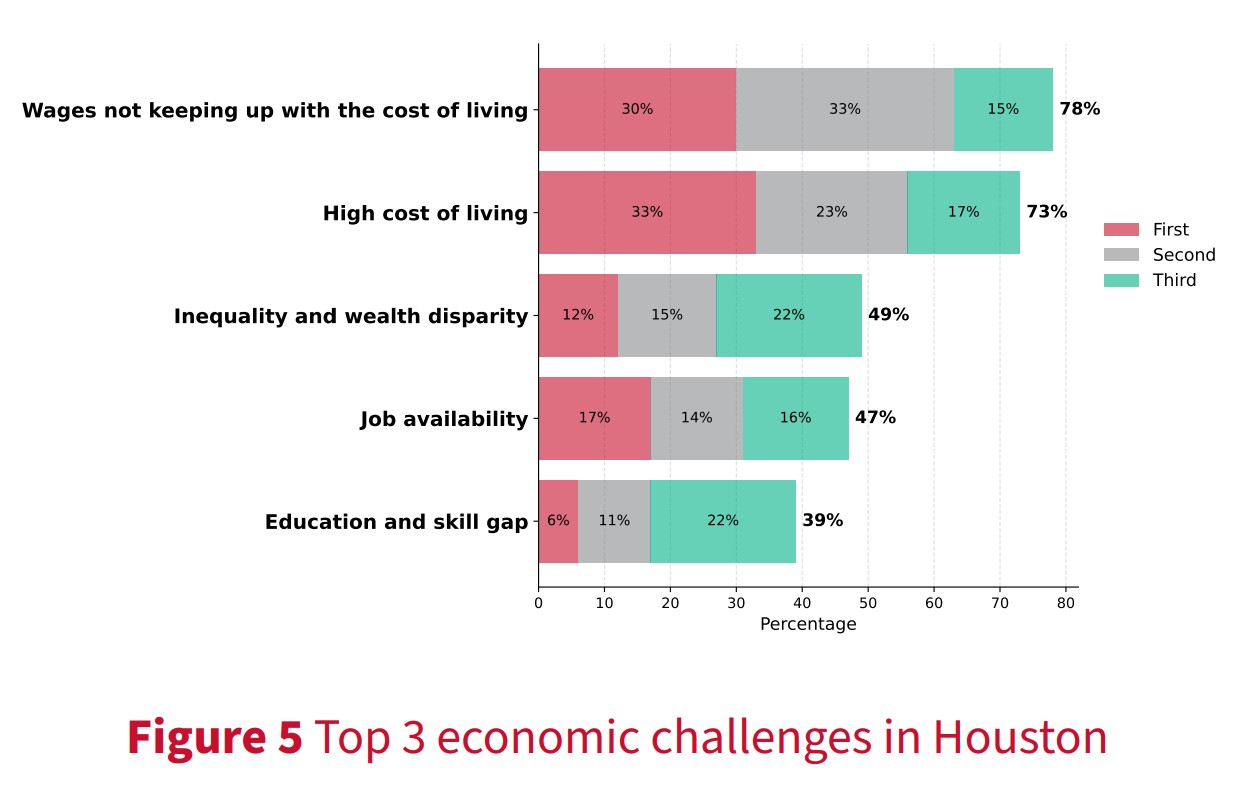
Nearly 80% of Houstonians listed wages not keeping up with the cost of living among their top three economic concerns, according to a survey released this week by the University of Houston.
The survey, published Tuesday by the University of Houston Hobby School of Public Affairs, collected responses from residents of Houston and Chicago to gauge the economic perceptions of those living in the nation’s third- and fourth-largest cities. According to the survey, the cost of living was among the dominant economic concerns for both populations.
Seventy-eight percent of Houstonians cited the cost of living outpacing their wages among their top three concerns, with 33% listing it as their greatest economic concern. Other top concerns among Houston respondents included the high cost of living, inequality and wealth disparity, job availability and education and skill gaps.
Sign up for the Hello, Houston! daily newsletter to get local reports like this delivered directly to your inbox.
Provided/ University of Houston Hobby School
Maria P. Perez Arguelles, the lead author of the survey report and a research assistant professor at the Hobby School, said in a statement the residents of both major cities shared similar economic concerns.
“Affordability is the core issue in both cities: Houstonians worry about wages falling behind, while Chicagoans focus on the high cost of living,” Perez Arguelles said.
According to the study, Chicago has a higher median household income of $75,134 compared to Houston’s $62,894. However, Houston has a lower cost of living at about 6% less than the national average, while Chicago’s cost of living is about 5% higher than the national average.
The two cities were chosen because of their relatively similar populations — Chicago has 2.7 million residents, while Houston has more than 2.3 million — and their differences in location and “distinct regional models of urban development.”
When broken down by demographics, Houston’s Hispanic residents were most likely to say that wages were not keeping up with the cost of living, with 40% choosing that as their top economic challenge. White Houston residents were the least likely to choose that top concern, with 22% picking it as their top economic challenge. Among Black Houston residents, 31% chose lagging wages as their top economic concern.
RELATED: Houston-area housing costs are increasing faster than income levels, Kinder Institute study finds
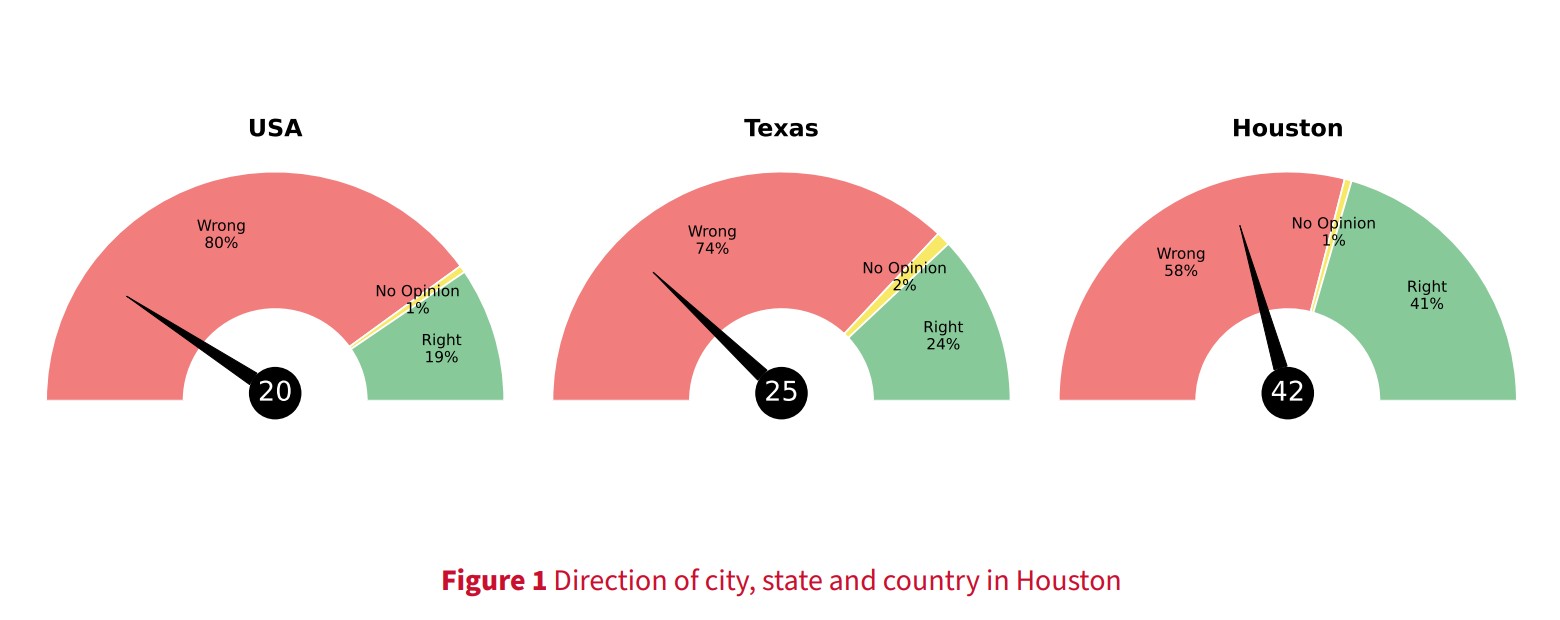
The survey also gathered data on how residents view the directions that local, state and federal governments are headed. More than 50% of Houstonians believed the country, state and city were headed in the wrong direction, but that percentage decreased as the region got more local.
According to the survey, 80% of Houstonians said the country was headed in the wrong direction, 74% believed the state was headed in the wrong direction and 58% believed the city was headed in the wrong direction.
Provided/University of Houston Hobby School
The belief about whether or not a region was headed in the right direction correlated with respondents’ political affiliation.
When broken down by party, 7% of Houston Democrats said the country was headed in the right direction. That number remained relatively the same at the state level, at 12%. Only the city level saw a significant increase, with 37% of Houston Democrats believing the city was moving in the right direction.
Houston Mayor John Whitmire is a Democrat, while the Texas and U.S. governments are controlled by Republican majorities.
RELATED: Harris County Democratic Party reprimands Houston Mayor John Whitmire, withholds future endorsement
The opinions of Republican Houstonians were flipped on the state and federal levels, with 63% approving of the nation’s direction and 66% agreeing with where the state was heading. Despite Houston being considered a blue-leaning city inside a largely red state, 66% of Houston Republicans believe the city is heading in the right direction.
Perez Arguelles said this political divide on the “right direction” question was also reflected in Chicago, according to the survey.
“People tend to be more optimistic when their party governs, and those partisan alignments play out very differently in Houston and Chicago,” Perez Arguelles said.
For Chicago — generally considered a blue city in a blue state — its residents had a more favorable opinion of the city and the state of Illinois compared to Houston.
According to the study, the survey’s sample size included 1,500 Houstonians with a margin of error of plus or minus 3.47%. The Chicago portion of the study surveyed more than 1,200 Chicago residents and did not include a margin of error in its methodology.
Disclosure: Houston Public Media is licensed to the University of Houston System. The university does not play a role in Houston Public Media’s editorial decisions. Read our statement of ethics and standards here.