
Sign up for TPR Today, Texas Public Radio’s newsletter that brings our top stories to your inbox each morning.
San Antonio City Council received an update Wednesday on VIA’s Green and Silver Advanced Rapid Transit lines during its weekly B Session, but the discussion revealed growing tension over transit funding and whether the city should move toward fare-free bus service.
VIA Board Chair Laura Cabanilla described the projects as a turning point for the agency.
“What you are seeing is not incremental,” Cabanilla told council. “It is a generational shift in how this agency operates, how we serve our riders and how we compete for the future of mobility in this region.”
The Green Line, a 10.3-mile north-south corridor running from Isom Road to Steves Avenue, is fully funded and entering early construction. Utility relocation work has begun, with major construction expected to ramp up in March.
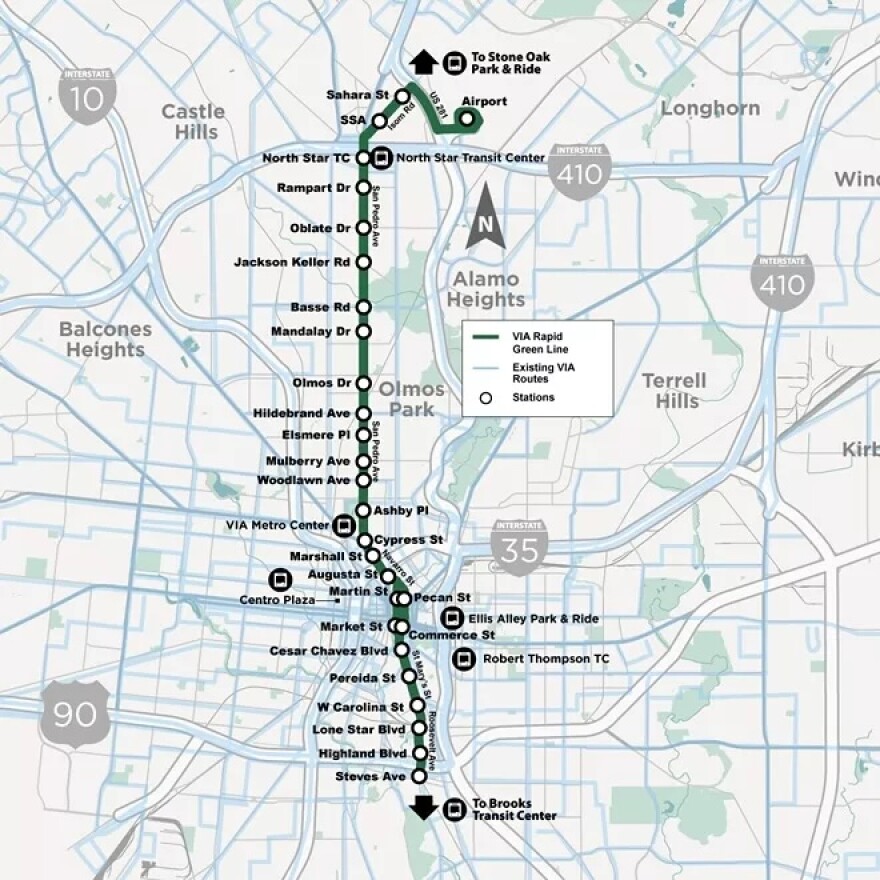
The $480 million project will add 25 new stations and 17 articulated buses operating every 10 minutes. About $268 million comes from the Federal Transit Administration’s Capital Investment Grant program.
VIA President and CEO Jon Gary Herrera said improving frequency and reducing travel time are central to attracting new riders.
Over the past year, the agency has shifted most of its routes from running every 30 minutes or longer to operating at least every 30 minutes or better, with some corridors moving to 10 and 15-minute service.
“These investments are about travel time,” Herrera said. “When customers tell us what they need, shorter travel times, more frequent service, safe and dependable rides, we listen and we act.”
The Silver Line, a 7.3-mile east-west corridor, would run from the Kellogg Transit Center on the West Side through downtown to the new East Side Transit Center near the Frost Bank Center. The project is about 40% designed.
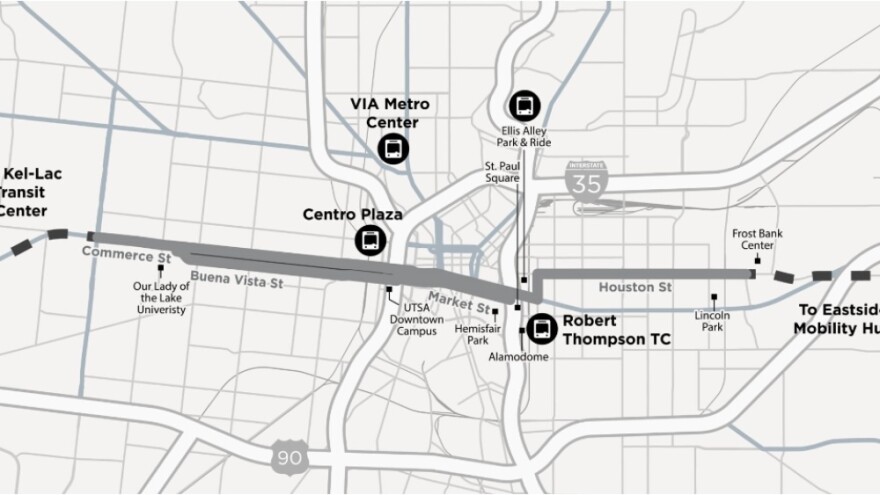
VIA is awaiting final federal approval of a $150 million grant. Construction is expected to begin in 2027, with service projected to start in 2030.
Much of the council discussion focused on funding.
Councilmember Jalen McKee-Rodriguez said he would not support expanding transit funding through a telecom tax without a clear commitment to eliminate fares.
“I will not vote to approve a telecom tax unless there is a commitment and a plan to get to zero fare,” he said. “Residents are already being taxed through the sales tax, and then we ask them to pay a fare to get on the bus. Public goods are public goods.”
Fare revenue accounts for roughly 4.6% of VIA’s operating budget. Herrera cautioned that eliminating fares would create a funding gap.
“$18 million is still $18 million,” Herrera said. “It’s a very important aspect of our budget.”
Mayor Gina Ortiz Jones also asked VIA to provide clearer comparisons of its funding levels and cost per rider relative to other Texas cities.
Herrera said the agency’s long-term goal is to grow ridership from 31.6 million annual trips to 50 million within the next decade.
For now, the Green Line is moving from plans to pavement, while the Silver Line awaits final federal approval, as council members continue debating how San Antonio should pay for the next phase of its transit future.