
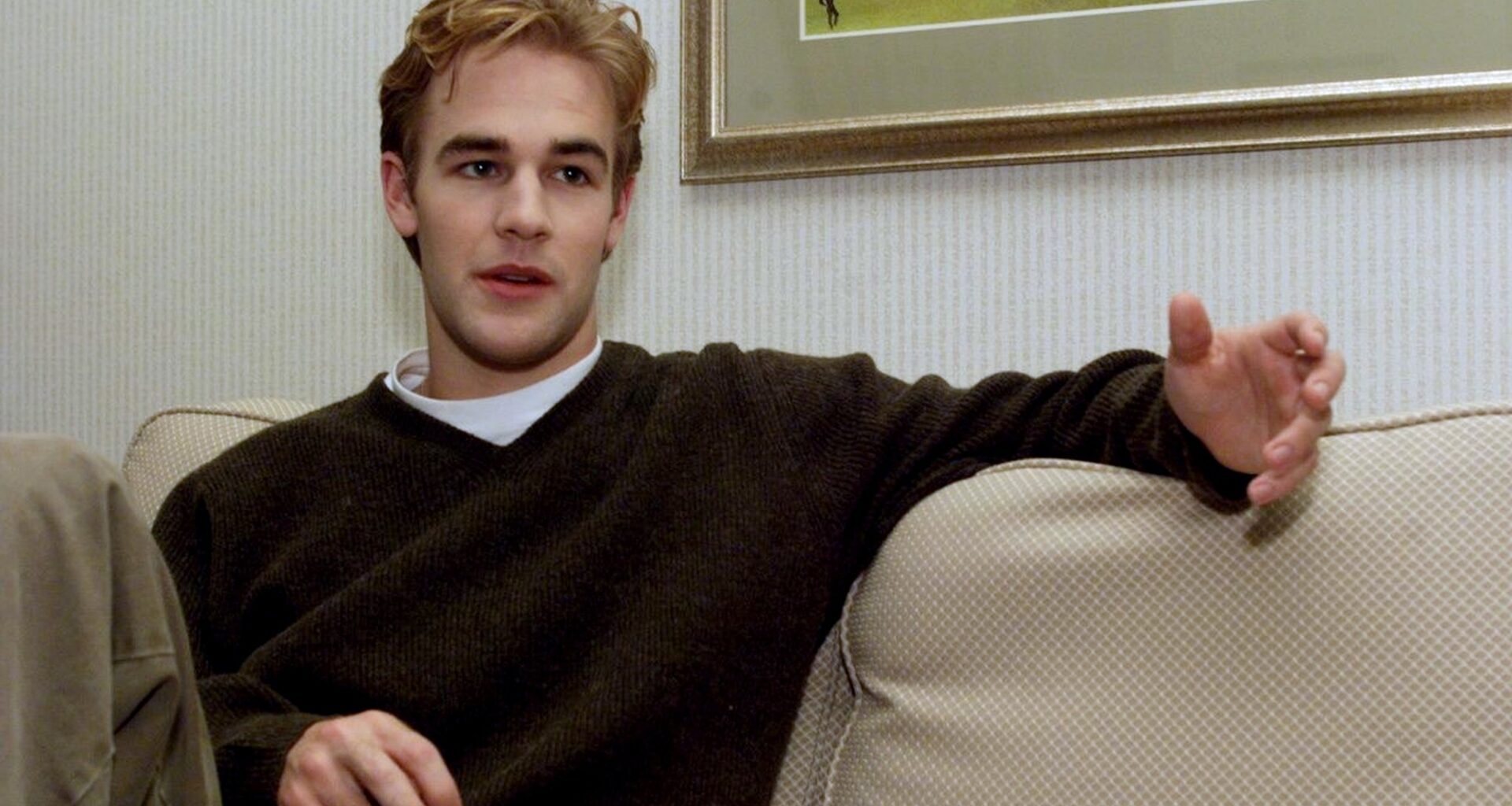
James Van Der Beek, star of the TV series, “Dawson’s Creek,” and “Varsity Blues.”
New York Daily News Archive/NY Daily News via Getty Images
James Van Der Beek arrived in Central Texas in the fall of 2020, not as part of a migration trend but as a man who had chosen to make a life here on his own terms.

He left Beverly Hills with his wife, Kimberly, and their children and settled on 36 acres along the Pedernales River in Spicewood, about 35 miles west of Austin. The house sat in the Hill Country’s scrub and limestone, not far from Willie Nelson’s Luck Ranch. It was a deliberate removal from Los Angeles, from what he once described as “the concrete jungle.”
Article continues below this ad
Van Der Beek, who died Wednesday after a battle with colorectal cancer, was 48. A GoFundMe campaign launched by his family described the financial strain the illness had placed on them, noting that Kimberly and their six children were working to maintain stability after medical costs depleted their funds.
From ‘Varsity Blues’ to Q2 Stadium
1999 James Van Der Beek and the cast star in the movie “Varsity Blues.”
Getty Images
For Van Der Beek, Austin was not new territory. In 1999, he had filmed “Varsity Blues” in and around the city, playing Jonathan “Mox” Moxon, the bookish quarterback reluctant to inherit a small town’s football mythology. The film embedded him, briefly, in the visual language of Central Texas stadium lights and dust.
Article continues below this ad
Two decades later, he returned without a production schedule dictating his stay. He appeared again on Texas screens in 2024, joining the final season of The CW’s “Walker,” filmed in Austin. The role was short-lived due to the show’s cancellation. By then, though, the work seemed secondary.
He showed up at Austin FC matches at Q2 Stadium, often with his children. In 2022, he posted a photo on Instagram from a game with one of his daughters. The caption was unguarded: “Okay, I get it. I’m a soccer fan now. And falling more in love with this city with each passing day… and each person I meet. *AND a changing table in the men’s restroom?”
It read like the small details that persuade newcomers they have chosen Austin correctly.
Article continues below this ad
In interviews, he described Texas as “centering.” The children, he said, had begun tracking the phases of the moon. They ran outside when it rained. They cooked more because there was no longer food delivery at the tap of an app. Rain, which once meant traffic in Los Angeles, became “a godsend.”
There were also adjustments.
In a backyard video that circulated widely, he delivered what he called a “Texas public service rant” against fire ants. He noted, correctly, that the imported red fire ant is an invasive species. “Much like Californians,” he added, with a half-smile that suggested he understood the joke was partly on him.
A life made deliberate
By November 2024, from that same Texas life, he revealed his cancer diagnosis. He wrote that he had been receiving treatment privately and was “in a good place and feeling strong.” Even as he returned briefly to work — including a role in a “Legally Blonde” prequel series — his home base remained in the Hill Country.
Article continues below this ad
Actor James Van Der Beek, wife Kimberly Brook and children attend the CYBEX and Jeremy Scott’s Halloween extravaganza at the Hollywood Castle on October 28, 2017 in Hollywood, California.
David Livingston/Getty Images
If Los Angeles had given him visibility, Austin appeared to give him proportion.
He had once embodied fictional adolescence in Capeside and West Canaan, places defined by longing and expectation. In Central Texas, the story narrowed: acreage, school runs, Saturday soccer, the domestic choreography of six children, a life recalibrated around land, weather and routine. He arrived as a man trying to make his life more deliberate.
Article continues below this ad
For five years, James Van Der Beek lived here not as Dawson Leery, not as Mox, but as a father in the stands at Q2 Stadium, noticing the changing table in the men’s room and taking it, sincerely, as a sign that he had landed where he meant to be.