
Saahithi Sreekantham/HPM
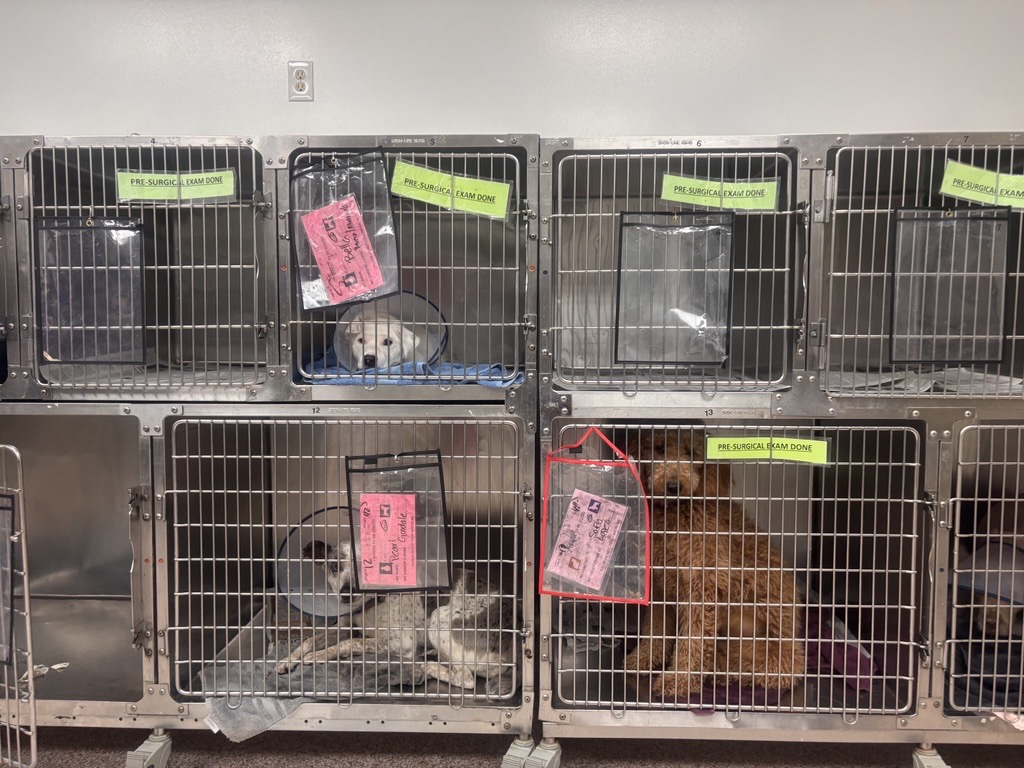
The surgery recovery room at the Houston Humane Society.
Houston animal shelters could soon have access to millions of dollars in state funding for increased spay and neuter programs.
On Sept. 1, 2025, the Texas Department of State Health Services’ Spay and Neuter Pilot Program went into effect, and Houston-area shelters are hoping to take advantage.
The program appropriated $13 million over the next two fiscal years for the sterilization of dogs and cats. The funds will be distributed to municipal and county shelters, private animal shelters, 501(c) nonprofits, animal rescue entities, and veterinary clinics across Texas that apply for direct grants ranging from $50,000 to $500,000 per fiscal year.
Jaime Olin, Interim Executive Director of the Texas Humane Legislation Network, said this grant will “protect Texans and animals alike.”
Dr. Tony Malone, chief clinical veterinarian at the Houston Humane Society, said Houston is overpopulated with millions of stray animals, making affordable spay and neuter services vital.
“[Spaying and neutering] reduces risk of cancer [and] infection; it helps pets live longer lives,” he said. “For the community, it will definitely reduce the chances of infectious diseases.”
As of right now, the Houston Humane Society offers spay and neuter services for free a few times a year, on days called Fix Felix and Spay Day. “We’ve spayed 1,000 cats in one day,” Malone said.
Gloria Zenteno is the founder and president of Barrio Dogs — a Houston-area non-profit animal advocacy group. She said that these types of programs are the most expensive and have also been more difficult to sustain in recent years.
“Last year, 2023 and 2024, were just really tough years financially,” she said. “Foundation money, grant money — all of it was down.”
The Houston Humane Society’s senior director of operations, Greg Evans, said that the organization is already working through the application process.
“We’re hoping to be accepted,” he said. “This grant is [on a] first-come, first-served basis, so we’re hoping to get our name in the ring as quick as possible.”
Evans also said that no state bills had been designed to attack the problem of overpopulation until now.
“This grant is going to allow us to do more,” Malone said. “We’re going to continue to strive and do as much as we can to help and support the animals in the community.”