
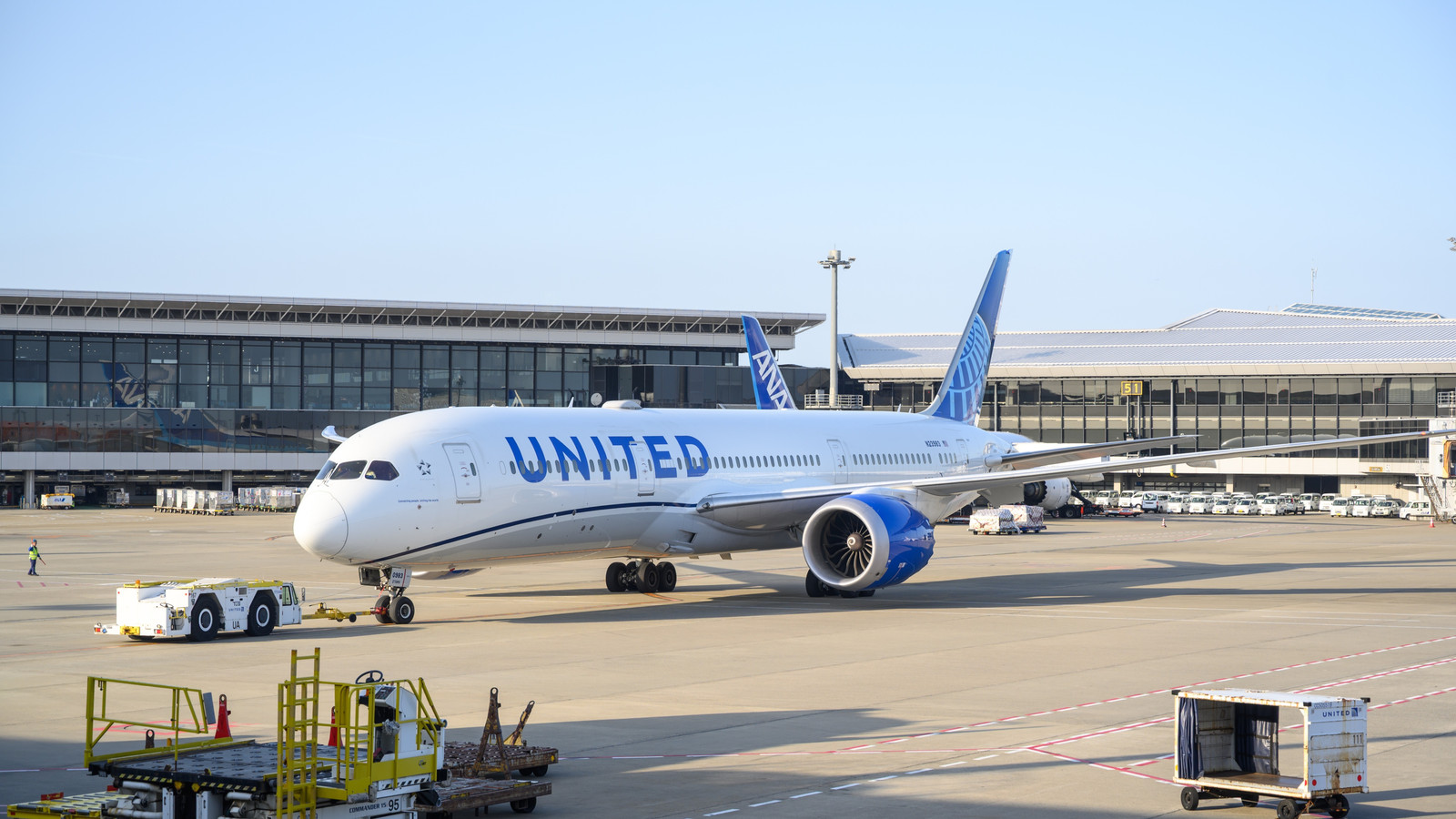
Japan is a long way from the U.S.—something a United Airlines passenger learned the hard way recently. In late January, flying from Los Angeles (LAX) on UA 39, Victor Calderón was set to catch a connecting flight at George Bush Intercontinental Airport (IAH), in Houston, Texas, while on his way to Managua, Nicaragua. Instead, he ended up on a flight to Tokyo but only realized it six hours in.
United Airlines has confirmed the incident. They even issued the passenger a revised compensation after the story gained media attention. But both the airline’s representatives and many of its loyal customers are still confused about the incident. Here’s a closer look at this situation and how United Airlines handled it.
United Airlines Increased Its Compensation For A Passenger Who Ended Up On A Flight To Tokyo Instead Of Houston
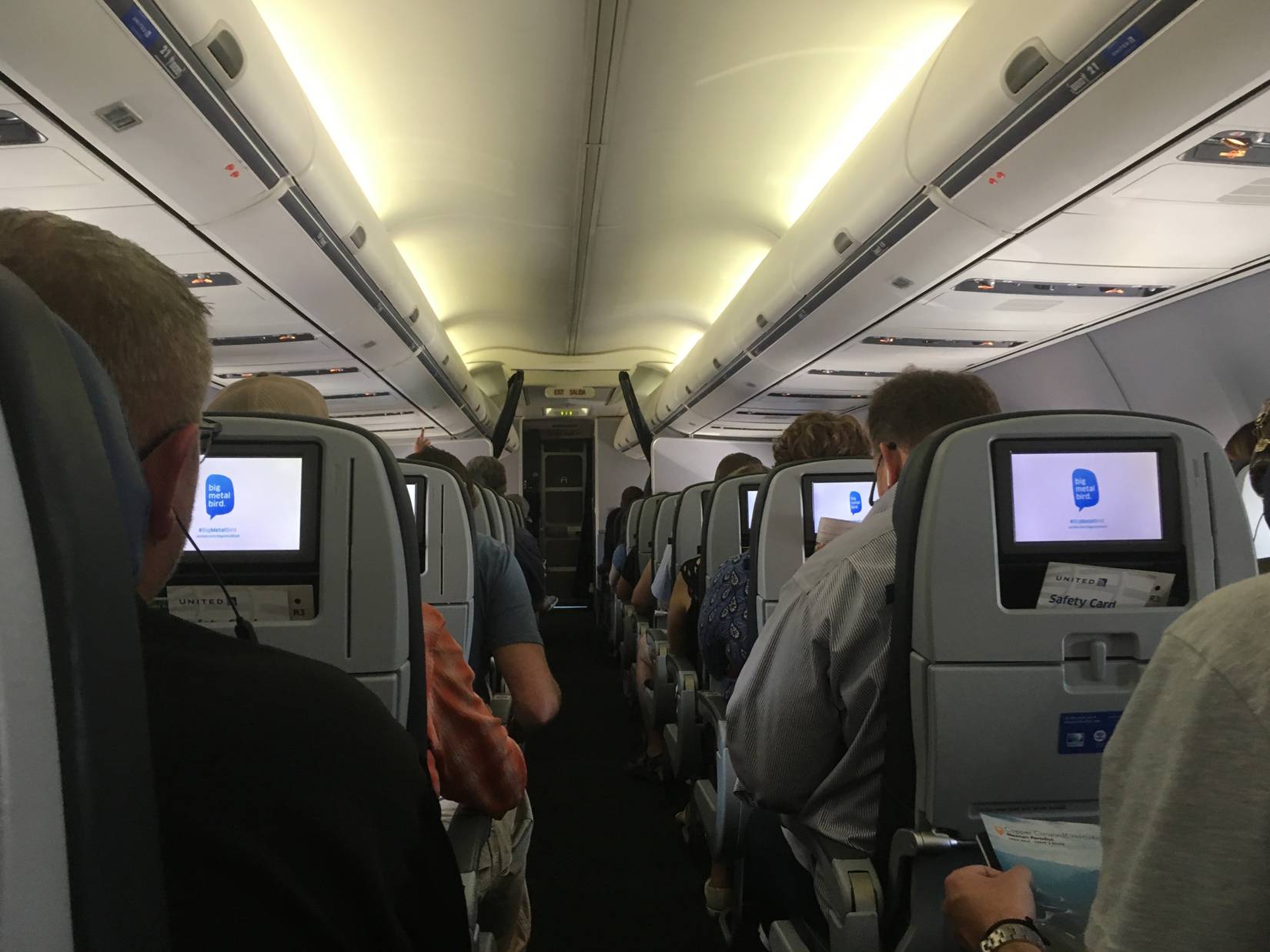
Inside a United Airlines aircraft during flightCredit: Shutterstock
On board, Calderón realized something was off, when the plane had still not landed in Houston after six hours on his United Airlines flight from Los Angeles. On asking the crew why, he was told that the flight was heading to Haneda Airport (HND) in Tokyo, Japan. There was no going back at that point.
After already paying $655 for his original trip to Nicaragua, Calderón had to spend the night in a hotel in Tokyo, book new flights back to the U.S., and then finally head to his original destination.
He submitted receipts for his extra expenses of $1,095 to United Airlines: two nights in hotels, as well as clothes and other necessities, as his luggage had already made it to Augusto Cesar Sandino International Airport (MGA) in Managua.
After two whole days in transit, United Airlines initially gave Calderón $300 in travel credits. But then Telemundo 52 reportedly reached out to the carrier, prompting them to send Calderón a revised compensation of $1,000 in credits.
“We always advise customers to monitor the signs at the gate and boarding announcements to make sure the aircraft they board is going to their intended destination,” United Airlines’ representative added.
A United spokesperson later told Fox News Digital that they had made a “direct apology” to the passenger and followed up with the airport to investigate how such a major error slipped through.
United Airlines’ Compensation Policy
United Airlines passenger silhouette.Credit: via Shutterstock
Under United Airlines’ “Customer Commitment” regulations, passengers may be eligible for compensation in cases of significant disruption. Significant disruption is a change or delay (including cancellation) of at least three hours (domestic flights) or six hours (international flights).
If the above conditions apply and the passenger chooses not to fly, they are entitled to a full refund of the fare and any fees paid (such as Wi-Fi or seat selection).
United Airlines offers travel credits as compensation (with a one-year validity). Cash compensation is only available for “involuntary bumping” due to the airline’s overbooking, up to $1,550 depending on the length of the delay.
Passengers on UA flights from Europe may be entitled to up to $650 (€600) in cash compensation under EC261 regulations for delays over three hours.
The unique case of Víctor Calderón on UA 39, the media attention it generated, and the public backlash over the scale of United Airlines’ mistake forced the airline to reconsider its initial compensation and amend it.
United Airlines Flyers Debate How The Passenger Ended Up On A Flight To Tokyo Instead Of Houston
Calderón has not provided a reason for the flight mix-up. So naturally, the story made for an entertaining Reddit post on the r/unitedairlines forum. Many were left confused by how Calderón missed all the signs, from the ground all the way to the announcements inside the plane. Some said that the “language barrier” must have been an issue.
Others humorously suggested that it must have been a Haneda-Houston confusion, which one compared to a man who once mistakenly flew to Auckland, New Zealand instead of Oakland, California back in 1985.
On a more serious note, someone shared that they once got close to boarding the wrong flight because the ground agent “couldn’t figure out why” their boarding pass wouldn’t scan on their way back to the U.S. from Europe. Eventually, the reason was more ironic than logical — It wouldn’t scan because the agents failed to notice that the passenger had entered the wrong gate. They made it all the way to the plane before realizing that the seat on their ticket didn’t exist on that aircraft.
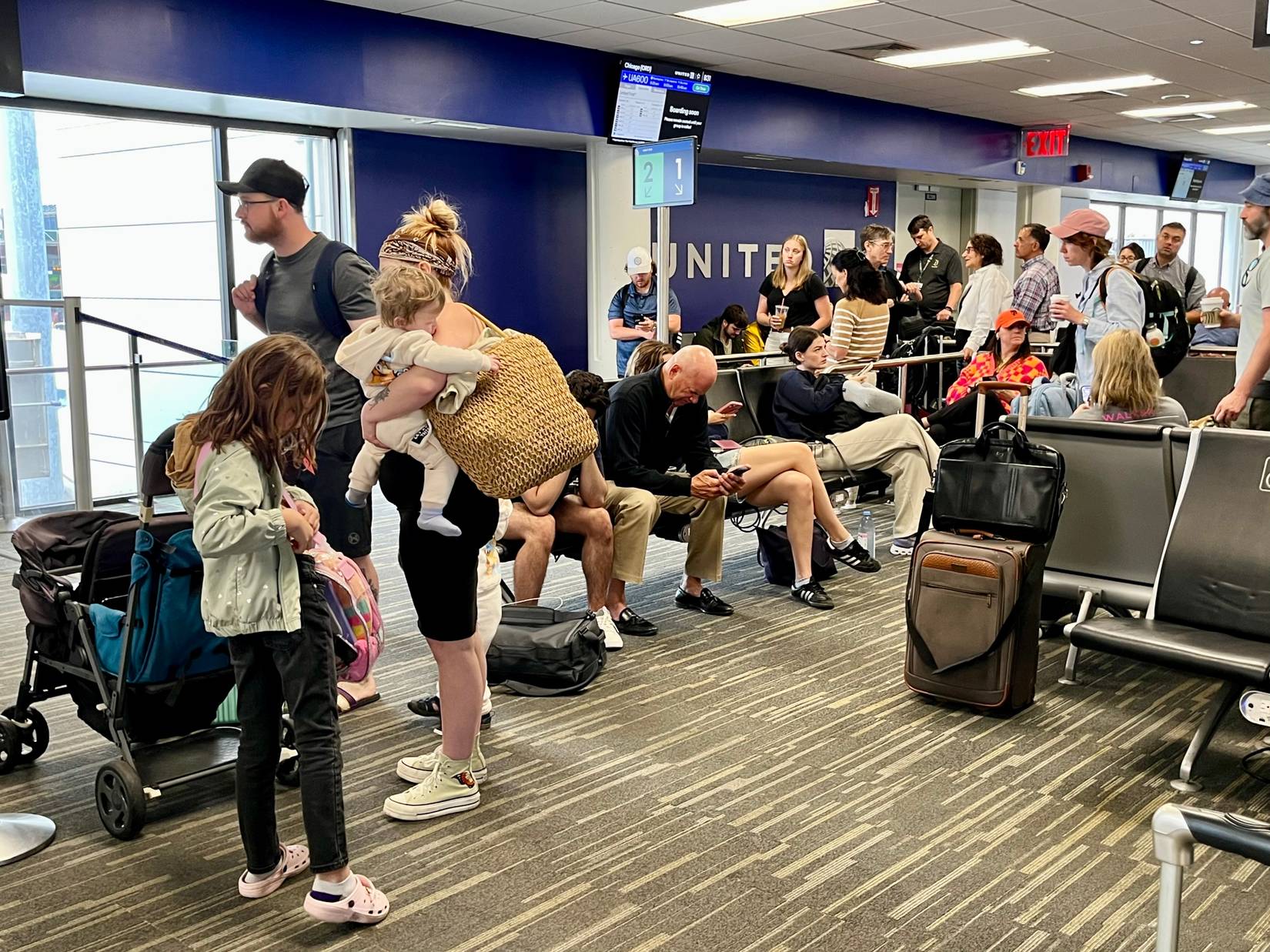
United Airlines passengers waiting for a flight.Credit: Shutterstock
To avoid these mistakes, make sure to familiarize yourself with the airport codes and check the screen (not just the gate number) at the gate to confirm whether the flight number and destination match your ticket.