
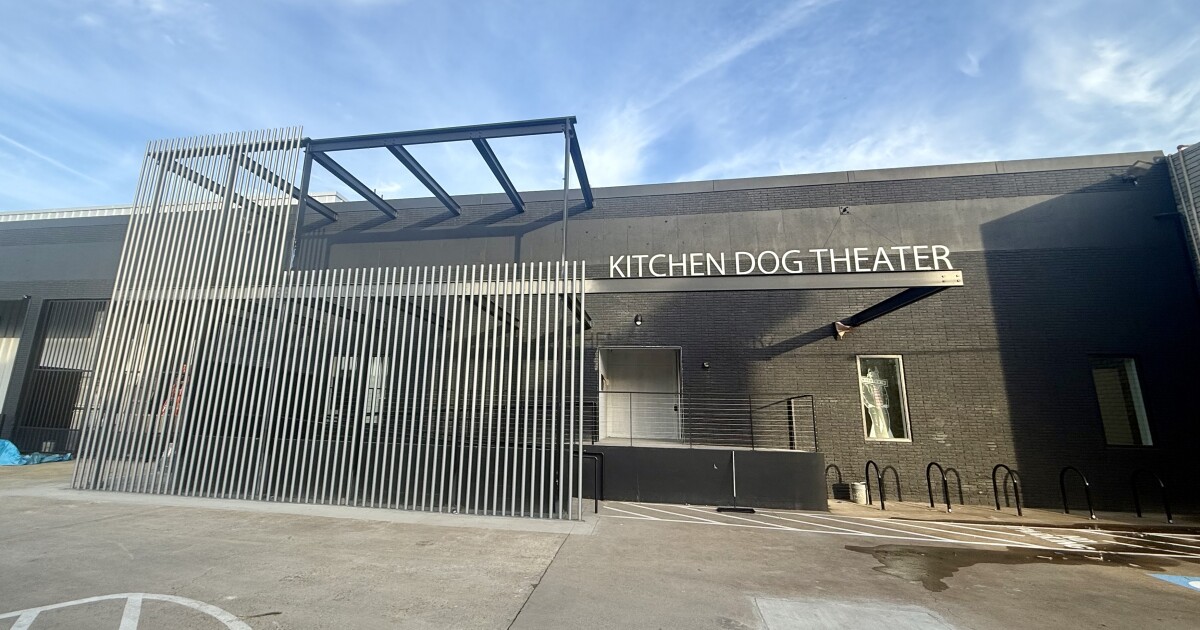
After construction delays, fundraising hurdles and pop-up performances everywhere from CrossFit gyms to baseball stadiums, Kitchen Dog Theater is finally settling into a forever home.
The 35-year-old theatre company is reopening Friday in a newly renovated theater near the Trinity River. The first performance is Pompeii, a musical satire the company first produced in 2018. The toga-filled, tap-dancing comedy, created by company members Cameron Cobb, Michael Federico and Max Hartman, pokes fun at nationalism under the looming threat of a volcano. It’s also the first time in the theater’s history that Kitchen Dog has revisited a past production, with several original cast members returning for the show.
“It’s been a dream 10 years in the making,” said Tina Parker, Kitchen Dog’s co-artistic director and company manager. “We bought a space at the end of2016and it took us almost 10 years to finally renovate it and turn it into a theater space.”
Few arts groups in Dallas own their own space. Most rent venues or share space, often juggling rising rent costs and limited availability. Only a handful of independent theaters control their own buildings.
For Kitchen Dog, the push to buy came after losing its longtime home at the McKinney Avenue Contemporary in 2015.
“That building got repurposed, and we found ourselves on the market trying to find a space in order to continue our work,” Parker said. “There’s just a lack of space for arts groups in Dallas.”
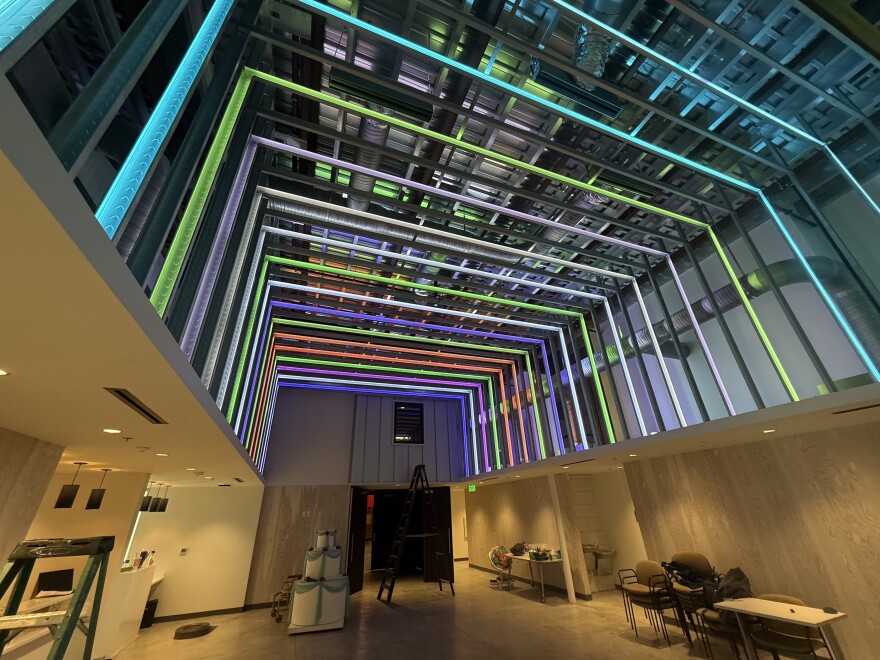
The new space includes a fully flexible black box theater with a sprung floor, something no other black box in Dallas offers.
Now the new space includes a fully flexible black box theater with a sprung floor, something Parker says no other black box in Dallas offers. There are also rehearsal and community rooms, and a lobby designed to double as an event space. She hopes the building becomes more than just a theater.
But ownership also comes with risk.
The renovation costs have ballooned from under$2 million, roughly, at the start, to nearly $4 million, Parker said. That was driven by spikes in cost of construction materials after the pandemic and unexpected repairs. The company took out a loan to finish the project and will now have to cover utilities, maintenance and debt services— expenses that were once folded into rent.
“Now we have to pay the bills,” she said. “Keep the lights on, pay that loan off. We’ll do whatever it takes to have this venue here.”
Across town, Bishop Arts Theater Center knows that balancing act well.
The Oak Cliff organization has owned its building since 2005, after a long-time patron donated the property. The group raised $1.2 million and took out an $800,000 construction loan to renovate it. That debt was finally paid off in 2021 and transformed how the theater operates.
“It gives us complete autonomy to do what we want,” Executive Artistic Director Teresa Coleman-Wash said. “There’s not a lot of bureaucracy around owning our space.”
Owning also allowed the organization to diversify its income beyond ticket sales, bringing in money through rentals, grants and community partnerships, including arts and movement programs for aging care facilities.
But Coleman-Wash said maintaining a more than century-old building can be costly, and independent theaters often miss out on city bond funds reserved for city-owned venues.
“Every year after the winter storm, we have major repairs,” she said.“That’s a huge challenge.”
Her advice to Kitchen Dog and others considering ownership is to be ready for both the freedom and the responsibility.
“Property ownership is definitely a huge advantage, but it’s also a huge responsibility,” she said. “Our superpower has always been to really double down on connecting with community.”
That connection may be what makes the difference.
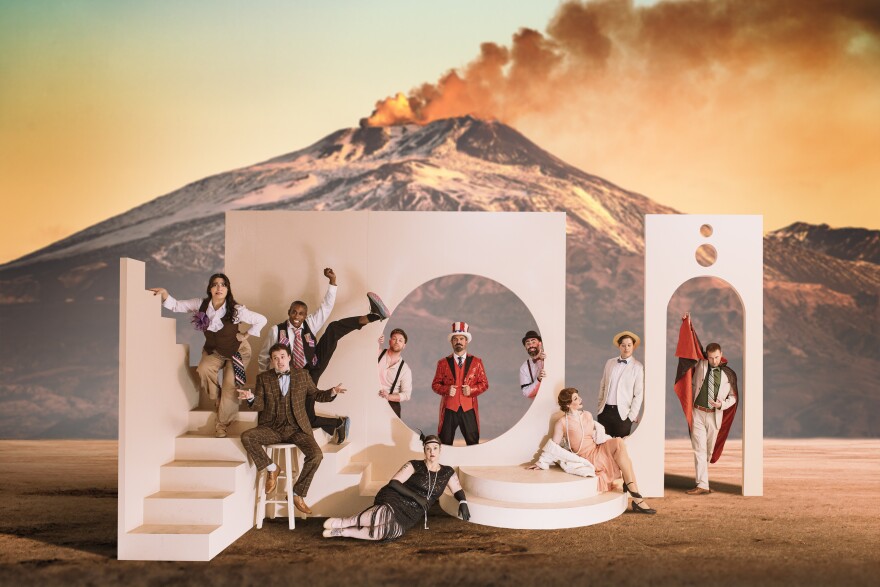
The first performance is Pompeii, a musical satire the company first produced in 2018 created by company members Cameron Cobb, Michael Federico and Max Hartman. It’s the first time in the theater’s history that Kitchen Dog has revisited a past production.
Farther north, Dallas Children’s Theater offers another model of what ownership can make possible and how complex it can be.
The company moved into its current building at Northwest Highway and Skillman in 2003. Executive Director Michael Meadows said the organization recently became debt-free after running a capital campaign.
The space, a renovated former bowling alley, houses two performance theaters, rehearsal halls, production shops and costume storage all under one roof.
“But the vast majority of what we do is all done in-house,” he said. “You’ve got to have reliable place for people to go and rehearse. You need space for you to be able to create the sets and store the sets, costuming and all of that.”
That self-sufficiency is a major advantage for a company producing shows year-round for families and schools. But it also means constant upkeep on a 55,000-square-foot facility.
To stay ahead, Dallas Children’s Theater rents rehearsal rooms and performance spaces to other arts groups and even a church congregation. Donors also pledged $100,000 a year for maintenance to avoid surprise crises.
Meadows’ advice for companies like Kitchen Dog is plan for empty days.
“The hardest part for a theater is kind of like what happens with a church,” he said. “You build it to accommodate the performances and the activities when those are going on, and then it sits empty a lot, and in the meantime, you’re going to have to pay for all the utilities, all the upkeep on all of this.”
For a company like Kitchen Dog, built on scrappy, intimate storytelling, permanence feels both new and long overdue. Kitchen Dog’s new home sits near galleries and creative spaces just outside the Design District that Parker hopes will form a kind of alternative arts corridor where audiences can bike between exhibits and performances.
“We’re kind of this next level arts district happening, right?” Parker said. “The little alternate arts action over here. Let’s make it to where you can ride your bike, hop down, go to an art gallery, come over, see a show at kitchen dog or come over work in the lobby. We can create that kind of synergy and make it a cool destination.”