
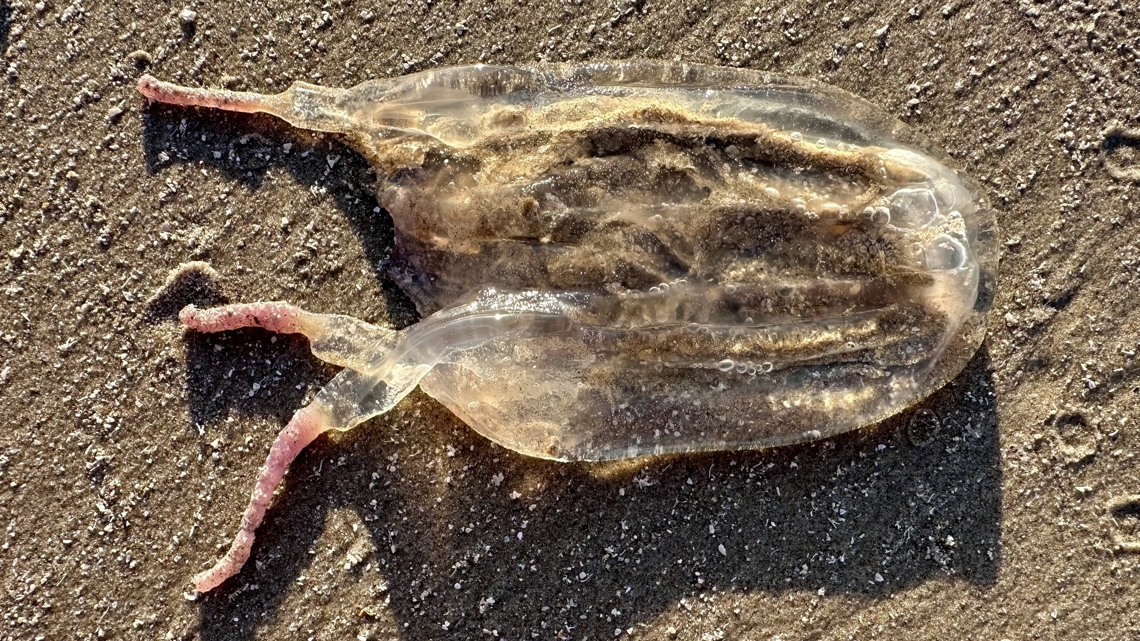
Researchers confirmed Atlantic box jellyfish washed up on North Padre Island and warn beachgoers that even dead-looking jellyfish can still sting.
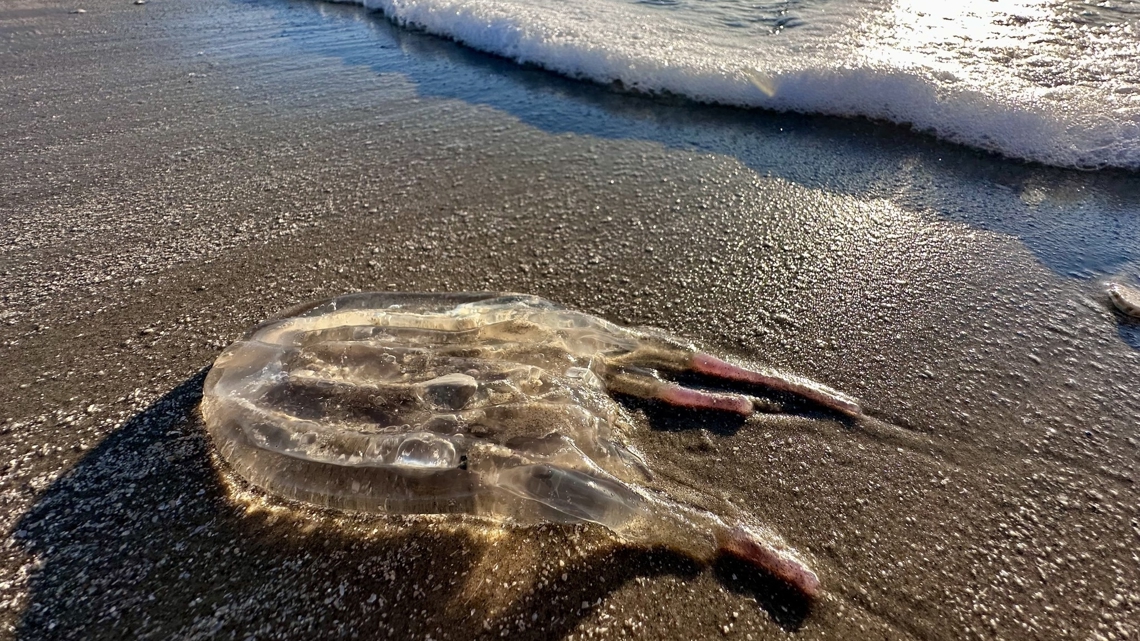
TEXAS, USA — A couple of strange-looking jellyfish spotted on North Padre Island this week turned out to be Atlantic box jellyfish, according to researchers with the Harte Research Institute.
Jace Tunnell, HRI director of Community Engagement, went out to investigate after the jellyfish were reported along the shoreline and confirmed they were Atlantic box jellyfish washed up on the beach.
While the Atlantic box jellyfish found along the Texas coast is not the infamous deadly Australian species, its sting is still painful. The sting can cause burning, welts, and itching.
To demonstrate the pain level, Tunnell placed one on his arm. He described the sting as about a 4 or 5 out of 10 on the “jellyfish pain meter.” He emphasized that people should not attempt this themselves.
Box jellyfish get their name from their square-shaped bell, with long tentacles extending from each corner. When alive and in the water, those tentacles can reach several feet in length. Unlike most jellyfish that drift with currents, box jellyfish actively swim and hunt small fish and shrimp. They are also short-lived, typically living about one year.
Beachgoers are urged to be cautious, even if a box jellyfish appears to be dead. Researchers warn that washed-up box jellyfish can still sting, as their venom cells can fire long after the animal looks lifeless.
The guidance is simple: look, don’t touch.

Got a news tip or story idea? Email us at newstips@khou.com or call 713-521-4310 and include the best way to reach you.