
Plano City Council will decide how to allocate nearly $7.2 million in excess sales tax revenue after tabling the discussion at their Feb. 9 meeting.
What you need to know
Plano has operated under a sales tax cap policy since 2008. The policy uses a three-year average of actual collections, excluding audit adjustments, to forecast revenue for budget projections and protect the city from economic swings.
City documents state the policy helps shield Plano from volatility during economic downturns such as the 2009 recession and the COVID-19 pandemic.
For the current fiscal year, the city budgeted $124.6 million in sales tax revenue but collected $131.8 million, creating a $7.2 million surplus, according to city documents.
Budget Director Karen Rhodes-Whitley said the higher total was driven in part by two large one-time sales tax payments received in August and September.
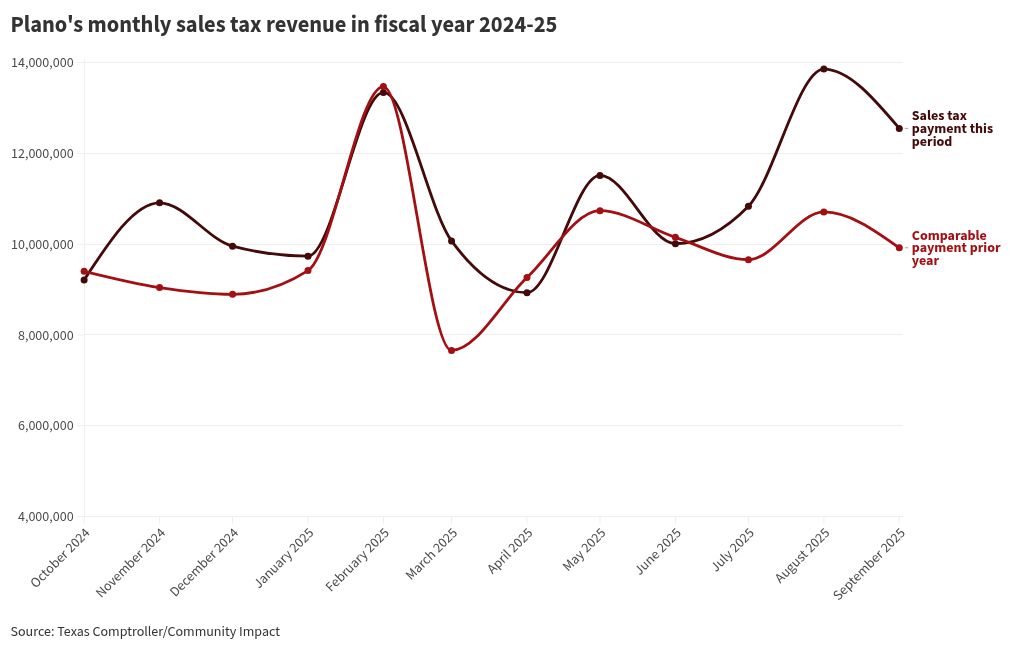 “When we submitted the recommended budget, it looked like it was going to be the $124 million,” Rhodes-Whitley said. “We had presentations in August and everything regarding our re-estimation. At the end of August and September, we received those one-time payments.”
Because the funds are considered one-time revenue, Rhodes-Whitley said they cannot be added to the ongoing operating budget.
Under the policy, city documents state council members could allocate the excess to:
One-time expendituresRainy-Day FundCapital Maintenance FundEconomic Development FundGeneral Fund balanceRhodes-Whitley noted that City Manager Mark Israelson had mentioned the money could be used for a “couple of land purchases” the city was looking at, but no specifics were provided.
What’s next?
With council member Steve Lavine absent at the Feb. 9 meeting, Israelson recommended postponing the discussion until all members are present.
Council will discuss the allocation at its Feb. 23 meeting.