
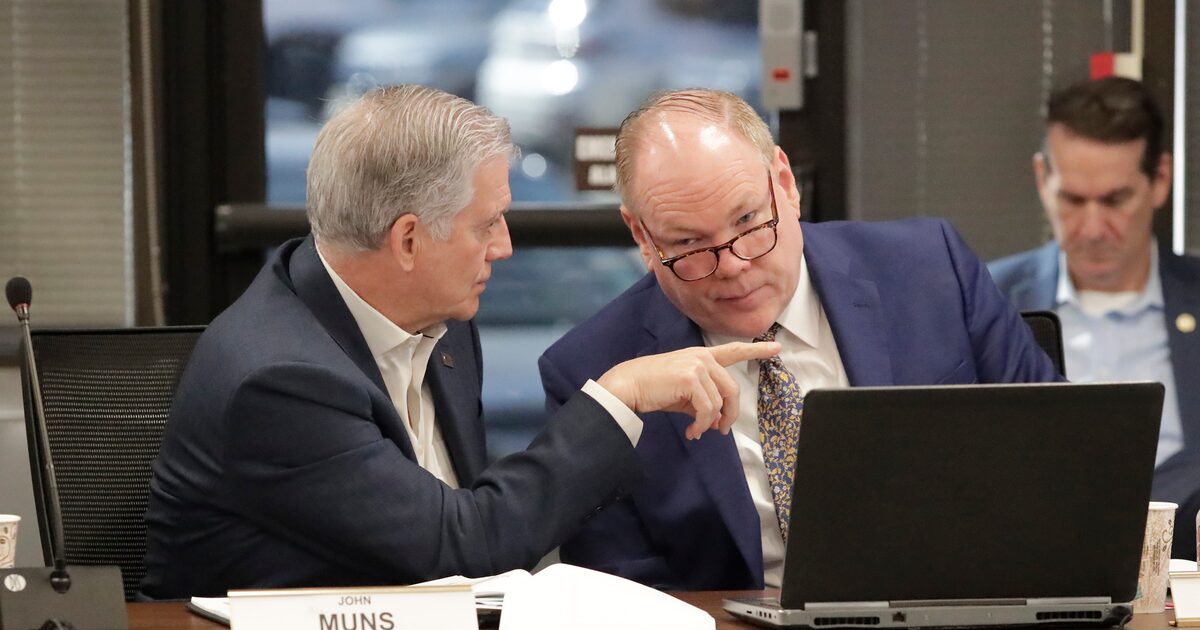
The Regional Transportation Council voted Thursday to commit funds to DART’s plan to give some resources back to cities, a proposal some suburban leaders said could convince them to cancel May elections on cutting ties with the public transportation agency.
The RTC, a 45-member transportation policy body of the North Central Texas Council of Governments, approved committing $180 million to Dallas Area Rapid Transit, the Denton County Transportation Authority and the Trinity Railway Express. Of the commitment to regional transit, $75 million would go to DART’s funding plan.
DART Board Chair Randall Bryant presented the plan to the agency’s board of directors Tuesday, a proposal to save the regional transit system as Plano, Irving, Farmers Branch, Addison, University Park and Highland Park — six of DART’s 13 member cities — near a deadline to call off withdrawal elections.
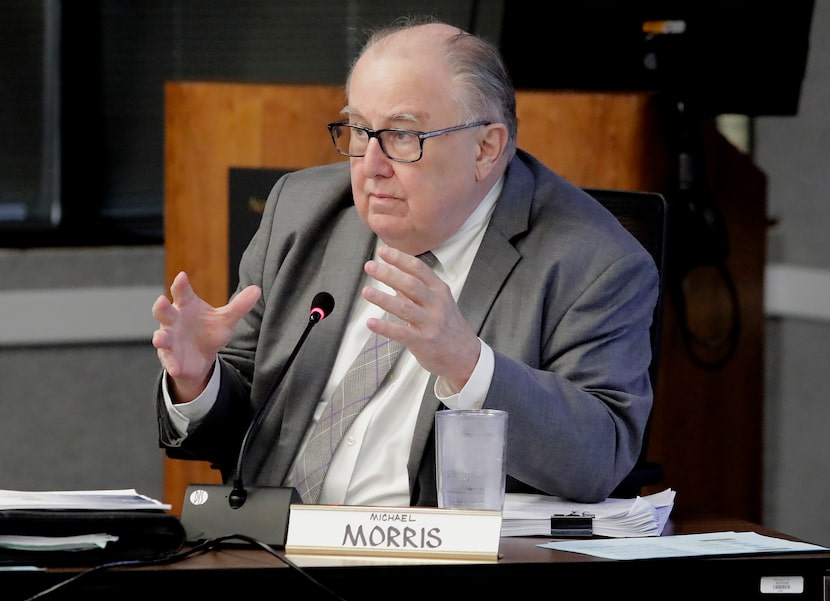
Micahel Morris, director of transportation for the North Central Texas Council of Governments, speaks as the Regional Transportation Council meets for a workshop to discuss the future of DART in Arlington on Thursday, Feb. 12, 2026.
Stewart F. House / Special Contributor
Breaking News
Cities are running out of time to finalize their ballots, with deadlines as early as Feb. 23.
Leaders support DART’s funding plan
The plan includes giving money for transportation back to cities to use on mobility and transportation, creating a new rail authority and adding a new revenue stream to fund DART. The plan would need action from state lawmakers to come to fruition.
The RTC approved one piece of the puzzle in a multifaceted proposal that leaders in Plano and Irving, the two largest cities that have called exit elections, said is a plan they could get behind.
If Plano receives the agreement discussed with DART and the RTC, Plano Mayor John Muns said he’d seek to put the recall of the scheduled May election up to a vote on his City Council.
Related
“I still want to have those conversations about ridership and service levels and being able to be more specific to the needs of our community,” said Muns, who also serves on the RTC, following Thursday’s meeting. But those are things he hopes they can work through.
“We’re glad that we will still be a partner of DART’s going forward,” he said.
Irving leaders expressed their support at Thursday’s meeting, too, and Addison Mayor Bruce Arfsten said he also plans to ask his council to consider recalling its scheduled election.
Council steps in to help
The RTC voted Thursday to help with parts of DART’s new funding plan, agreeing to give $75 million to DART over five years to help give cities back some of their sales tax to fund mobility projects. DART is funded by a one-cent sales tax contributed by each member city — a price some smaller, suburban cities say far exceeds the service they receive from the agency.
Related

In their vote, the RTC also agreed to support asking a subcommittee to continue discussion of creating a regional authority of commuter rail service and to go to the state Legislature with unified requests on improving the region’s transit.
RTC member and Denton County Judge Andy Eads called the plan a “Hail Mary” pass at solving DART’s crisis, but he and others asked the council to consider offering funds to other agencies in the region as a commitment to regionalism.
His amendment to broaden the plan to include other parts of Dallas-Fort Worth’s public transportation systems passed and added $105 million to the original partnership the RTC considered — funds for the DCTA and TRE to expand rail mobility in North Texas.
“In the spirit of true regionalism here in the D-FW area, we need to not just address one of the agencies,” Eads said after the vote. “But at the same time demonstrate that same level of commitment to all three agencies.”
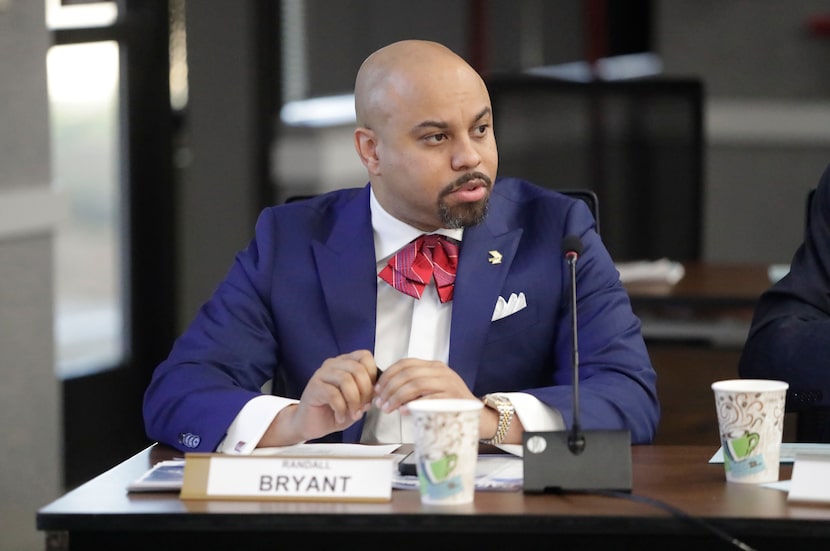
DART Board Chairman Randall Bryant listens to a speaker as the Regional Transportation Council holds a meeting to discuss the future of DART in Arlington on Thursday, Feb. 12, 2026.
Stewart F. House / Special Contributor
Michael Morris, director of transportation at the NCTCOG, said the region’s transportation relationships were like “a bad marriage,” without communication or agreement between parties. But now DART and city leaders have taken leadership to solve regional issues.
“This financial partnership is a stepping stone to a whole new institutional structure to deliver transit,” he said. Morris called the RTC’s vote one of the most important days of his nearly five decade career in transportation.
Seeking compromise
A group of DART and city leaders has sought for months to seek agreement on reforms to the agency’s governance, funding and service — three aspects of DART some member cities find most irreconcilable.
On the governance front, Dallas city leaders voted Wednesday to support conceding power on DART’s board, which some cities say doesn’t give a fair voice or vote to smaller suburbs represented by the 15-member governing body.
Related

On Tuesday, DART’s board tackled funding. The chair outlined the most detailed plan yet on reforming the issue in the tug-of-war between the agency and dissatisfied members. Bryant proposed a three-pronged framework:
DART, with funding support from the RTC, would start giving cities some sales tax back — up to 10% of their contributions over the next six years. Cities could use this money for transportation-related projects. DART and other authorities would transfer their regional rail systems — including the DCTA’s 21-mile A-train commuter rail line, Trinity Metro’s TRE and DART’s Silver Line — to an independent management authority. This idea has previously been recommended by a subcommittee of the RTC. It would require action in the state Legislature to become a reality. DART would pursue a new revenue stream in coordination with member cities and regional stakeholders, such as a vehicle registration fee. This would also need action by state lawmakers to come to fruition.
Related

“The work is still before us, as we need to now go to Austin and carry our message in unity there,” Bryant, DART’s board chair, said.
Several leaders thanked the chair for his work on the funding plan that has dug the agency from its hole.
“There are still steps that have to be taken,” DART CEO Nadine Lee told reporters following the RTC’s meeting. “I think DART has exercised good faith in extending this olive branch to our cities, and I hope that our cities will actually follow through with the commitments.”
Morris said there’s lots of homework for the council.
“We were able to … bring the family back together,” Morris said. “This is a big deal to be able to go back to the Legislature as a united region. … I think it sets the right message back to our federal partners. We have our act together.”