
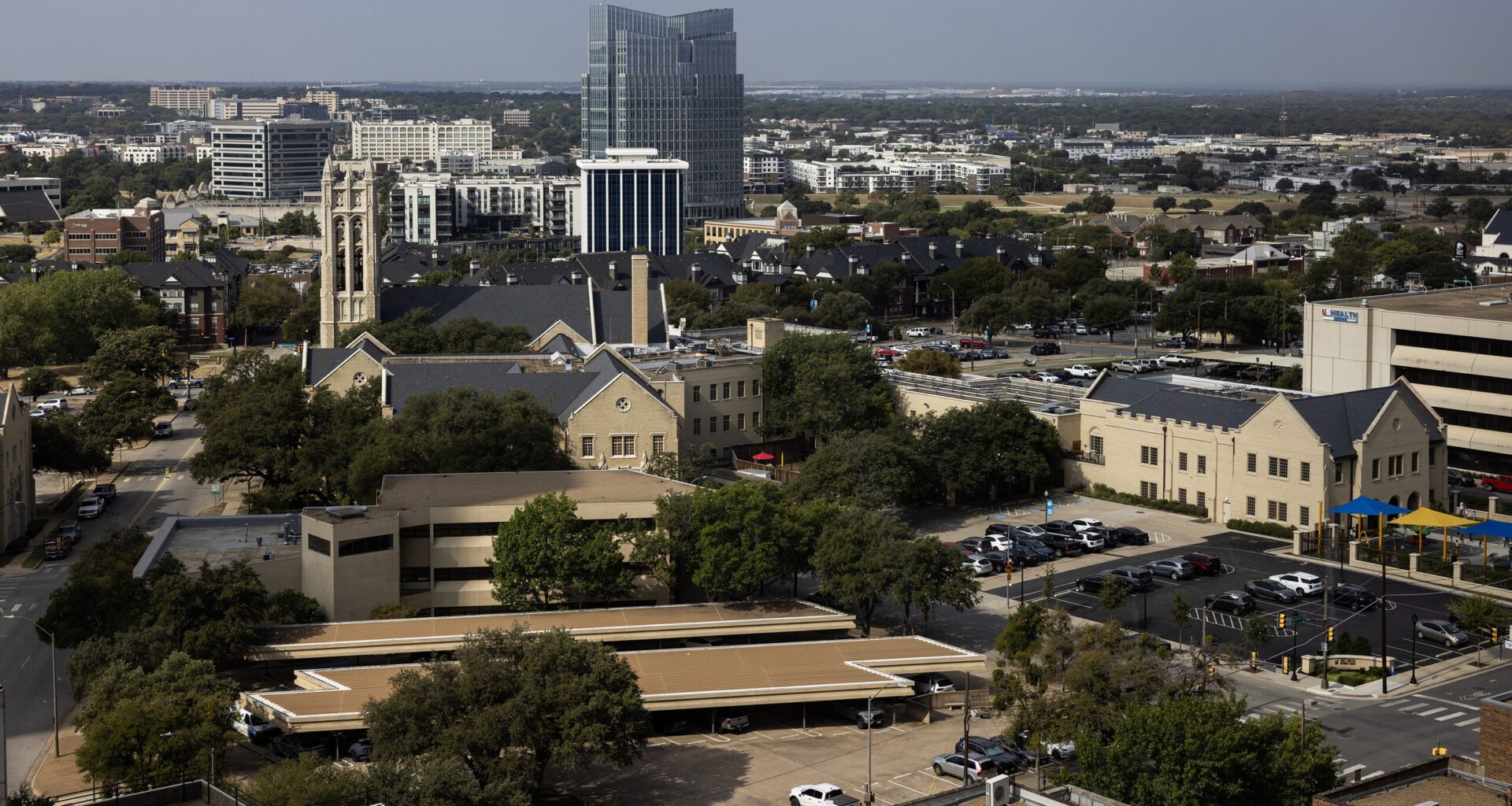
Fort Worth City Council wants to adopt strict limits on where registered sex offenders can live in the city.
City Council members on Tuesday pushed a vote on the restriction to Feb. 24 as it undergoes legal review. They did agree to expand the restriction, making 98% of Fort Worth’s residential land off limits for registered sex offenders if their victims were younger than 17.
The restriction would bar registered sex offenders whose victims were younger than 17 from living within 2,000 feet of child safety zones.
Texas law defines such zones as schools, playgrounds, public pools, youth centers and other such places.
Six residents implored the City Council to not implement the restriction at Tuesday’s meeting, saying it would do more harm than good and not protect children.
“You don’t have an ally in defeating this particular ordinance here. It’s simply me wanting to make sure that we’re doing our job to protect our cities,” council member Elizabeth Beck said.
Speakers against the restriction included a psychologist, an attorney and a leader of a ministry focused on rehabilitating registered sex offenders.
“This is based on the false assumption that proximity to locations, such as schools and parks, is a reason for people committing sexual offenses,” said Sean Braun, a Texas-licensed sex offender treatment provider. “That’s actually untrue. Over 90% of sexual offenses are committed by people who have never been in trouble for a sexual offense.”
Braun, who is not a registered sex offender, said he’s devoted his career to preventing such abuse.
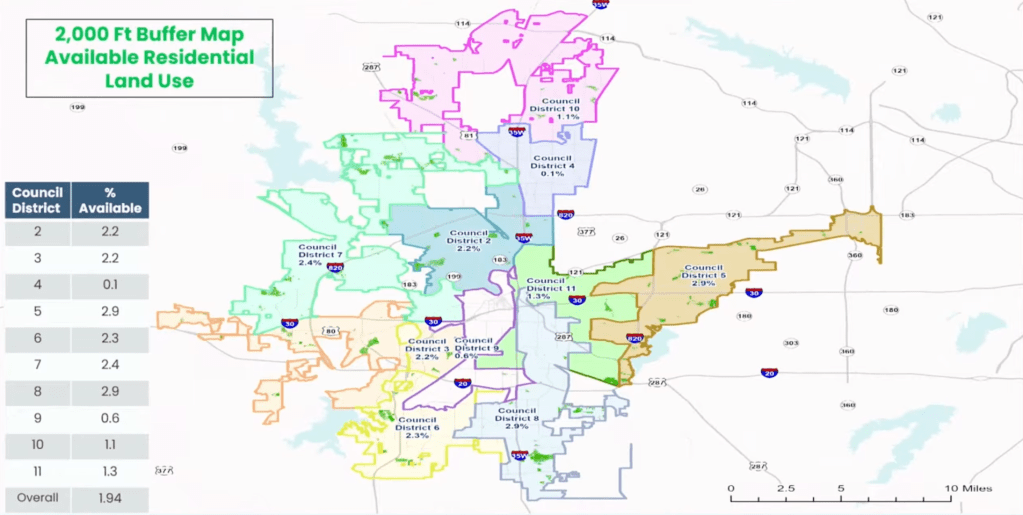 A drafted map from Fort Worth’s attorney’s office shows where registered sex offenders can live in the city under a possible new restriction. (Courtesy | City of Fort Worth)
The 2,000-foot rule would be one of the most restrictive in north Texas as most cities employ a 1,000- or 1,500-foot rule. Keller rolled out a similarly restrictive 2,000-foot rule in 2021.
Fort Worth’s vote on Tuesday comes after months of discussion among council members on whether and how to control where registered sex offenders live after they’ve finished their parole.
City staff previously recommended a 1,000-foot restriction, which would have left about 9% of Fort Worth available for registered sex offenders. But a majority of the council expressed concern that such a limit could unintentionally lead to certain neighborhoods becoming hot spots for sex offenders to live in.
During a Dec. 2 work session, Jerris Mapes, senior assistant city attorney, warned council members stricter limits could open the door to sex offenders suing Fort Worth as the city isn’t legally allowed to “banish” anyone from living within its limits.
Of the 3,201 registered sex offenders who live in Fort Worth, 2,454 had victims under 17 years old. Of those, 1,577 have no residency restrictions, according to a December presentation.
City officials cannot apply the restriction retroactively, meaning those registered offenders who currently live within such limits would not have to move.
“I’m not asking the council to excuse wrongdoing,” said Fort Worth resident Jerry Puckett, who with his wife founded and operates Under The SON Outreach, a Christian nonprofit providing transitional living and rehabilitation services to men who are registered sex offenders. “I’m just as aligned as you are on issues of safety, where the safety mechanism actually provides safety.”
Puckett, a registered sex offender for an offense committed in 1992, went through years of healing and rehab, he previously told the Report. He said he’s since been open about his experiences and tries to help other men on the road to recovery.
While Puckett would not be directly affected by the ordinance, he said such restrictions would harm his ministry. Recently released offenders already have limitations on where they can live. Those whose state restrictions have expired rarely recommit offenses, he said.
While speaking to the council, Braun cited data suggesting that an estimated 93% of juvenile victims were abused by someone they knew, not a stranger, according to a 2000 study by the U.S. Department of Justice.
Another 2003 federal study found 3.5% of 9,691 registered sex offenders were reconvicted for a sex crime within three years, while 24% were reconvicted for an offense of any kind during the follow-up period.
Puckett told the Report after City Council’s vote on Tuesday that litigation is not his goal with the city, rather, he wants to ensure the policy is “lawful and improves safety.” He said the council’s response to his pleas “raises real questions about whether the policy is being driven by evidence or by emotion.”
Council members previously suggested that, after the initial rule is rolled out, that city officials find ways to further restrict where registered sex offenders can live.
Chris Nettles, who represents parts of southeast Fort Worth, suggested the council “get creative with zoning” to make more land off limits. Charles Lauersdorf, who represents a northern portion of the city, said Fort Worth could create more parks, thus limiting where sex offenders can move.
“If there are parks or other areas where our children can safely come together and play, and that just so happens to put a restriction on somebody, they made that bed, and they can sleep in it,” Lauersdorf said at the Dec. 2 work session.
What ordinances do other cities enforce?
Dallas: Does not allow offenders whose victims were under 17 to “remain at or near” child safety zones.
San Antonio: Does not allow any offender to live within 1,000 feet of a park, or loiter within 300 feet of a park.
Arlington: Does not allow “habitual offenders” to live within 1,000 feet of specified zones.
Everman: Does not allow offenders whose victims were under 17 to live or rent within 1,000 feet of specified zones.
Keller: Does not allow offenders whose victim was under 17 to live or rent within 2,000 feet of specified zones.
Mansfield: Does not allow any offender to live or rent within 1,000 feet of specified zones, and this year added restrictions to multiple offenders living at the same dwelling.
Drew Shaw is a government accountability reporter for the Fort Worth Report. Contact him at drew.shaw@fortworthreport.orgor @shawlings601.
At the Fort Worth Report, news decisions are made independently of our board members and financial supporters. Read more about our editorial independence policy here.
This <a target=”_blank” href=”https://fortworthreport.org/2026/02/12/fort-worth-closer-to-significantly-restricting-where-sex-offenders-can-live/”>article</a> first appeared on <a target=”_blank” href=”https://fortworthreport.org”>Fort Worth Report</a> and is republished here under a <a target=”_blank” href=”https://creativecommons.org/licenses/by-nd/4.0/”>Creative Commons Attribution-NoDerivatives 4.0 International License</a>.<img src=”https://i0.wp.com/fortworthreport.org/wp-content/uploads/2021/04/cropped-favicon.png?resize=150%2C150&quality=80&ssl=1″ style=”width:1em;height:1em;margin-left:10px;”>
<img id=”republication-tracker-tool-source” src=”https://fortworthreport.org/?republication-pixel=true&post=407012&ga4=2820184429″ style=”width:1px;height:1px;”><script> PARSELY = { autotrack: false, onload: function() { PARSELY.beacon.trackPageView({ url: “https://fortworthreport.org/2026/02/12/fort-worth-closer-to-significantly-restricting-where-sex-offenders-can-live/”, urlref: window.location.href }); } } </script> <script id=”parsely-cfg” src=”//cdn.parsely.com/keys/fortworthreport.org/p.js”></script>