
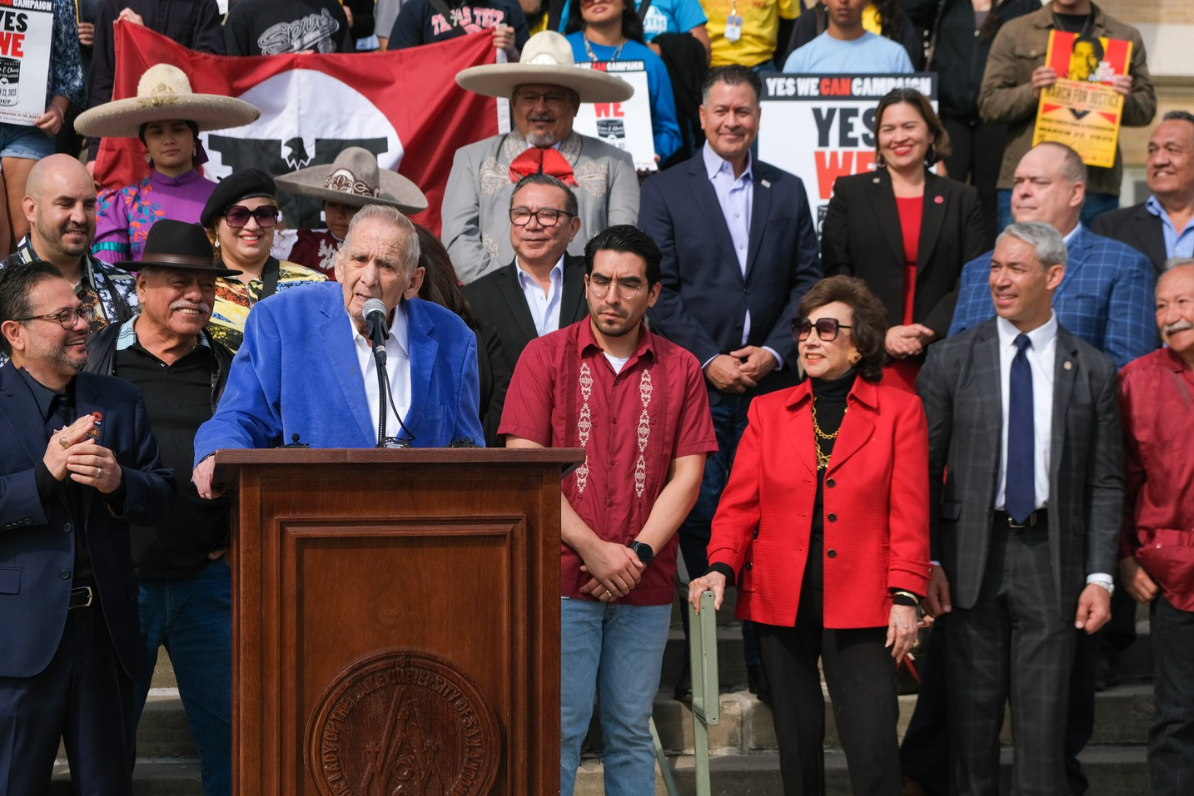
Gil Coronado, a West Side of San Antonio native also known as the Padrino of Hispanic Heritage Month, died at the age of 89 in his home in San Antonio.
He went peacefully on Saturday, just two weeks before his 90th birthday, his daughter Elaine Coronado said. He died of natural causes and was surrounded by his immediate family.
“He was just so generous of heart and spirit,” she said. “Of course, he will be remembered as the Padrino of Hispanic Heritage Month, but those who knew him and loved him, they will always remember a humble man who was just so kind.”
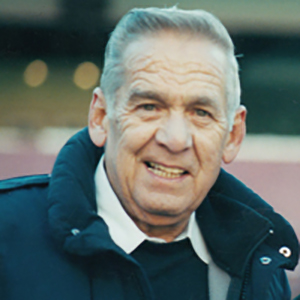 Gil Coronado Credit: Courtesy/ Our Lady of the Lake University
Gil Coronado, a retired U.S. Air Force Colonel, built a legacy as a firm and loving family man, a retired U.S. Air Force Colonel, an alumnus and longtime supporter of Our Lady of the Lake University, and a mentor to many who sought his guidance. He was also a self-titled “Barrio Boy,” according to his memoir published in 2024.
Sign up for the Bexar County Ballot, our weekly politics and election newsletter.

“In every interaction, Gil embodied values that endure: respect for one another, meeting people eye to eye, holding one’s head and chin up, honoring one’s word through action, and being proud of one’s roots,” said OLLU President Abel Chávez in a statement sent this week to the community.
Throughout his career, Coronado spoke candidly about his childhood. He shared how losing his mother at the age of 5 left him feeling like he had no guidance. He dropped out of Lanier High School at 15, and at 16 he enlisted in the Air Force, where he made a career of more than 30 years.
“These tumultuous times instilled in me a profound sense of determination and a relentless drive to seek a better future,” Gil Coronado wrote for his website. “The struggles and hardships I endured ultimately became the catalysts for my decision to join the U.S. military, where I found a sense of purpose, discipline, and direction.”
This determination led to him becoming the first Hispanic officer appointed as Director of Selective Services and earning other high ranking government titles such as Deputy Assistant Secretary of Veterans Affairs.
The connections he made along the way led him to advocate for added recognition of the contributions of the Hispanic community. On Aug. 17, 1988 a law was enacted to expand National Hispanic Heritage Week into what is now celebrated as Hispanic Heritage Month, between Sept. 15 and Oct. 15.
“I think my father found a new path [asking] ‘What about a month?’” Elaine Coronado said. “But it wasn’t like he did it all by himself. There was an army of people that you know were with him, behind him, to his side.”
But it was the everyday actions always spoke loud about who her father was. The way he would always ask, “Did you do your best?” when talking to his children about their day. The way he would encourage honesty and accountability especially when acknowledging mistakes. He started every Sunday morning with Ranchera music and a Mexican breakfast, regardless of what part of the world he was stationed in.
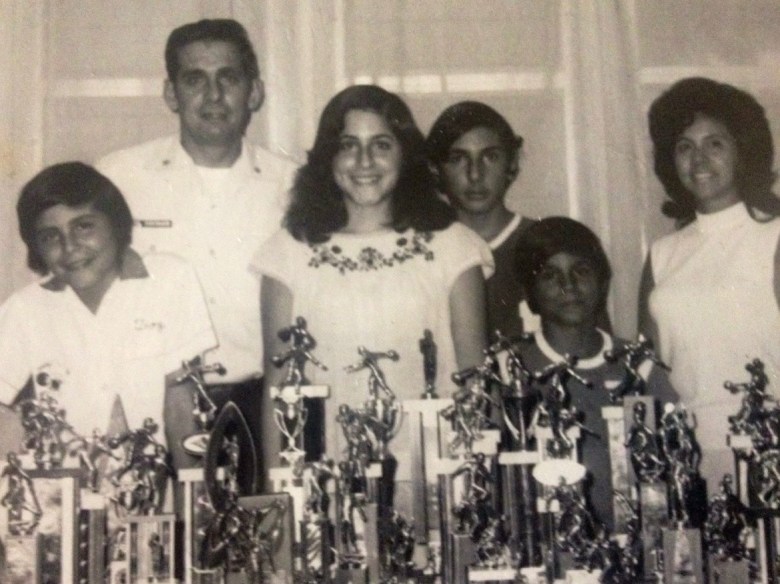 Gil Coronado surrounded by his family including wife Mary Helen Zepeda Coronado and his children, Elaine, Todd, Troy and Troup Coronado. Credit: Courtesy / Coronado Family
“I grew up on military bases … in either Germany, Spain or Panama, depending on which Air Force base we were at. And it was all English speaking,” Elaine Coronado said. “But on Sunday mornings he would always have Mariachi music and my mother would make tacos or huevos rancheros for him.”
“My father spoke beautiful Spanish,” she continued.
Despite growing up in a time when children were discouraged and even reprimanded for speaking Spanish at school, Elaine always admired her father’s ability to maintain his bilingualism. She also fully understood why her parents made the decision not to teach their children Spanish out of a need to protect them.
But his ability to speak Spanish was one of the reasons why he was assigned several positions of leadership in the military that dealt with Latin America or were based in Latin America.
“A lot of his jobs involved him interacting with Latino officers from all of the Americas,” Elaine said. “So I think that interacting with them maybe gave [my father] a better sense of how diverse the Americas are.”
This realization, she said, was probably what helped him better understand the cultural diversity that existed outside of what he had always known as the Hispanic community in his native San Antonio. And eventually, this could have been the precursor to his decision to leverage his connections and seek a more concrete celebration of Hispanics in the U.S.
“He was as a young boy in San Antonio, joined the Air Force, goes to live in Spain, goes to live in Panama where his military career had him interacting with military officers from the entire continent from all of the Americas, maybe extending his mind,” she said.
After retiring from the military, her father spent the first part of his retirement playing golf, but he would gleefully interrupt his downtime at the first opportunity to coach or mentor somebody, she said.
“My father just had a lack of direction until he joined the military, and I think that’s why when he gives back to these young people,” Elaine Coronado said. “I think that it [made him feel like] he’s looking at himself as a young man. Right. He was looking at himself and he was hoping to guide them to something good, to a good life.”
Gil Coronado is survived by his wife Mary Helen Zepeda Coronado, who he married in 1958 at Sacred Heart Church on the West Side. Their children Elaine, Todd, Troy and Troup Coronado, daughter-in-law Lisa Langois Coronado, son-in-law Andrew Gridley, granddaughters Raquel Estelle Coronado, Jaqueline Lisa Coronado Gridley, Mindy Helen Coronado and great-grandchildren Antonio, Athena and Jordan.
He will be laid to rest at Fort Sam this weekend, with his family holding a private ceremony and funeral to commemorate his life.
Are you doing your part?
You’ve read unlimited of unlimited free articles. That’s right — we’re committed to providing free, fair journalism for all. But without donor support, our nonprofit newsroom can’t do its job to inform and empower your community.
Are you in? Your donation of any amount will help keep articles like this one accessible to all San Antonians.