
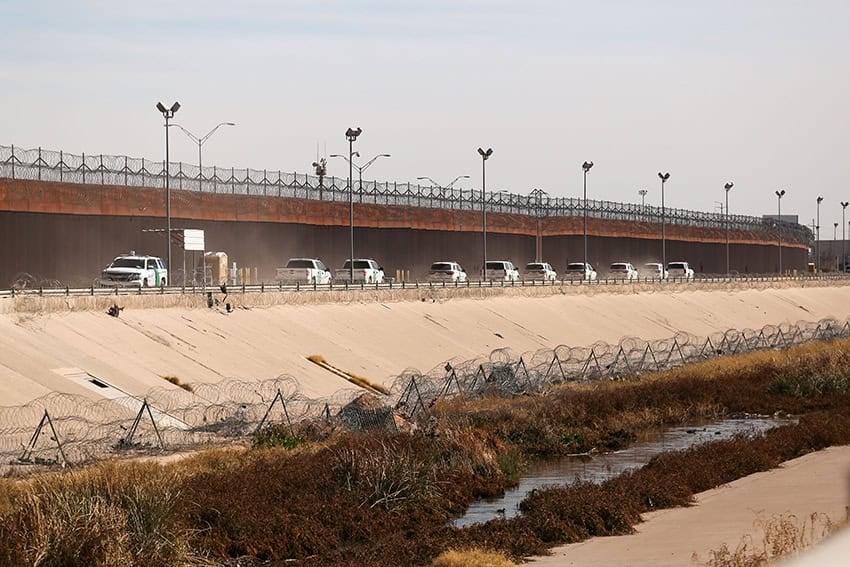
The cause of the closure of airspace over El Paso, Texas, from late Tuesday to early Wednesday was Customs and Border Protection’s deployment of a military anti-drone laser, according to media reports citing people familiar with the situation.
That version of events — reported by The New York Times (NYT) and the Associated Press (AP), among other media outlets — stands in contrast to U.S. Secretary of Transportation Sean Duffy’s assertion that a “cartel drone incursion” occurred, forcing the U.S. Federal Aviation Administration (FAA) to close the airspace above El Paso, located opposite the Mexican border city of Ciudad Juárez, Chihuahua.
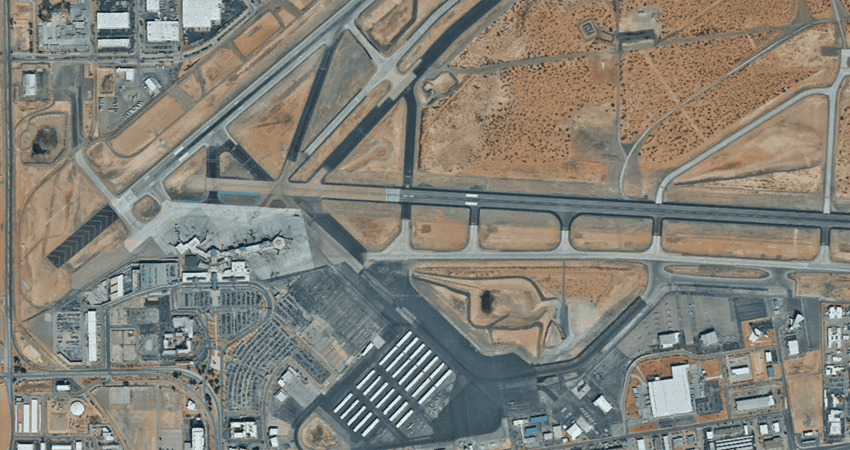 The U.S. declared a 10-day closure of the area around the El Paso airport in response to the incident — but the closure was quickly lifted the same day. (Google Earth)
Duffy said on social media on Wednesday that the cartel drone threat had been “neutralized,” allowing the airspace over El Paso to reopen. His assertion was reposted by the FAA on X.
Citing “multiple people briefed on the situation,” the NYT reported that “the abrupt closure of El Paso’s airspace late Tuesday was precipitated when Customs and Border Protection [CBP] officials deployed an anti-drone laser on loan from the Department of Defense without giving aviation officials enough time to assess the risks to commercial aircraft.”
“… The episode led the Federal Aviation Administration to abruptly declare that the nearby airspace would be shut down for 10 days, an extraordinary pause that was quickly lifted Wednesday morning at the direction of the White House,” the Times wrote.
AP, citing two unnamed “people familiar with the situation,” reported that the Pentagon allowed CBP to “use an anti-drone laser earlier this week, leading the Federal Aviation Administration to suddenly close the airspace over El Paso, Texas.”
AP cited one of its sources as saying that the laser was “deployed near Fort Bliss [U.S. Army post] without coordinating with the FAA, which decided then to close the airspace to ensure commercial air safety.”
“Others familiar with the matter said the technology was used despite a meeting scheduled for later this month between the Pentagon and the FAA to discuss the issue,” AP said.
The NYT wrote that Duffy’s assertion was “undercut by multiple people familiar with the situation, who said that the FAA’s extreme move” to close the airspace above El Paso “came after immigration officials earlier this week used an anti-drone laser shared by the Pentagon without coordination with the FAA.”
“… CBP officials thought they were firing on a cartel drone, the people said, but it turned out to be a party balloon,” the Times reported.
“Defense Department officials were present during the incident, one person said. … The military has been developing high-energy laser technology to intercept and destroy drones, which the Trump administration has said are being used by Mexican cartels to track Border Patrol agents and smuggle drugs into the United States.”
The Times also wrote that “it was not clear” the CBP’s deployment of an anti-drone laser “alone prompted the FAA’s decision to close the airspace over El Paso.”
Did a Mexican cartel just try to attack El Paso?
“FAA officials did not respond to questions about the claims by Mr. Duffy and other administration officials that a subsequent drone incursion had necessitated the closure of the airspace starting at 11:30 p.m. local time” on Tuesday, the newspaper said.
“… But according to the people briefed on the matter, at the time FAA officials closed the airspace, the agency had not yet completed a safety assessment of the risks the new [anti-drone laser] technology could pose to other aircraft.”
Sheinbaum: US government has to explain what happened
At her Thursday morning press conference, President Claudia Sheinbaum said there was no “official information” about the cause of the closure of airspace above El Paso, although she acknowledged there was a social media post from Duffy.
“There was nothing from Mexico,” she said, asserting that there was no evidence of drones having entered the U.S. from the north of the country.
“You can be absolutely certain of that,” added Sheinbaum, who said Wednesday that there was “no information about the use of drones at the border.”
“In any case, they have to provide an official explanation,” she said Thursday in reference to the U.S. government.
 In response to queries about the Wednesday airspace shutdown, President Sheinbaum said any explanation must come from the U.S. government. (Andrea Murcia/Cuartoscuro.com)
“… They don’t even mention ‘Mexico.’ … They talk about cartels, but they never mention Mexico, [at least in] the case of the transportation secretary,” Sheinbaum said.
U.S. Senator Jack Reed, a Democrat from Rhode Island who serves on the Senate’s Armed Services Committee, also said that the U.S. government needs to explain itself.
“A ten-day shutdown of a major U.S. air corridor is an extraordinary step that demands a clear and consistent explanation,” he said.
“The conflicting accounts coming from different parts of the federal government only deepen public concern and raise serious questions about coordination and decision-making.”
US Senator: Airspace closure due to ‘lack of coordination’
U.S. Senator Tammy Duckworth, a Democrat from Illinois and a former U.S. Army helicopter pilot, said that the closure of the airspace over El Paso was the result of a “lack of coordination that’s endemic in this Trump administration.”
“I have all sorts of questions,” Duckworth said.
Scott Brown, a former special agent in charge at Homeland Security Investigations who has experience in counter-drone operations at the U.S.-Mexico border, told Reuters that he thought the Trump administration could be using the airspace closure as the pretext for a strike on Mexican cartels, which the U.S. president has threatened to carry out in Mexican territory.
“When I heard about the airport closure, my concern was, is this a pretext for a counter-strike by the U.S.?” Brown said.
Republican lawmaker: Drone incursions part of ‘everyday life’ at US-Mexico border
Last July, Steven Willoughby, director of the counter-drone program at the U.S. Department of Homeland Security (DHS), said that “nearly every day, transnational criminal organizations use drones to convey illicit narcotics and contraband across U.S. borders and to conduct hostile surveillance of law enforcement.”
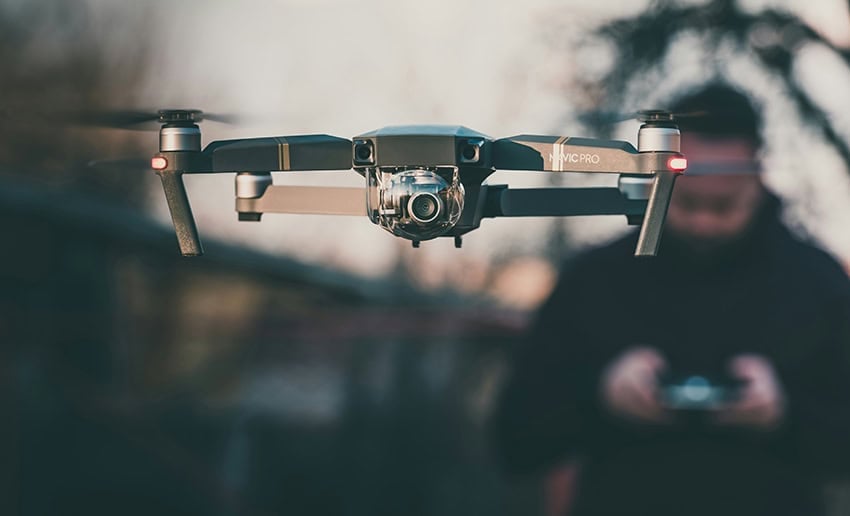 There are more than 1,000 drone incursions from Mexico into the U.S. every month, some of which are operated by criminal organizations. (Diana Măceşanu)
Similarly, AP reported that incursions into U.S. airspace by Mexican cartel drones “are not uncommon along the southern border,” while Republican Representative Tony Gonzales said that “for any of us who live and work along the border, daily drone incursions by criminal organizations is everyday life for us.”
“It’s a Wednesday for us,” said Gonzales, whose congressional district in Texas abuts the border with Mexico.
Reuters reported that “the Pentagon has said there are more than 1,000 drone incursions along the U.S.-Mexico border each month.”
In such a context, the Trump administration’s assertion than an incursion by a Mexican cartel drone (or drones) precipitated the closure of airspace above El Paso appears fanciful.
“There have been drone incursions from Mexico going back to as long as drones existed,” said Representative Veronica Escobar, a Democrat who represents El Paso in the U.S. Congress.
“This is not unusual, and there was nothing extraordinary about any drone incursion into the U.S. that I’m aware of. … There’s no threat. There was not a threat, which is why the FAA lifted this restriction so quickly. The information coming from the [Trump] administration does not add up,” she said.
“I believe the FAA owes the community and the country an explanation as to why this happened so suddenly and abruptly and was lifted so suddenly and abruptly,” Escobar said.
Security expert: Drone attack ‘narrative’ serves Trump’s interests
Willoughby, the DHS official, asserted last July that it was “only a matter of time” before Mexican criminal organizations carried out drone attacks against U.S. citizens and law enforcement authorities.
“In Ukraine and Russia, the extensive use of drones in the ongoing war has further demonstrated their lethality and versatility. … As my colleagues here can attest to, the threat of weaponized UAS [unmanned aircraft system] attacks is also a concern right here in the United States,” Willoughby said at a July 22 appearance before the U.S. Senate Committee on the Judiciary.
Carlos Pérez Ricart, a security expert and academic at the Center for Research in Teaching and Economics in Mexico City, took issue with the assertion that cartels would use drones to launch attacks in the U.S. at some point.
“There’s no evidence that the cartels would attack the U.S. with drones, it doesn’t make sense for them,” he told Reuters. “But such a narrative does serve Trump’s interests in creating a justification for military action.”
With reports from The New York Times, AP and Reuters