
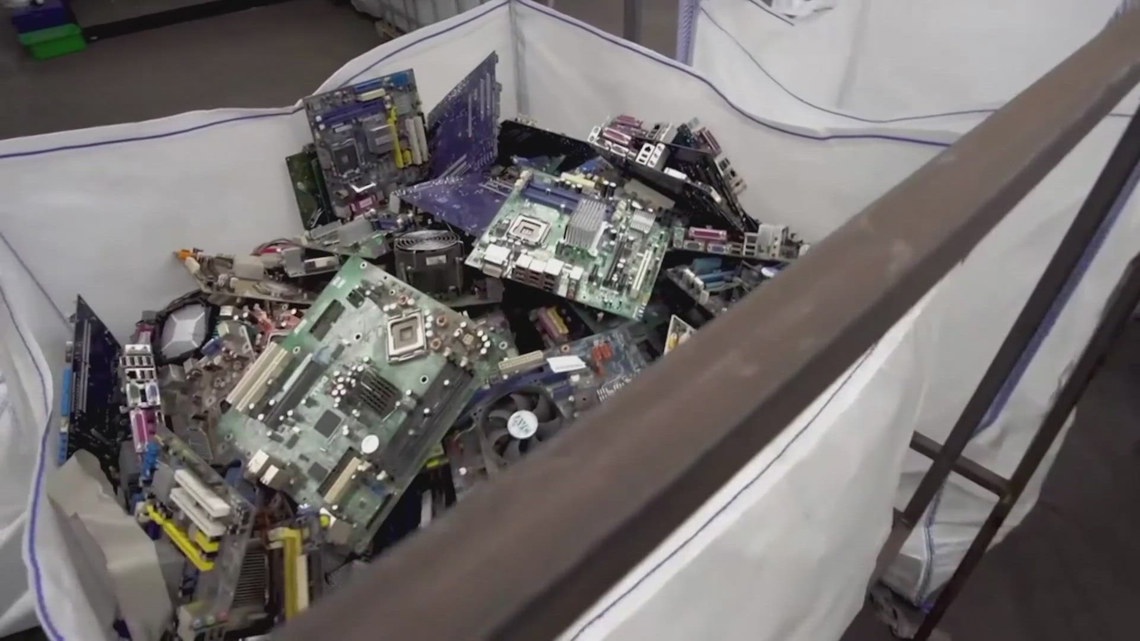
A non-toxic process involving a 3-D printed cartridge may help cut U.S. reliance on imported minerals used in the electronics and defense industries.
AUSTIN, Texas — One recent scientific breakthrough from the University of Texas at Austin will not only help the environment, but may also keep the United States from having to rely on some very important foreign imports.
Supra Elemental Recovery Inc., a UT Austin spinoff, has launched with a $250,000 investment from Discovery to Impact’s UT Seed Fund as part of its pre-seed round.
The startup aims to commercialize a new technology designed to recover high-purity critical minerals from U.S. waste streams, including mine tailings, industrial byproducts and electronic waste.
Supra’s platform targets minerals such as cobalt, lithium, gallium and scandium, which are essential for semiconductors, batteries, magnets and electronics – but are also difficult and costly to refine.
By improving domestic recovery of these materials, the company seeks to strengthen U.S. supply chains and reduce reliance on foreign sources.
The company was founded on research by UT scientists Zachariah Page, Michael Cullinan and Jonathan Sessler. Their interdisciplinary collaboration produced a 3D-printed, porous cartridge that filters and separates minerals at the molecular level using common solvents like water and alcohol.
The reusable system combines elements of solvent extraction and ion exchange, while also avoiding toxic byproducts and heavy machinery associated with traditional methods.
Supra says its modular cartridges can be customized and scaled for manufacturers, mines and industrial partners, offering a more affordable and environmentally friendly way to extract valuable materials from millions of tons of U.S. industrial and e-waste generated annually.
“America’s ability to compete in advanced manufacturing depends on securing its supply of critical minerals,” said co-founder and CEO Katie Durham.
Supra joins more than 100 startups launched through UT’s Discovery to Impact initiative, which supports commercialization of university research.