
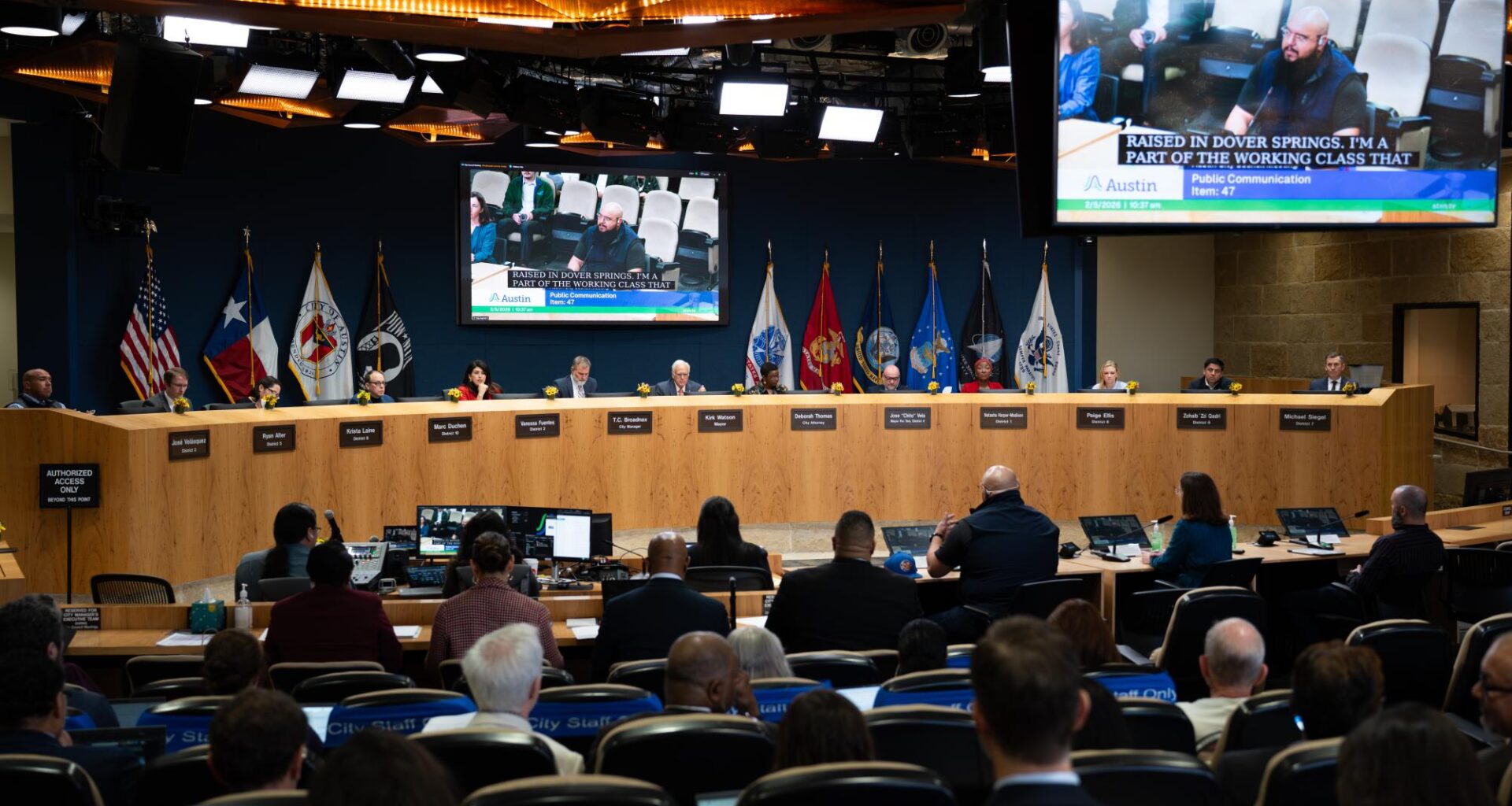
Austin City Council is working on passing an ordinance establishing a citywide “Comprehensive Efficiency Assessment.”
The draft ordinance would establish a three-year cycle of city efficiency assessments conducted by an outside consultant in collaboration with the city auditor. The assessments would evaluate city operations, management structure and standards for outside contractors, as well as compare Austin’s finances and efficiency to peer cities.
Mayor Pro Tem José “Chito” Vela said the ordinance proposal was a reaction to a petition started by Save Austin Now, which seeks to add a requirement for regular outside audits to the city charter.
Save Austin Now launched the petition in November after the failure of Proposition Q, which the organization advocated against. Proposition Q would have increased property taxes to raise funds for housing, public safety and public health. Save Austin Now did not respond to multiple requests for comment.
Vela said Save Austin Now’s charter petition mandates an unrealistically short timeframe for the audit and makes the assessment too difficult to update because the charter can only be changed by a public vote.
The City Council was set to vote on the ordinance at the Feb. 5 council meeting, but it was withdrawn from the agenda to give the Council more time to work on the ordinance. Vela said the Council is likely to vote on the ordinance at the Feb. 26 council meeting.
“We want to get it right, give people a reasonable amount of time to assess it, and assure confidence in the outcome,” Mayor Kirk Watson wrote in a statement. “We’ve had good discussions so far that, in my view, need to continue for a little while longer so that people will have more time to engage with and give more input to the proposal.”
Vela also said having an efficiency assessment is important because Austin is limited in their ability to collect revenue due to Texas Senate Bill 2 from the 86th Texas Legislature, a cap on property tax increases that went into effect in 2020.
“Every city in the state of Texas is going to be struggling for revenue, and is going to be belt tightening,” Vela said. “So we need to be more efficient in the way we provide services.”
At a Feb. 3 work session, the Council discussed the possible cost of an outside audit, which could cost hundreds of thousands of dollars, as well as adding a provision for including city employees in an efficiency assessment.
“Taxpayers worked hard for their money, and we should stretch it as far as we can to do as much good as we can,” Council Member Ryan Alter wrote in a statement. “This starts with asking workers who are on the front line of service delivery how we can provide those services more effectively and efficiently.”