
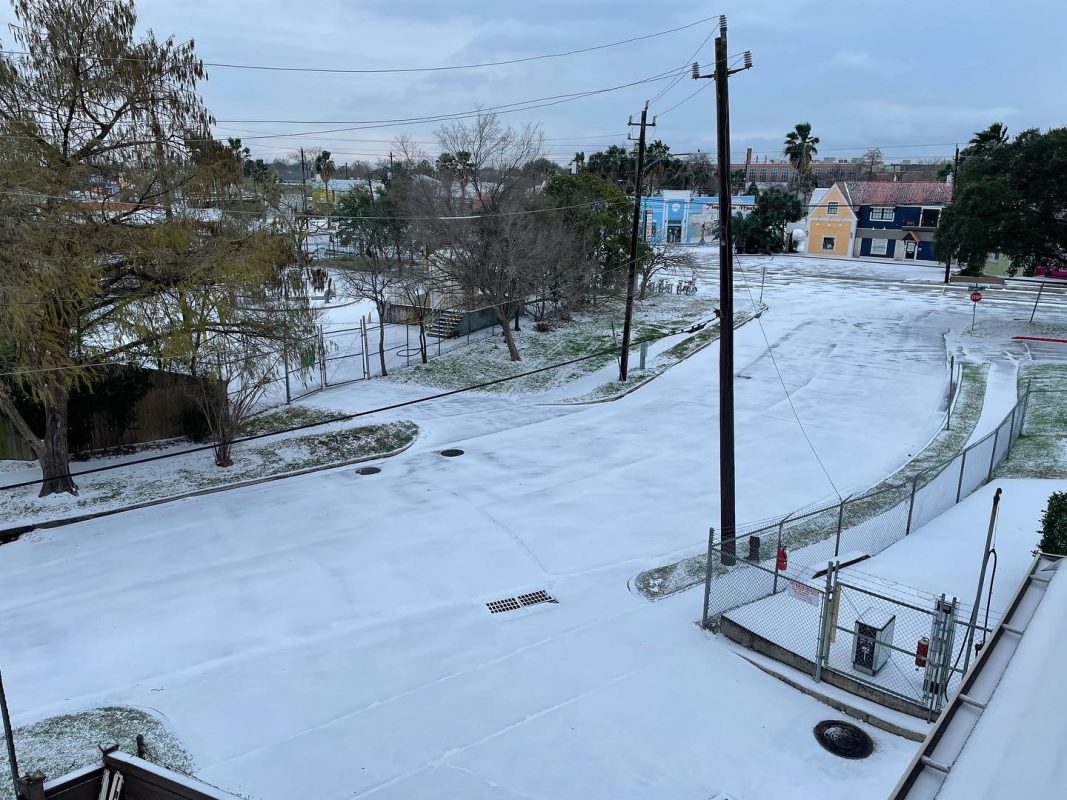
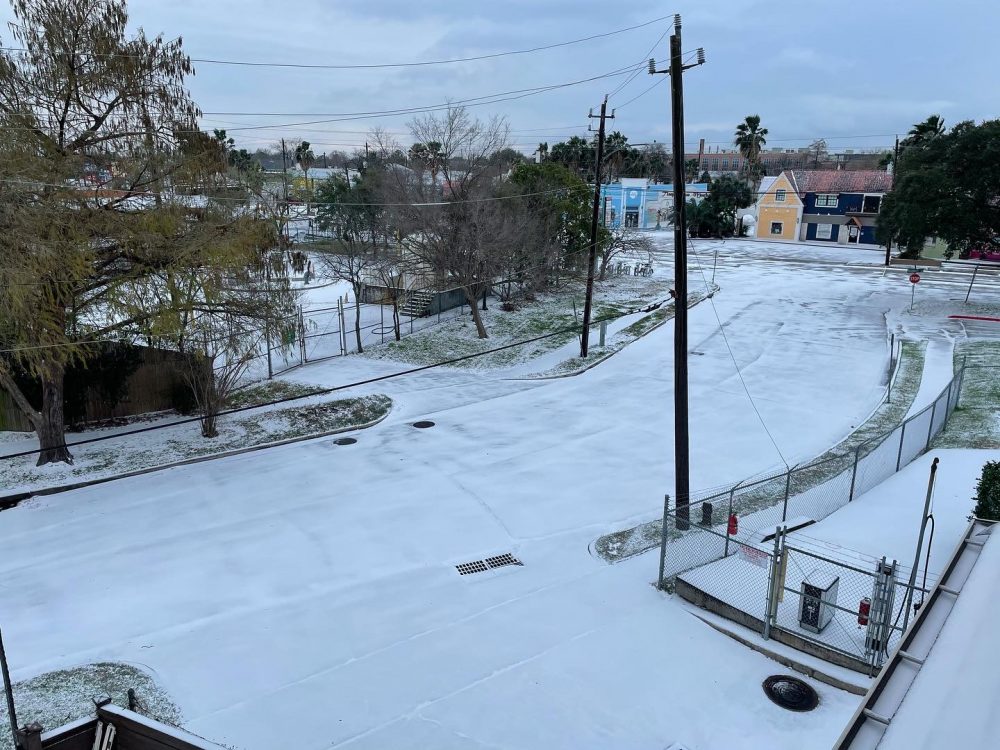
Elizabeth Trovall/Houston Public Media
Houston’s East End during the winter storm of 2021.
Houston resident Sade Hogue was 5 months pregnant with her second daughter when her home lost power during the deadly 2021 winter storm that left millions of Texans without power or heat.
Hogue and her family went to stay with relatives who still had electricity. Then, a few days later, they also lost power.
Sign up for the Hello, Houston! daily newsletter to get local reports like this delivered directly to your inbox.
“Not only are you worried about you, but you’re worried about the unborn child because you don’t know what the effects of this freeze is doing to the child as well,” Hogue said.
It’s been five years since the winter storm, which led to at least 246 deaths statewide and hundreds of billions of dollars in damages. Since then, Texas has taken steps to harden its power grid.
Click here for more inDepth features.
But Texans such as Hogue still get worried, and still scramble to prepare, whenever frigid weather is approaching.
That’s partly because Texas is unique in that it operates an isolated power grid. Only pockets of the state are connected to the United States’ eastern and western grids.
Texas’ grid struggled to keep up with surging demand for electricity as Texans turned up their heaters during the 2021 storm, when much of the state endured sub-freezing temperatures for multiple days.
Many of the state’s power plants failed as they were not designed to withstand extreme winter weather. The Electric Reliability Council of Texas (ERCOT) – which operates the state’s grid – initiated rolling blackouts to avoid catastrophic damage to the grid.
The state has since implemented more stringent standards for power plants and gas facilities to ensure they can withstand extreme winter weather, said Matt Boms, the executive director of the Texas Advanced Energy Business Alliance. Texas also has more batteries that store electricity and help increase energy supply when demand peaks, and renewable energy sources have grown in the last five years.
“Texas has a lot more protection built into the system than we did a few years ago,” Boms said.
A recent test
A recent freeze in late January, which led to at least 13 deaths across the state, tested the grid. But Texas did not see widespread power outages.
RELATED: Texas grid weathers winter storm, unlike 2021 blackout
Boms said that’s in part because the freeze was less intense and shorter than the 2021 winter storm.
He added, however, that the state’s measures to harden its grid helped maintain stability throughout this year’s winter storm.
“I would say it wasn’t one silver bullet, but it was really those layers of reliability,” he said.
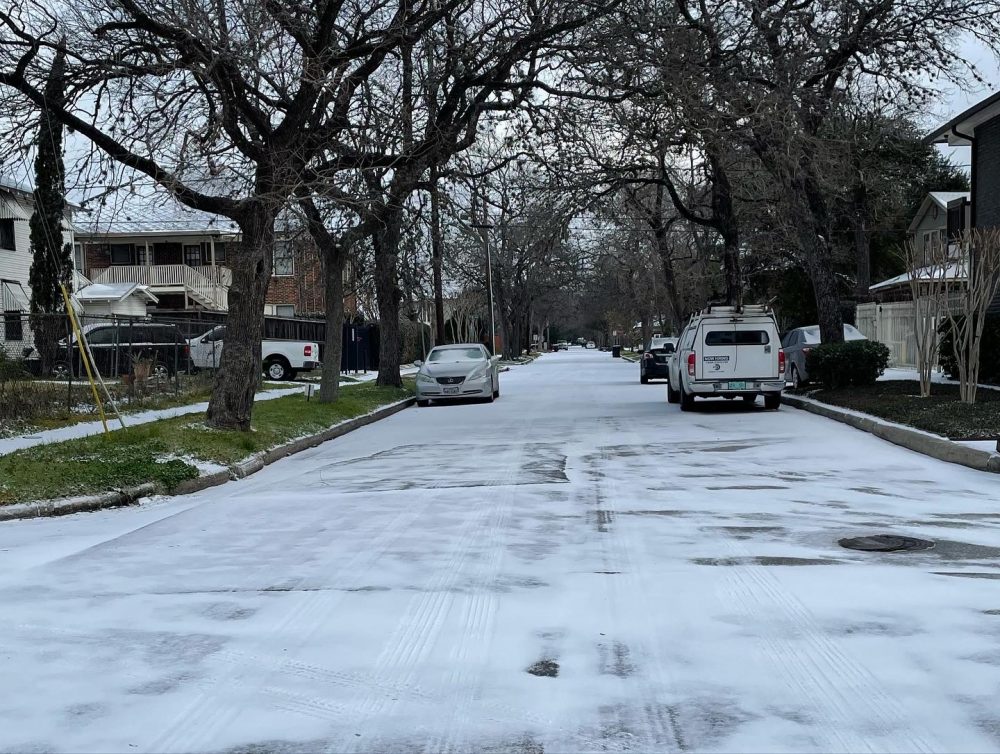
Elizabeth Trovall/Houston Public Media
Houston’s East End during the winter storm of 2021.
Will McAdams previously served on the Public Utility Commission of Texas and was appointed in the aftermath of the 2021 storm.
He said the commission implemented fines of up to $1 million per day per violation of the new weatherization standards.
“Those are significant penalties that are consistent with federal penalty structures in other regulated areas,” he said.
Texas Oil and Gas Association President Todd Staples said that prior to the 2021 freeze, many oil and natural gas field operations were not allowed to be designated as “critical load” – facilities such as hospitals or fire stations that are the last to lose power during planned rolling blackouts.
As a result, many of the oil and gas production facilities lost power during the state’s rolling blackouts, and were unable to operate.
Since then, many of these facilities have been designated as critical load, following new legislation, Staples said. And there’s better communication between the industry and state agencies, he added.
These factors helped natural gas facilities stay operational through this year’s winter freeze, Staples said.
“The fact that there were no emergency alerts, I think, is a testament of how the enhanced communication and the critical load designation – by prioritizing these assets – really made a difference,” he said.
In a statement, ERCOT highlighted its power plant inspections, backup fuel supply at generators and improved communications, among other steps it says it’s taken to harden the grid.
“At this time, ERCOT does not anticipate any reliability issues on the statewide electric grid,” the council said in a statement. “ERCOT plans for and prepares year-round for all weather scenarios and will deploy all available tools to manage the grid, maintaining a reliability-first approach to operations.”
Andrew Mahaleris, a spokesperson for Gov. Greg Abbott, noted in a statement that along with legislative action intended to bolster the grid, more than 40,000 megawatts of power have been added to the grid since the 2021 winter storm.
“Thanks to those reforms, no Texan has lost power because of the state grid,” Mahaleris added. “Governor Abbott will continue working with the legislature to build a grid with enough energy to power Texas for the next century.”
Challenges remain
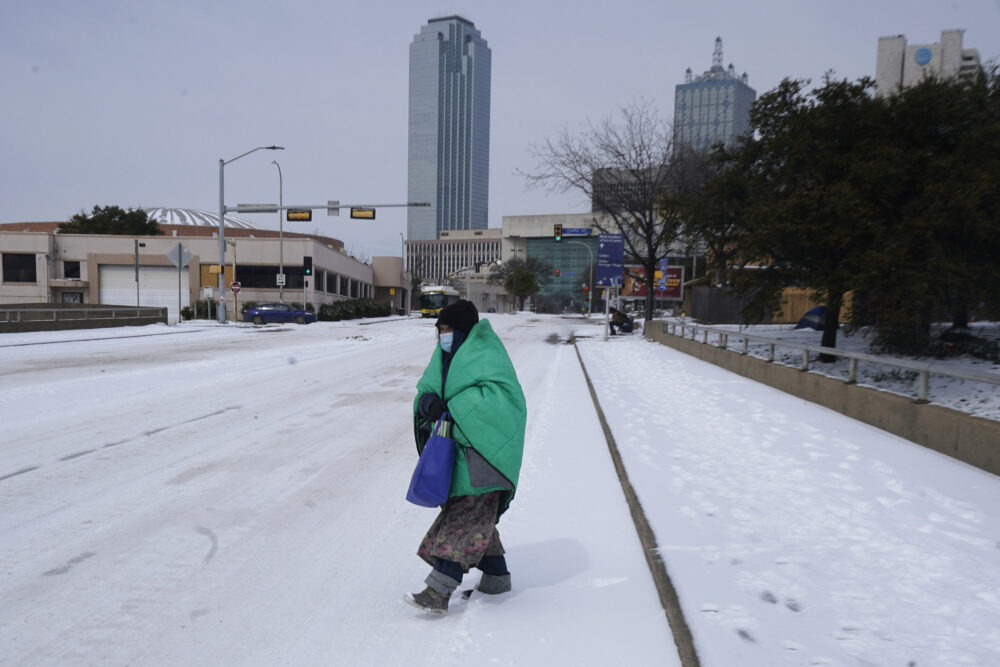
AP Photo/LM Otero
A woman wrapped in a blanket crosses the street near downtown Dallas, Tuesday, Feb. 16, 2021. Temperatures dropped into the single digits as snow shut down air travel and grocery stores.
However, the state is still grappling with a growing energy demand, aging infrastructure and a need for further weatherization.
Beth Garza is an energy consultant who previously served as the independent market monitor for ERCOT. She said the state’s new winterization standards are a work in progress.
“It has to get cold for you to understand where the vulnerabilities are,” she said. “So that, in some respects, is an ongoing practice and process.”
RELATED: ERCOT to update planning process for connecting data centers, other large loads to Texas power grid
University of Houston Energy Fellow Ed Hirs said the state’s energy demand is growing due to a booming population, cryptocurrency mining and AI data centers. And he said the state’s electricity market does not incentivize power plant operators to produce enough energy.
“The state passed laws requiring the weatherization of power plants, thinking that that was the real problem,” he said. “But we know that it was the economic incentives that drove the lack of weatherization.”
For many Texans, the lingering memories of the 2021 freeze come to mind every time forecasters predict extreme winter weather.
Before this year’s freeze, Sade Hogue of Houston stocked up on tuna, bread and extra bottled water.
“You’re always in fear,” she said. “You don’t know, you know, if you’re going to be OK, if your family’s going to be OK, so you want to make sure everything is safe and you try to over-prepare.”