
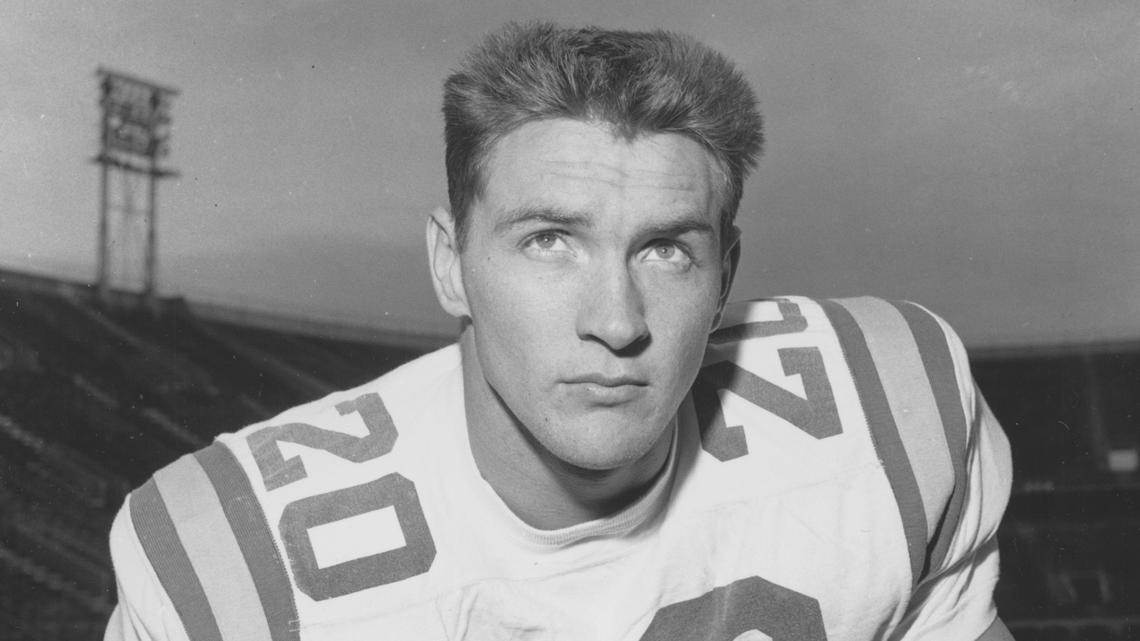
President Trump has pardoned Billy Cannon, a former Houston Oilers star and Heisman Trophy winner whose legacy includes football greatness and later legal trouble.
HOUSTON — President Donald Trump has pardoned five former NFL players, including Billy Cannon, a former Houston Oilers standout whose legacy spans college football greatness, professional success, and later legal trouble.
The White House said the pardons are about “second chances,” though officials did not explain why Cannon and the other former players were selected.
Cannon remains one of the most celebrated athletes in the history of Louisiana State University football. According to the Heisman Trophy Trust, Cannon became the first LSU player to win the Heisman Trophy in 1959.
Born in Philadelphia, Miss., Cannon grew up in Baton Rouge, La., and attended Istrouma High School, where he excelled in football, basketball, and track, according to the Heisman Trophy Trust. He chose LSU over Florida and Mississippi and quickly emerged as a rare combination of speed and strength.
Cannon played a pivotal role in LSU’s perfect 1958 season and national championship, earning MVP honors in the Sugar Bowl. His most iconic moment came the following year against Ole Miss, when he returned a punt 89 yards for a touchdown, a play that helped secure a 7–3 victory and became one of the most enduring images in college football history.
By the end of the 1959 season, Cannon had secured the Heisman Trophy in a decisive landslide. According to the Louisiana Sports Hall of Fame, he received more votes than the combined totals of the next eight finishers, sweeping every region of the country.
Cannon went on to a distinguished professional career, most notably with the Houston Oilers during the AFL era. The Louisiana Sports Hall of Fame notes that Cannon helped the Oilers win the first two AFL championships and later earned All-Pro honors with both Houston and the Oakland Raiders after transitioning from running back to tight end. He also played for the Kansas City Chiefs, finishing an 11-year pro career that included rushing, receiving, and kick-return success.
Away from football, Cannon pursued academics, earning a Doctor of Dental Surgery degree from the University of Tennessee in 1968 and completing graduate studies in orthodontics in Chicago, according to the Heisman Trophy Trust. He later practiced dentistry in Baton Rouge, where he lived with his wife, Dorothy, and their five children.
Despite his athletic achievements, Cannon’s life included serious legal trouble. In the 1980s, he pleaded guilty to counterfeiting and served time in federal prison, a fact noted in the White House announcement accompanying the pardon.
Cannon was inducted into the National Football Foundation Hall of Fame in 2008. He died on May 20, 2018, at the age of 80.
Got a news tip or story idea? Email us at newstips@khou.com or call 713-521-4310 and include the best way to reach you.