
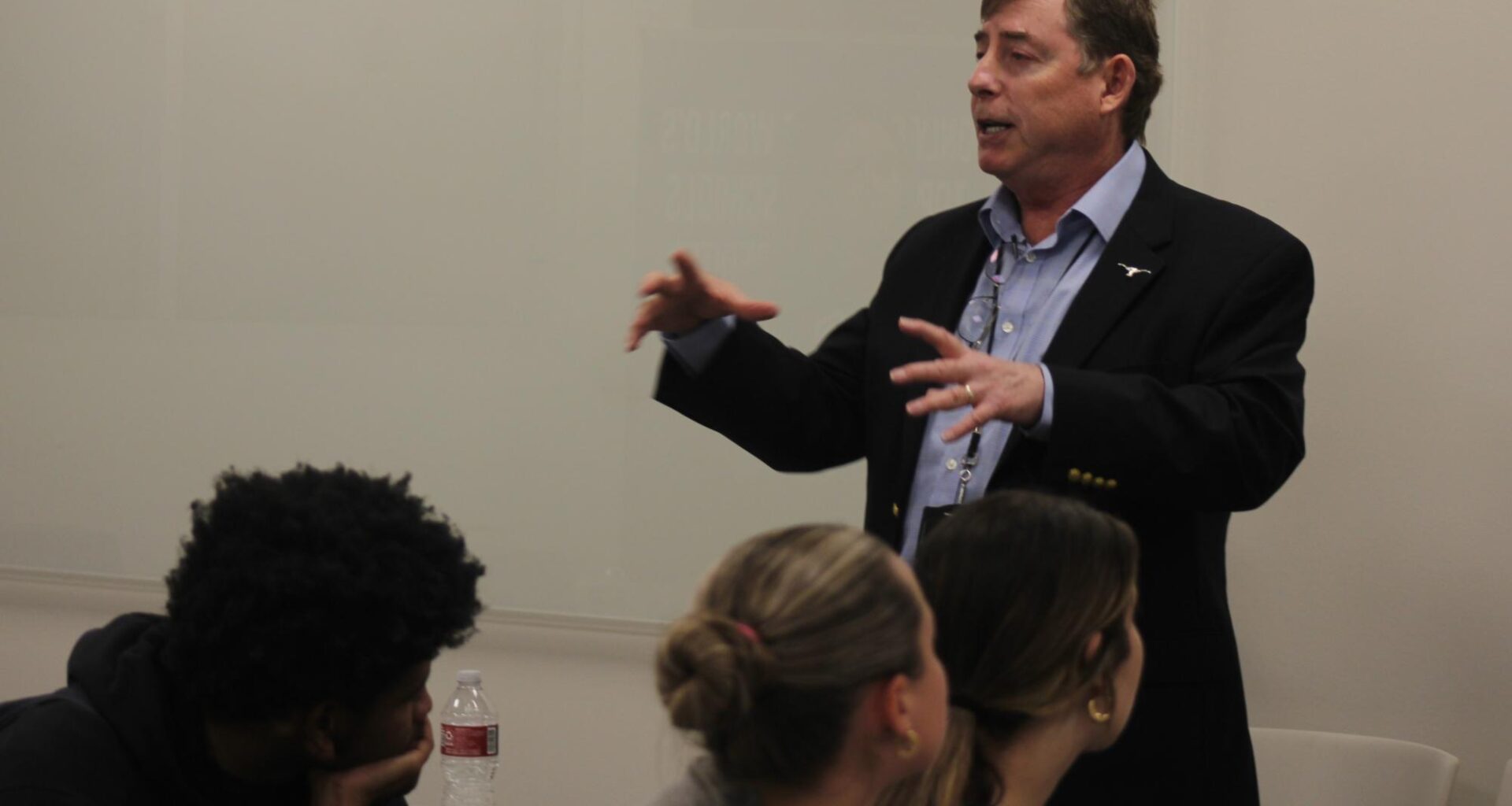
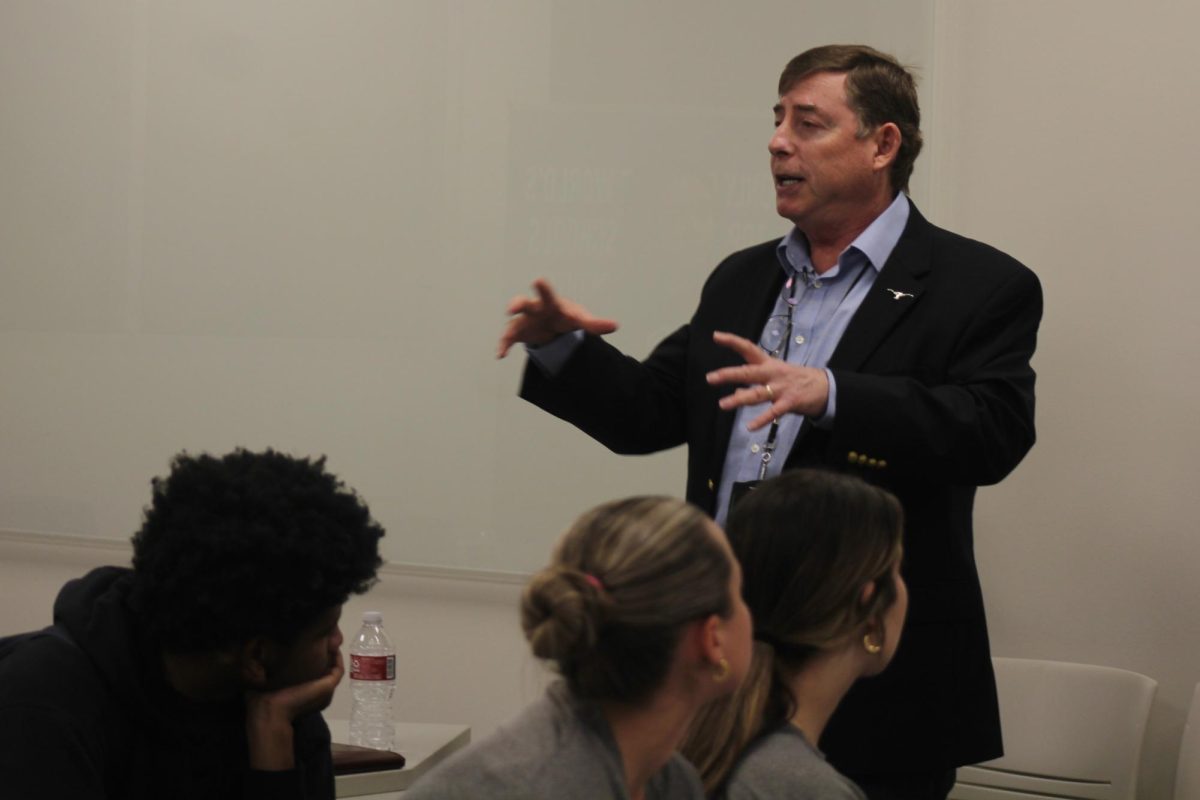
City of Fort Worth Planning Division Assistant Director Eric Fladager speaks during the Q&A panel.
On Feb. 10 the Entrepreneurship Network welcomed representatives from Fort Worth’s Reimagine: 2050 Comprehensive Plan, part of a new partnership with the City of Fort Worth.
The meeting, held in the Jack Morton Accelerator Room, invited students to enjoy lunch while discussing what they’d like to see in Fort Worth by 2050, including businesses, recreation centers and public transportation.
In addition to the project proposal, the city representatives also held a Q&A session about the 2050 Comprehensive Plan, as well as general questions about city planning.
With Fort Worth being one of the most heavily populated cities in the U.S., handling the anticipated influx was a topic of discussion. This included exchanges about the types of urban developments in Fort Worth and how residence, business and corporate spaces can coexist.
First-year business administration student Ricardo Escamilla was interested in the solutions for accommodating Fort Worth’ growing population.
“They were talking about different types of cities. That kind of broadened my perspective,” Escamilla said.
Reimagine Fort Worth welcomes input from those living in our community. Online community engagement is encouraged on connectfw, where users can learn about upcoming in-person events and project updates. The project proposal is expected to be finalized by Spring 2027.
CEO of the Entrepreneurship Network Arianna Martinez, first-year supply chain management major, encouraged students to come and take part in the unique opportunity.
“They can come out, they can share their ideas and help us help them. It’s what we want, how can we help you advocate for yourself,” Martinez said.
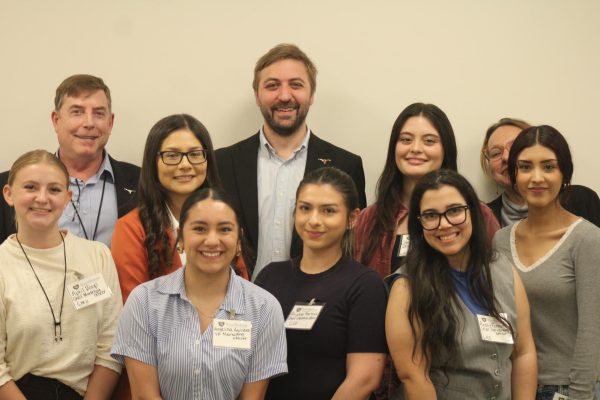 City of Fort Worth Representatives and Entrepreneurship Network leaders gather for a photo at the end of the event. (Josephine Juarez)
Gokcen Ogruk, associate professor of economics and faculty adviser of the Entrepreneurship Network, believes that this experience is helpful to all students regardless of their major or career path.
“This opportunity benefits all students by exposing them to real-world economic development strategies, city planning insights and data resources,” Ogruk said.
Martinez expressed the importance of student engagement in the city planning process.
“We’re the people that are going to be driving on the streets, walking the sidewalks, paying for the parking; we’re fueling the development because they get their money from [our] taxes,” Martinez said. “it’s a great opportunity, a perfect time for students to actually advocate for what their money is going to.”