
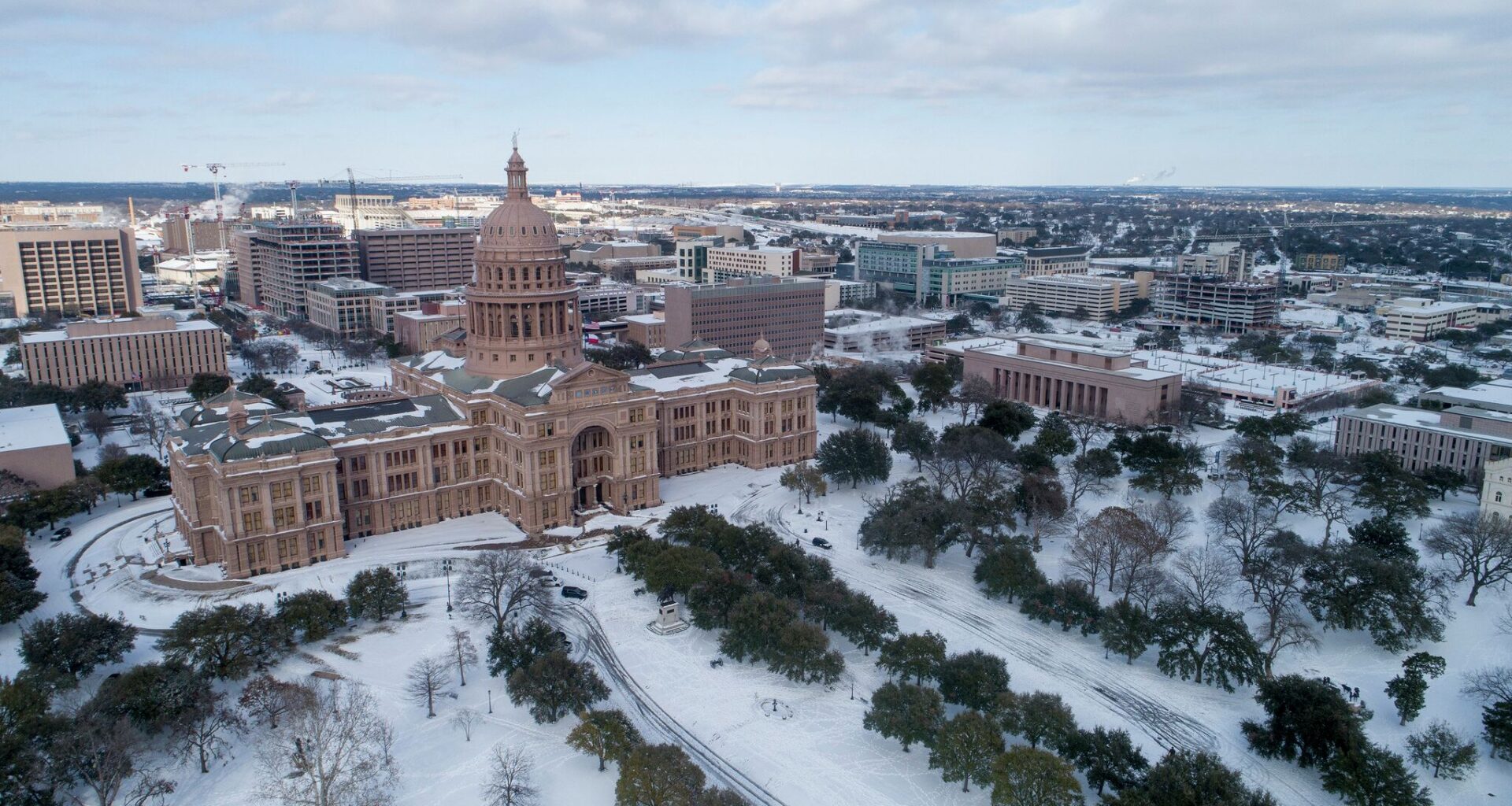
The Texas Capitol grounds are covered in snow on Feb. 15, 2021, in Austin.
JAY JANNER/TNS
Five years ago, this weekend, Texas was paralyzed by a catastrophic winter freeze that delivered historic snowfall, crippling ice storms, and record-shattering cold.

For some, it feels like it happened yesterday; for others, it seems like a lifetime ago. But everyone living in Texas in February 2021 carries a memory from that extended freeze — a storm that reshaped the state’s energy policies, exposed serious vulnerabilities in critical infrastructure, and left lasting scars on millions of Texans.
Article continues below this ad
Timeline of the 2021 Texas Freeze from Feb. 10-18.
National Weather Service
What was the weather setup?
In February 2021, a sharp dip in the jet stream allowed frigid air from the Arctic to plunge deep into the Central Plains and all the way to the Texas Gulf Coast. The initial system brought between 6 and 8 inches of snow to Central Texas, but it was a second disturbance arriving from the southwest that produced damaging ice and more snow across the region.
All 254 Texas counties recorded wintry precipitation, and local National Weather Service offices issued winter storm warnings that blanketed the entire state for the first time in Texas history.
Article continues below this ad
Winter storm warnings across the entire state of Texas on Feb. 14, 2021.
National Weather Service
While the snow and ice were enough to shut down the state for a few days, it was the duration of the cold that set the disaster apart.
Temperatures across Texas remained below freezing for days, compounding stress on power plants, natural gas facilities, water systems, and homes built for heat, not hard freezes. As demand for electricity surged, critical infrastructure began to fail.
Article continues below this ad
The February 2021 freeze became one of the deadliest and costliest disasters in state history. Over multiple days, the cold wave that exposed deep weaknesses in Texas’ power grid and emergency preparedness.
How cold did it get and for how long?
Parts of Texas endured the longest stretches below freezing in modern records.
Waco: 8.5 days (205 hours)
Downtown Austin: 6 days ( 144 hours)
Austin-Airport: 7 days (164 hours)
San Antonio: 4.5 days (108 hours)
Dallas-Fort Worth area: 4 days (93 hours)
Houston: 2 days (44 hours)
Article continues below this ad
But it was the collapse of the state’s power grid that turned a severe winter event into a humanitarian crisis.
As temperatures plunged, demand for electricity soared while power plants — including natural gas, coal, nuclear and wind facilities — went offline. Equipment froze and supply chains for natural gas faltered, prompting controlled power outages to prevent a total system collapse.
At the peak, more than 4 million Texas utility customers were without electricity, many for days. Without power, homes became dangerously cold. Hospitals and nursing homes struggled with generator failures. Water systems lost pressure, triggering boil-water notices for millions, and burst pipes flooded homes across Texas.
State officials later attributed at least 246 deaths to the freeze. Economic losses reached the tens of billions of dollars.
Article continues below this ad
Carolina Velez, 40, looks at frozen agave plants on East Side Drive in Austin on Feb. 14, 2021.
Bronte Wittpenn / American-State
What would it take for it to happen again?
A repeat of February 2021 would require another rare and sustained Arctic outbreak— not just a strong cold front, but a weather pattern strong enough to push bitter cold deep into Texas and keep it here for several days.
Texas experiences winter cold fronts every year, but what made 2021 exceptional was the magnitude and how long temperatures were below freezing — factors that make a significant difference. A quick freeze may cause spotty problems. But when temperatures stay below freezing for days, the strain on pipes, power systems and infrastructure builds without relief.
Article continues below this ad
In 2021, the prolonged cold allowed problems to snowball and worsen over time. A storm of similar severity would require a comparable atmospheric setup: the jet stream plunging far south, strong high pressure locking Arctic air in place, and little opportunity for that air mass to warm before reaching Texas. Those conditions are uncommon, but not unprecedented in the historical record.
Snow blankets a neighborhood near the Mueller neighborhood in Austin on Feb. 15, 2021.
Status: None
Bronte Wittpenn / American-State
Five years later, the February 2021 freeze remains a defining reference point each winter when temperatures plunge. The atmospheric setup that caused it was rare, but the memory of what followed remains immediate.