

This article is part of a series of pieces celebrating Glasstire’s 25th anniversary. To see other stories from this series, go here. To see pieces from the month of February, around the theme Early Sightings: Before They Were Big, go here.
When I started contributing writing to Glasstire in 2018, I was ambitious. I wanted to cover many fields and experiment with exciting formats. While I’ve done much of that, the role encompasses more than writing. There are travel arrangements, overlapping and constantly shifting timelines of exhibitions and programs across the state, and, of course, a general amount of variability that comes with covering a state as big as Texas. Here are some pointers for our readers and prospective writers on things I’ve learned:
 A view from El Boquerón (volcano), San Salvador, El Salvador
Travel opens up new worlds
Covering art across Texas means you’ll become deeply familiar with communities you might never have encountered otherwise. You’ll get to know the real character of different regions. This kind of ground-level experience is valuable, and takes time.
There’s something irreplaceable about being physically present in a space, walking through a gallery, talking with artists in their studios, and experiencing the energy of an opening night. While it means less time with friends in any one place (you might only see your closest contacts in any given city a couple times a year) it’s an incredible opportunity to truly understand the diverse cultural landscape of our state. You begin to notice patterns, connections, and threads that run through Texas’ art communities that you couldn’t perceive from a distance.
The roads between cities become as familiar as the galleries themselves. You learn the quirks of different regions, the local histories that inform artistic practices, and the unique challenges and opportunities that shape creative communities across the state. This comprehensive perspective is something few people outside of regional arts journalism ever develop, and it fundamentally changes how you understand not just art, but culture, geography, and community itself.
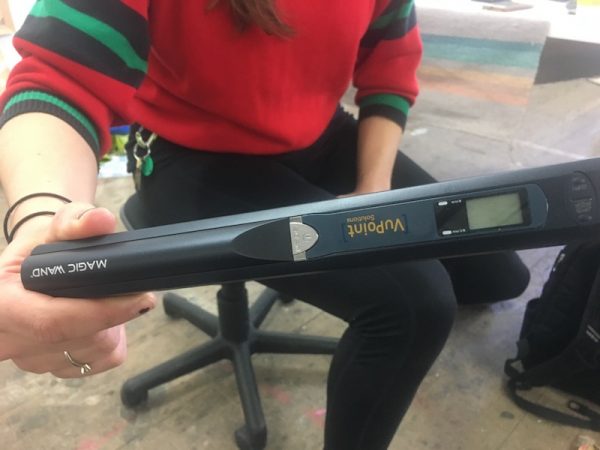 Liz Trosper and a CCD platen scanner
Building relationships is at the heart of everything
Glasstire’s work thrives because of the wonderful network of people who welcome us, share their knowledge, and open doors to Texas’ vibrant arts community. Beyond our staff, contributors, and supporters, there’s an entire ecosystem of Texas artists and arts professionals who generously share their perspectives and keep our coverage meaningful. These relationships are what make regional arts writing possible and worthwhile.
The people who host us during our travels, who give thoughtful tours of their exhibitions, who take time out of their busy schedules to sit down for interviews, are the true backbone of what we do. They share not just information, but insights, context, and often deeply personal stories about what drives their creative practice. They introduce us to other artists, tip us off to emerging talents, and help us understand the nuanced dynamics of their local art scenes.
This network is built on trust and mutual respect. Arts professionals and artists are incredibly generous with their time and knowledge, and that generosity deserves to be honored with thoughtful, accurate, and contextualized coverage. Without these relationships, regional arts journalism would be less meaningful. With them, it becomes a rich, layered conversation that reflects the true depth and complexity of our artistic enclaves.
 Hayden Pedigo at the Oak Cliff Film Festival
Great writing connects the dots
The most valuable arts writing helps readers see the bigger picture. By connecting individual works and exhibitions to broader conversations, movements, and ideas, we can help audiences develop a richer appreciation for what they’re experiencing. A painting is more than the sum of its parts; it’s an ongoing dialogue about materials, techniques, themes, and cultural moments.
When you can draw lines between what’s happening in a small gallery in Marfa and a major institution in Houston, or when you can trace how a particular artistic concern is being explored differently across the state, you’re providing readers with something they can’t get anywhere else. You’re creating a map of cultural production that helps everyone understand where they fit in the larger ecosystem.
This kind of connective writing requires knowledge, research, and a willingness to do the intellectual work of synthesis. It means reading exhibition catalogs, following artistic debates, understanding movements and counter-movements, and always asking yourself: How does this work relate to what came before and what’s happening now? What conversations is it entering or challenging?
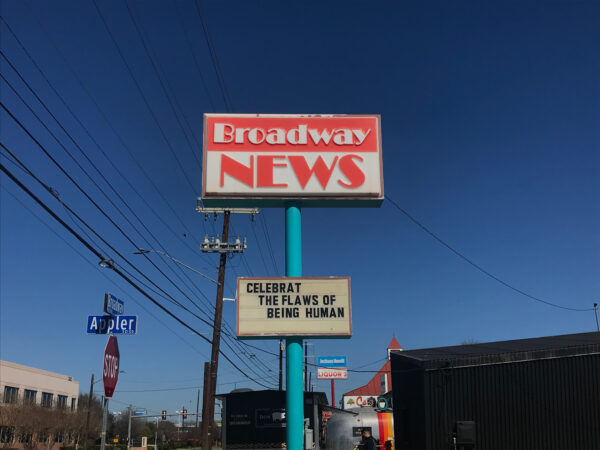 Broadway News in San Antonio
Be creative in how you approach your writing
There are so many ways to write about art! Comparing similar events, exploring themes across different venues, or finding unexpected angles can make your writing more engaging. Think about how images can enhance your storytelling. The more you explore different approaches, the more dynamic your writing becomes.
Writing about art doesn’t have to follow a single formula. Sometimes a traditional exhibition review is exactly what’s needed. Other times, a thematic essay that weaves together multiple shows or events creates a more compelling narrative. You might write a profile that lets an artist’s voice take center stage, or a reported piece that investigates a particular phenomenon in the art world.
Subscribing to newsletters from galleries, museums, alternative spaces, and other arts organizations keeps you plugged into the constant flow of activity across the state. You’ll discover artists, exhibitions, and programs you didn’t know about. You’ll start to see patterns and connections. You’ll find novel story ideas that others might miss.
Arts writing has its own relationship to visual representation. The properly chosen photograph can convey something that even the most eloquent prose cannot. Think carefully about which images will best support and enhance your writing. Following other publications helps foster your sense of what’s possible.
 Dan Flavin’s “untitled (Marfa project)” (detail) on view at the Chinati Foundation
Professionalism Matters
Being flexible and accommodating when scheduling interviews shows respect for busy artists and professionals. Professional communication is important to make your contacts feel like you’re on top of your game. When possible, sharing a meal or coffee can build the necessary rapport to move forward with coverage of a given topic.
Practical skills matter here. Offer multiple options when scheduling meetings. Artists and arts professionals are often juggling multiple projects and deadlines, and flexibility on your part makes their lives easier. Develop good communication habits: respond promptly to emails, be clear about your needs and timeline, follow up appropriately, and always respect people’s time.
Though I’ve focused on the professional component of this work, informal settings often lead to the best conversations. A formal interview creates a different kind of psychological space and expectations than running into someone at an event. These are the conversations where you learn not just about a specific project, but about an artist’s entire practice, their influences, their struggles, their aspirations. Really great stories can come from unexpected encounters.
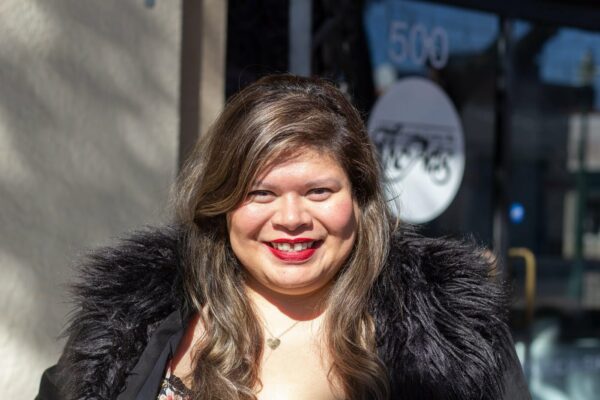 Rosie Santos, Executive Director of Laredo Center for the Arts
Flexibility is key in arts journalism
Things don’t always go according to plan. Weather happens, flights get canceled, and schedules shift. During one border region tour, an unexpected freeze threatened to ground my flight home. In one fell swoop, I was forced to anticipate what this would mean for my return travel, make accommodations, and then continue on to meetings and viewings later that day. These moments require quick thinking and adaptability.
I don’t have to tell you that Texas is enormous. The distances between cities can be vast. The arts calendar is constantly shifting: exhibitions get extended or close early, events get rescheduled, artists have emergencies, and venues have technical difficulties. If you’re going to do this work, you need to be comfortable with a certain level of uncertainty.
These moments can be challenging. They require responsiveness and the ability to communicate clearly with everyone involved. It’s not always easy to make quick decisions with incomplete information and to accept that sometimes things simply won’t work out as planned. You learn to build buffer time into your schedules. You learn to have backup plans and to be upfront with sources about potential complications. After a while, big setbacks will start to feel like manageable hiccups.
This also means staying open to how a story can change in interesting or positive ways as well. Chance meetings can happen anywhere if you keep looking. There’s insight to gain into a subject if given enough time and openness to connection. It makes one more empathetic in one’s writing, more understanding of the constraints and challenges others face, and more appreciative of the moments when everything does come together beautifully. Regional arts writing is a marathon, not a sprint, and learning to roll with the inevitable chaos is essential to sustaining this practice over years and decades.