
Professors at University of Texas System institutions could soon see new standards they must adhere to for teaching “controversial topics” in the classroom.
The UT Board of Regents will vote next Thursday on a proposal that outlines teaching expectations for faculty, which includes fostering welcoming class environments, presenting differing views on “unsettled issues” and omitting “controversies” that are not relevant to the course.
“Instructors must not attempt to coerce, indoctrinate, harass, or belittle students, especially in addressing controversial subjects and areas where people of good faith can hold differing convictions,” the proposed policy reads.
It also directs professors to “adhere faithfully to the contents of the syllabus” when teaching and “avoid introducing undisclosed material that is not clearly relevant.” If a course includes “controversial and contested” issues, instructors must “ensure a broad and balanced approach” to discussing the topic.
The Education Lab
The proposal comes amid intensifying political pressure to roll back what Republican lawmakers say is liberal bias on state campuses, including concerns about civil discourse and ideological content. College professors have called the increased restrictions an attack on academic freedom.
The policy proposal does not define what is considered a “controversial” or “contested” topic. It also does not explicitly restrict what topics can be taught, as other university systems have done.
Related

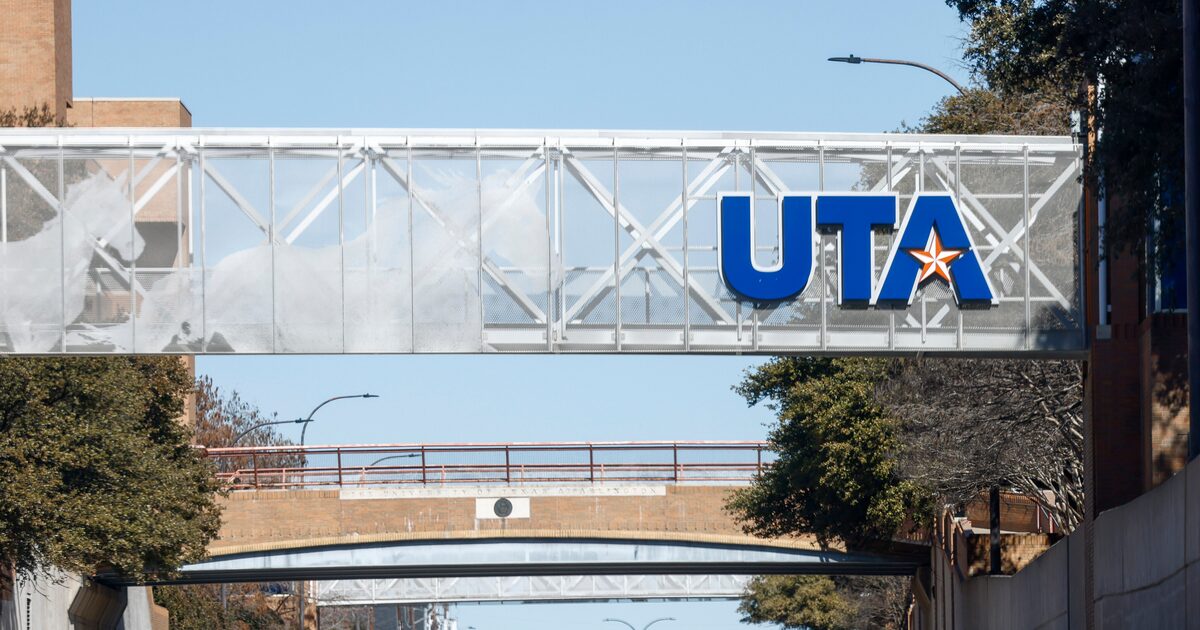
The proposed policy charges the UT System’s 14 institutions, including UT Dallas and UT Arlington, with building “breadth and balance” in the faculty body and curriculum to ensure a variety of viewpoints.
If approved, officials at each university would have to determine whether “controversial material” is required for a degree during its curriculum reviews. They would also have to tweak required general education courses so that students do not have to “study unnecessary controversial subjects.”
The face of Texas higher education is transforming under a new law that gives regents, who are appointed by Gov. Greg Abbott, more power over the day-to-day functions of universities. Among other things, the law requires regents to ensure core courses students take are “foundational and fundamental” and “prepare students for civic and professional life” and “participation in the workforce.”
Related

Scrutiny of universities increased in September after a state lawmaker posted a video on social media of a Texas A&M professor discussing gender identity in her course. The incident, which A&M Chancellor Glenn Hegar referred to as “indoctrination,” led to the professor’s firing and President Mark A. Welsh III’s resignation.
Regents and university leaders, including those at the Texas A&M, UT and Texas Tech systems, subsequently instituted policies and reviews on how topics like gender and race are taught in classrooms.
Related
The UT System’s review of its courses was meant to ensure “compliance and alignment” with state and federal guidance. Any courses taught on its campuses must be “aligned with the direction and priorities of the Board of Regents,” according to a statement sent to The Dallas Morning News in September.
A UT spokesperson did not respond to a request for comment on the status of the review, which was still underway in December.
Related

Individual institutions across the system are also conducting reviews of courses, programs and departments.
UT Austin, the system’s flagship institution, moved to consolidate its ethnic and gender studies departments this week following a review of overly “fractured” departments that began last fall.
UT Arlington is currently conducting a review of its 180 undergraduate and master’s degree programs. Some of the programs have been identified for possible cuts, according to university spokesperson Jeff Caplan.
The review, which started last year, is designed to ensure the school’s academic offerings align with student demand, workforce needs and institutional sustainability.
“No specific program has been targeted for closure or elimination,” Caplan said in a statement, adding that no decisions have been made yet.
A separate working group is working to reimagine the core curriculum and ensure full compliance with state law, Caplan said.
The DMN Education Lab deepens the coverage and conversation about urgent education issues critical to the future of North Texas.
The DMN Education Lab is a community-funded journalism initiative, with support from Bobby and Lottye Lyle, Communities Foundation of Texas, The Dallas Foundation, Dallas Regional Chamber, Deedie Rose, Garrett and Cecilia Boone, Judy and Jim Gibbs, The Meadows Foundation, The Murrell Foundation, Ron and Phyllis Steinhart, Solutions Journalism Network, Southern Methodist University, Sydney Smith Hicks, and the University of Texas at Dallas. The Dallas Morning News retains full editorial control of the Education Lab’s journalism.