
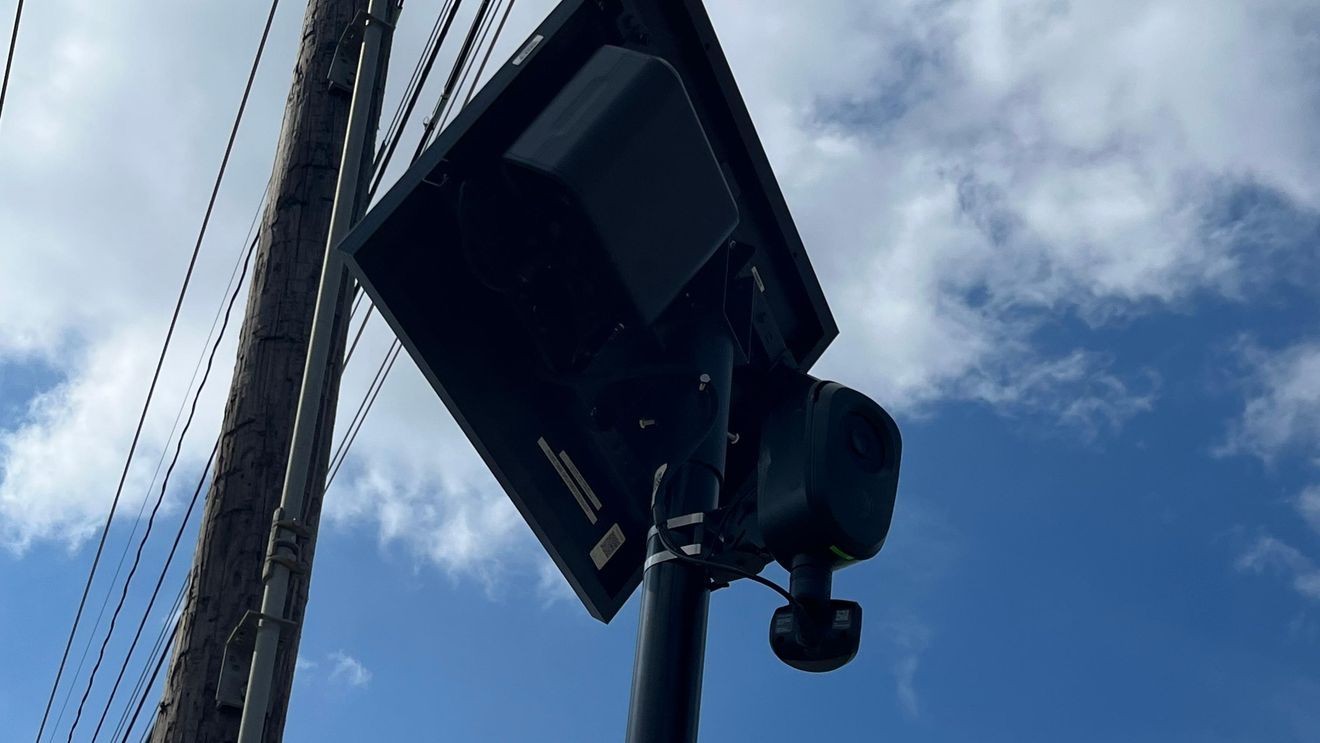
AUSTIN, Texas — License plate readers recently installed around Austin by the Texas Department of Public Safety are drawing pushback from some privacy advocates and local leaders, even as DPS says the technology helps investigators find suspects and missing people.
DPS says it put up new license plate readers across town on Feb. 2. The agency says the technology enhances law enforcement’s ability to keep communities safe and can serve as a resource for investigators working to locate suspects or missing persons.
On Monday, Feb. 2, 2026, as part of continued efforts to improve public safety, the Texas Department of Public Safety (DPS) installed license plate readers (LPR) in Austin within several state right of ways following authorization by the Texas Department of Transportation (TxDOT) and once appropriate TxDOT state roadway permits were issued. Only law enforcement agencies who have signed agreements with the department have access to footage and images collected by DPS LPRs.LPRs enhance law enforcement’s ability to keep communities safe, serving as a resource for investigators working to locate suspects or missing persons, recover stolen property, identify suspicious vehicles and develop timelines in criminal investigations, among other public safety efforts.
Kevin Welch, president of EFF-Austin, said the new readers are not the answer. EFF-Austin is an organization focused on protecting citizens from what it’s website describes as the negative implications of emerging technology.
Welch said he, “In almost all circumstances, would say more surveillance is bad and that many people feel that surveillance equals safety. I would argue no.” He also said, “The only way you’re going to assure that license plate readers are not being used for harmful surveillance is don’t use them.”
At the same time, Welch acknowledged DPS’ statement saying they will only share the internal photos and videos from their cameras with agencies who have signed agreements with the department, saying, “I appreciate that DPS says that that is their intention.”
Welch said he remains skeptical and has concerns about who could access the system.
Dr. Roy Taylor, a police procedure expert and current police captain in North Carolina, said the technology can expand law enforcement’s reach. “It is a force multiplier and allows more eyes to be on the lookout,” Taylor said. He added, “If they make the policy restrictive enough, hopefully that’ll negate some of these public fears.”
Expanding about peoples’ concerns over the use of the technology, Taylor says, “the benefits far outweigh the negatives.”
Consultant Charles Johnson said the broader debate over surveillance is unlikely to end. “30 years of industry experience in the security industry tells me that they’re not going away. They’re just simply not,” Johnson said. He also said, “We want privacy, but in the same breath, we’re in public and you can’t have privacy in public.”
Johnson also says, “some could even argue that the license plate reader that’s reading your tag, that technically the tag is owned by the state and effectively owned by the state basically.”
Welch says so far in his research, he’s found that the license plate readers put up by DPS are on state-owned property. “So they’re not breaking the law,” he said.
CBS Austin reached out to the Austin Police Department to ask whether APD plans to sign an agreement with DPS, but had not received a response.
District 7 Austin City Council member Mike Siegel, who has been openly against surveillance cameras and systems, said of APD, he expects APD to respect City Council’s previous decision to reject Flock license-plate reader systems and to seek council approval before seeking access to DPS’ system.
The City rejected Flock ALPR cameras because they pose a serious risk to the liberty and privacy of our constituents by putting intimate information about our movements in the hands of a private company that can use the data for any purpose it wishes.My expectation is our police department should respect that decision and seek Council approval for any change in approach, including accessing the same system from another law enforcement agency. The TRUST Act proposed by Mayor Pro Tem Vela and myself will be finalized in the coming weeks, and hopefully that will clarify our expectations as a Council and a community. No City resources—including City personnel—should be used to promote a product that puts our community at risk.
DPS has not said whether or not the new cameras are from the Flock company or not.